


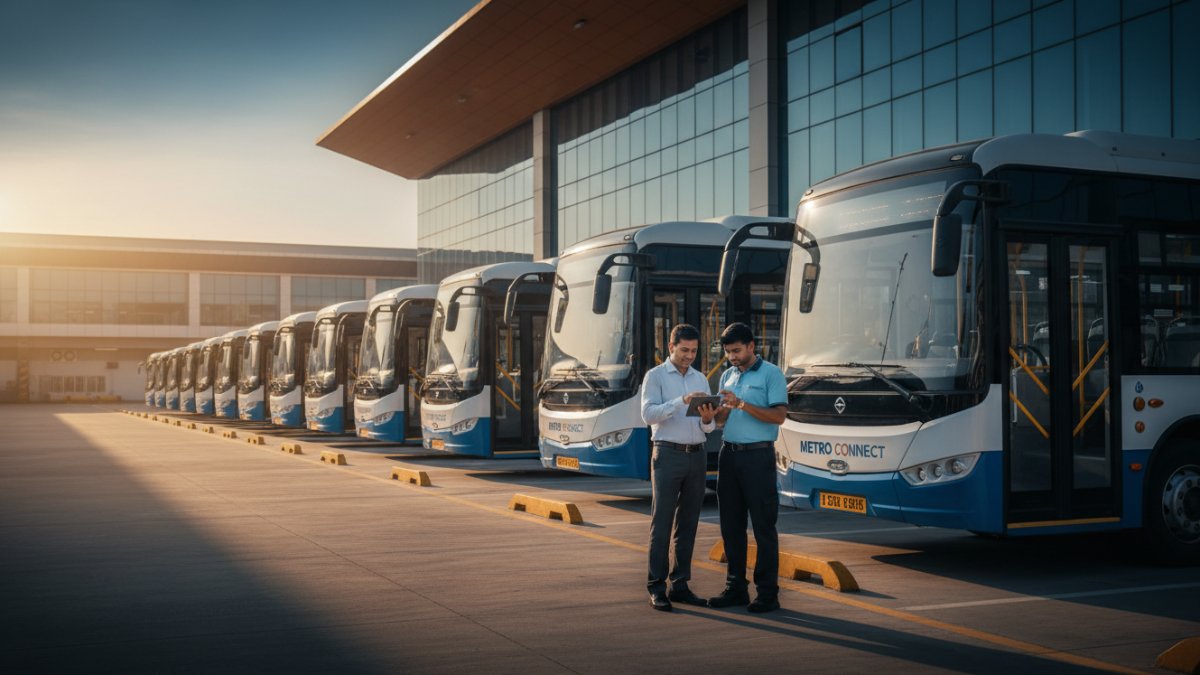
Nagpur’s expanding public transport system, operated under the Nagpur Municipal Corporation (NMC), is increasingly reliant on sustained fiscal support—highlighting the financial realities of building inclusive and low-emission urban mobility networks. The Nagpur NMC bus network currently operates around 580 buses, requiring nearly ₹150 crore in annual support to bridge operational losses. Despite serving over 1.6 lakh passengers daily through more than 7,000 trips, fare revenues remain insufficient to cover rising operational costs.
The scale of operations reflects the city’s growing dependence on organised public transport as private vehicle usage increases and congestion intensifies. However, projections indicate a widening gap between expenditure and income. Estimates suggest that annual costs could rise to approximately ₹350 crore, while revenues may remain around ₹190 crore—underscoring structural financial pressures within the system. A defining feature of the Nagpur NMC bus network is its rapid shift towards electric mobility. Nearly 385 buses in the fleet are electric, positioning the city among India’s early adopters of large-scale e-bus deployment. This transition aligns with national goals of reducing emissions and improving urban air quality, particularly in rapidly growing cities. However, the electrification push has also exposed infrastructure challenges. Charging capacity constraints and delays in depot readiness have affected fleet utilisation, with several buses unable to operate at optimal levels. This highlights the importance of synchronising vehicle procurement with supporting infrastructure—an issue increasingly relevant across Indian cities adopting e-mobility solutions. From an urban development perspective, the Nagpur NMC bus network plays a vital role in ensuring equitable access to mobility. Affordable public transport connects residents to employment, education, and healthcare, particularly for economically vulnerable groups. Yet, maintaining such accessibility requires consistent financial backing. Urban mobility experts note that subsidy-driven models are common globally, especially in cities prioritising public transport over private vehicle dependence. However, long-term sustainability depends on diversifying revenue streams. NMC has been exploring options such as advertising, commercial use of transit infrastructure, and value capture mechanisms linked to transit-oriented development. Infrastructure gaps continue to affect commuter experience. The number of bus shelters in Nagpur remains significantly below demand, limiting comfort and accessibility. Plans to introduce cost-effective bus stop infrastructure indicate an effort to scale quickly while managing fiscal constraints. At the same time, NMC is considering operational enhancements, including deploying higher-capacity buses on high-demand corridors to improve efficiency and reduce crowding. Such measures could help optimise existing resources while improving service quality.
Looking ahead, the Nagpur NMC bus network will need to balance expansion with financial sustainability. Strengthening infrastructure, improving operational efficiency, and integrating mobility planning with urban development strategies will be critical to reducing reliance on subsidies. As Nagpur continues to urbanise, the effectiveness of its public transport system will play a decisive role in shaping mobility patterns. Building a resilient, efficient, and inclusive network will not only support economic activity but also contribute to cleaner, more liveable urban environments.
ALSO READ – Surat Railway Station Redevelopment Reaches Midway Milestone
Nagpur NMC Bus Network Expansion Strains Civic Finances
