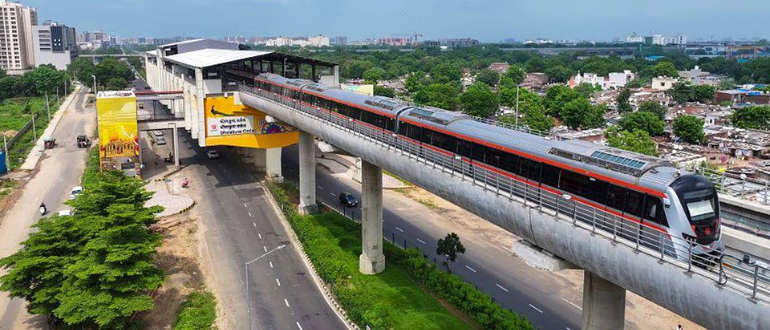
Surat Metro Trial Run Begins On Key Urban Corridor
Surat has taken a significant step towards modernising its urban transport network, with trial operations commencing on a key stretch of its metro corridor—marking the city’s entry into a new phase of mass transit development.The trial run has begun on an approximately 8.5-kilometre section connecting Dream City to Althan, forming part of the first phase of the Surat Metro project. The corridor is designed to improve connectivity across rapidly expanding urban zones, particularly in areas witnessing high residential and commercial growth.
The Surat metro trial is being conducted to test critical systems including signalling, track alignment, power supply, and operational safety protocols before the commencement of full passenger services. Officials indicate that multiple rounds of testing will be undertaken to ensure reliability and compliance with safety standards.From an urban development perspective, the Surat metro trial represents a shift in how mid-sized Indian cities are approaching mobility challenges. Traditionally dependent on road-based transport, cities like Surat are increasingly investing in mass rapid transit systems to manage congestion, reduce travel time, and improve environmental outcomes.The Dream City–Althan corridor passes through key urban clusters, including emerging business districts and residential zones. By linking these areas, the metro is expected to ease traffic pressure on arterial roads and provide a more predictable and efficient commuting option.Urban planners note that such infrastructure projects can significantly influence land use patterns. Transit corridors often drive transit-oriented development, encouraging higher-density, mixed-use development around stations.
This can lead to more compact urban growth, reducing reliance on private vehicles and supporting sustainable city expansion.The Surat metro trial also aligns with broader national efforts to promote low-emission transport systems. Metro rail networks, when integrated with other forms of public transport, can play a crucial role in reducing carbon emissions and improving air quality in urban areas.However, the success of the system will depend on effective integration with existing transport networks, including buses and last-mile connectivity options. Experts emphasise that seamless connectivity is essential to maximise ridership and ensure that the metro becomes a viable alternative to private transport.The project is being developed in phases, with additional corridors planned to expand coverage across the city. As construction progresses, authorities are focusing on ensuring timely execution while minimising disruption to existing urban activity.For Surat, a city known for its rapid economic growth and industrial base, the metro project is expected to enhance mobility and support continued expansion. Improved transport infrastructure can boost productivity, attract investment, and improve quality of life for residents.
Looking ahead, the Surat metro trial will serve as a critical test of the system’s readiness for public operations. If successful, it could accelerate the rollout of subsequent phases and reinforce the role of mass transit in shaping the city’s future.As Indian cities continue to evolve, projects like the Surat metro highlight the importance of investing in efficient, sustainable, and inclusive transport systems—key to building resilient urban environments capable of supporting long-term growth.