


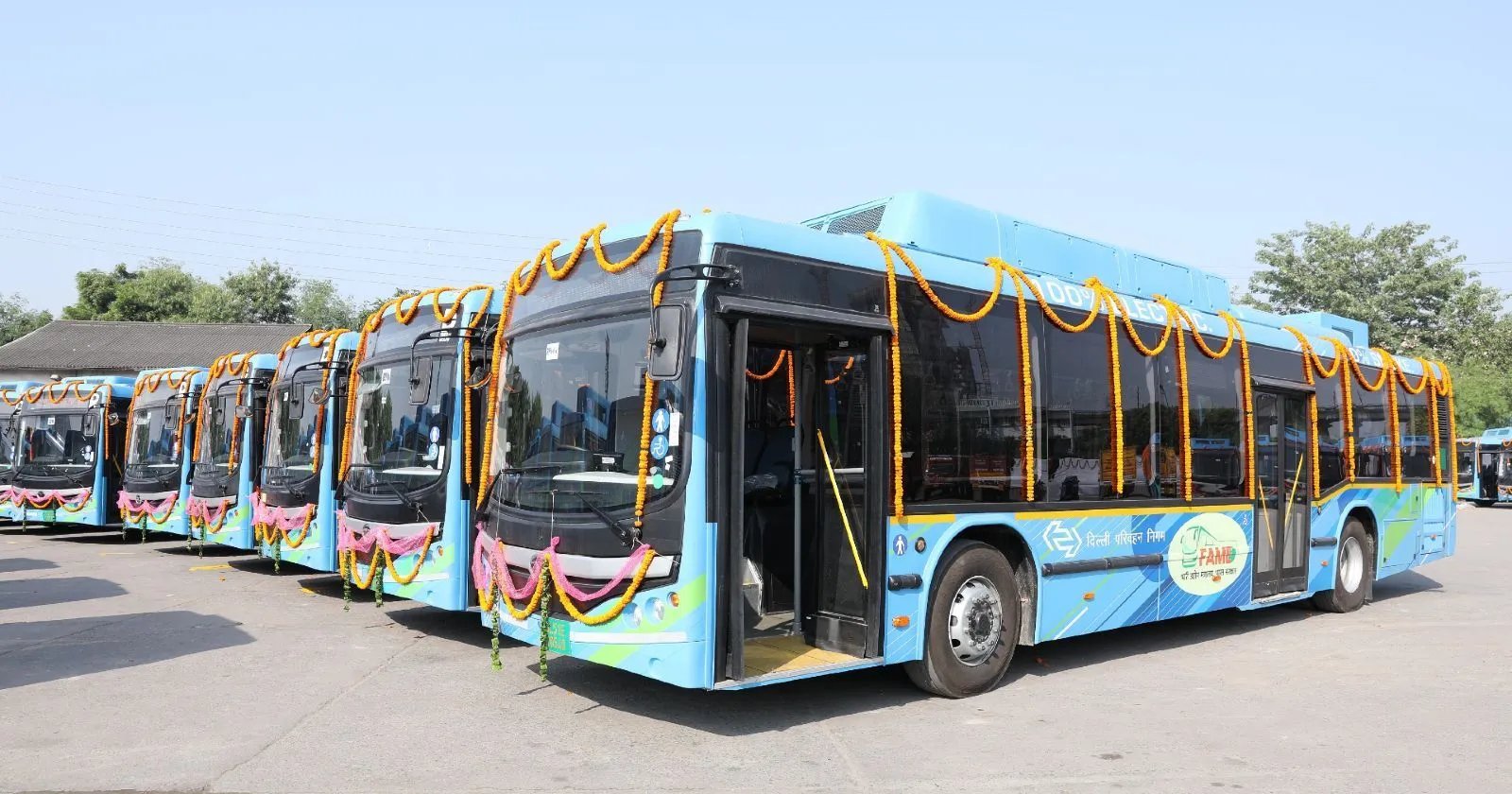
Nagpur’s transition towards electric public transport is encountering operational hurdles, with a significant portion of its e-bus fleet lying idle due to gaps in charging infrastructure—raising questions about the pace and planning of urban mobility electrification. More than 100 electric buses in the city are currently non-operational, primarily due to inadequate charging capacity and delays in setting up supporting infrastructure. The situation has affected service efficiency in a system that is otherwise positioned as one of India’s leading municipal electric bus deployments.
The Nagpur e bus infrastructure issue highlights a critical disconnect between fleet expansion and backend readiness. While the city has rapidly inducted electric buses as part of its sustainability push, the supporting ecosystem—charging depots, grid capacity, and maintenance facilities—has not scaled at the same pace. Officials indicate that a large number of buses are awaiting commissioning or are unable to operate at full capacity due to limited charging slots. This has led to underutilisation of assets and increased pressure on the remaining operational fleet, affecting route coverage and service frequency. From an urban mobility perspective, the challenge underscores the complexity of transitioning to electric transport systems. Unlike conventional buses, e-buses require dedicated charging infrastructure, careful scheduling, and robust energy management systems. Without these, even well-funded fleet expansions can struggle to deliver intended outcomes. The Nagpur e bus infrastructure gap also has financial implications. Idle buses represent sunk investments that are not generating expected returns in terms of ridership or emissions reduction. At the same time, operational inefficiencies can increase costs for civic authorities already managing tight budgets. Experts point out that electrification of public transport must be approached as a systems-level transformation rather than a vehicle procurement exercise. This includes planning for charging networks, grid integration, depot capacity, and workforce training. Cities that have successfully implemented e-bus systems have typically prioritised phased deployment aligned with infrastructure readiness. The issue is particularly relevant in the context of India’s broader push towards sustainable urban mobility. Electric buses are seen as a key tool for reducing emissions, improving air quality, and lowering long-term operating costs. However, infrastructure constraints can delay these benefits and affect public confidence in the transition. In Nagpur, efforts are underway to address the bottlenecks. Authorities are working on expanding charging infrastructure, accelerating depot development, and improving coordination with power utilities to ensure reliable energy supply. These measures are expected to gradually bring idle buses into operation.
Urban planners emphasise that integrating electric mobility into city transport systems requires long-term planning and cross-sector collaboration. Coordination between municipal bodies, transport agencies, and energy providers is essential to ensure seamless implementation. Looking ahead, the resolution of the Nagpur e bus infrastructure challenge will be critical to sustaining the city’s leadership in electric mobility. As more Indian cities adopt e-bus systems, Nagpur’s experience offers valuable lessons on the importance of aligning infrastructure, operations, and policy to build resilient and efficient urban transport networks.
ALSO READ – Nagpur Bus Network Runs On Heavy Subsidy Support
Nagpur E Bus Fleet Faces Charging Infrastructure Gap
