



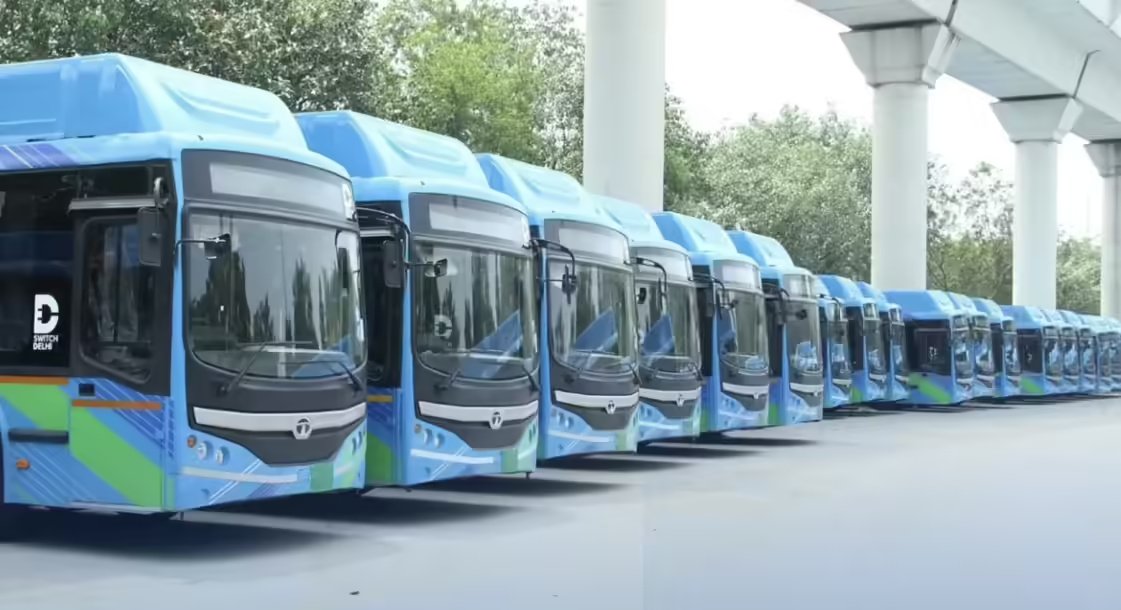
Nagpur’s public transport system is operating at scale but under growing financial strain, with the city’s bus network sustained through substantial viability gap funding—highlighting the economic challenges of building inclusive urban mobility systems. The Nagpur Municipal Corporation (NMC) currently runs around 580 buses under its city transport service, supported by nearly ₹150 crore in annual financial backing to bridge operational losses. The system serves over 1.6 lakh passengers daily through more than 7,000 trips, making it a critical backbone for urban mobility in the city.
Despite its scale, the financial model remains under pressure. Budget projections indicate a widening gap between operational costs and revenue generation, with expenses significantly outpacing fare collections. While recent budgets show near-balanced accounts, future estimates suggest rising deficits as costs increase and ridership growth alone struggles to offset expenditure. A key feature of Nagpur’s bus system is its rapid transition towards electric mobility. Of the total fleet, nearly 385 buses are electric, reflecting one of the largest municipal e-bus deployments in India. This shift aligns with national and local goals to reduce emissions, improve air quality, and lower long-term fuel costs. However, the transition has exposed infrastructure bottlenecks. Charging capacity constraints and delays in fleet deployment have limited the operational efficiency of electric buses, with several vehicles reportedly idle due to inadequate depot readiness. From an urban development perspective, Nagpur’s model illustrates the dual challenge of scaling public transport while ensuring financial sustainability. Affordable and accessible bus systems are essential for reducing congestion, lowering emissions, and supporting equitable access to jobs and services. Yet, fare revenues alone are often insufficient to sustain operations, particularly in mid-sized cities. Urban mobility experts point out that subsidy-backed models are common globally, especially in cities prioritising public transport over private vehicle dependence. However, long-term sustainability requires diversification of revenue streams. In Nagpur’s case, efforts are underway to explore non-ticket income sources such as advertising, commercial use of bus infrastructure, and value capture from transit-oriented development. Infrastructure gaps remain another concern. The city currently has a limited number of modern bus shelters, far below estimated requirements, affecting commuter experience and last-mile accessibility. Plans to introduce simpler bus stop infrastructure indicate an attempt to scale quickly while managing costs. The civic body is also exploring capacity enhancements, including the introduction of articulated buses for high-demand corridors such as the Inner Ring Road. Such measures aim to improve efficiency and accommodate rising passenger volumes in key urban zones.
For rapidly urbanising cities like Nagpur, the evolution of public transport systems will play a decisive role in shaping mobility patterns. A reliable bus network can reduce dependence on private vehicles, ease traffic congestion, and contribute to climate-resilient urban growth. Looking ahead, the success of Nagpur’s transport model will depend on balancing financial viability with service expansion. Strengthening infrastructure, improving operational efficiency, and integrating sustainable funding mechanisms will be essential to ensure that public transport remains both accessible and resilient as the city continues to grow.
ALSO READ – Nagpur Road Safety Model Gains Statewide Policy Push
Nagpur Bus Network Runs On Heavy Subsidy Support
