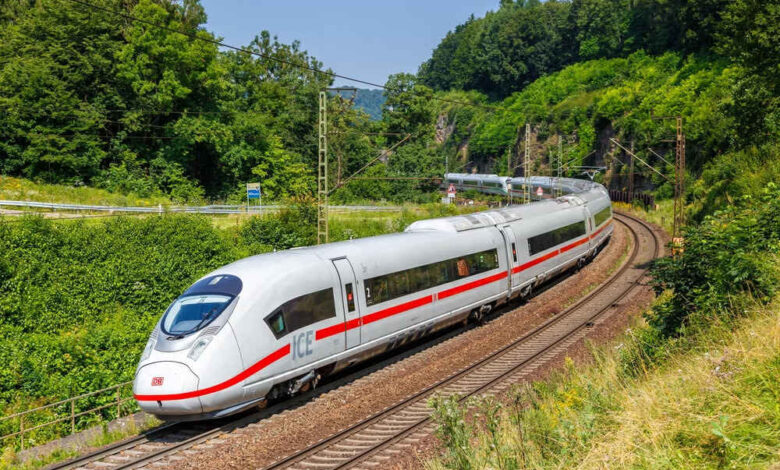
Hyderabad Bullet Train Hub Near Airport Gains Approval
Hyderabad is set to emerge as a key node in India’s high-speed rail network, with Telangana planning a dedicated bullet train hub near Shamshabad—marking a significant step in the city’s transformation into a multi-modal transport and logistics centre.The state government has proposed allocating nearly 500 acres in the Bharat Future City area near the international airport to develop a central hub for upcoming high-speed rail corridors. The project is aligned with national plans to expand bullet train connectivity linking Hyderabad with major economic centres such as Chennai, Bengaluru, and Pune.
Positioned close to Rajiv Gandhi International Airport and the Outer Ring Road, the Hyderabad bullet train hub is expected to function as a strategic interchange integrating air, road, metro, and high-speed rail networks. This convergence of transport systems is designed to enhance regional accessibility while reducing travel time between key urban clusters. The initiative reflects a broader shift in India’s infrastructure planning, where cities are being developed as interconnected mobility hubs rather than isolated nodes. Hyderabad’s inclusion in multiple high-speed rail corridors underscores its growing role as a bridge between southern and western economic regions. Under proposed plans, travel times between Hyderabad and cities like Bengaluru and Chennai could be reduced to under three hours, significantly altering inter-city mobility patterns. From an urban development perspective, the Hyderabad bullet train hub is likely to catalyse growth in the southern periphery of the city, particularly around Shamshabad. Infrastructure-led development in such zones often triggers demand for housing, commercial real estate, and logistics facilities, contributing to the emergence of new urban clusters.
Urban planners highlight that such projects can reshape land use patterns, encouraging transit-oriented development. Areas around the hub could evolve into mixed-use districts with integrated residential, commercial, and institutional spaces—reducing dependence on central business districts and supporting decentralised urban growth.The project also aligns with efforts to create climate-efficient transport systems. High-speed rail, when powered by cleaner energy sources, offers a lower-emission alternative to short-haul aviation and long-distance road travel. Integrating it with existing urban transit systems can further reduce congestion and improve energy efficiency across metropolitan regions.However, experts caution that large-scale infrastructure projects of this nature require careful coordination across multiple agencies. Land acquisition, financing models, and alignment with existing transport networks will be critical to ensuring timely execution. Funding remains a key consideration, with discussions around public-private partnerships and central-state collaboration expected to shape implementation.
The Hyderabad bullet train hub is also part of a wider infrastructure push in Telangana, which includes road expansions, ring road development, and expressway projects aimed at strengthening regional connectivity. Looking ahead, the success of the project will depend on how effectively it integrates with the city’s broader urban planning framework. If executed well, the Hyderabad bullet train hub could redefine mobility, stimulate economic activity, and support the development of a more connected and resilient urban region—positioning Hyderabad as a central player in India’s next phase of infrastructure growth.