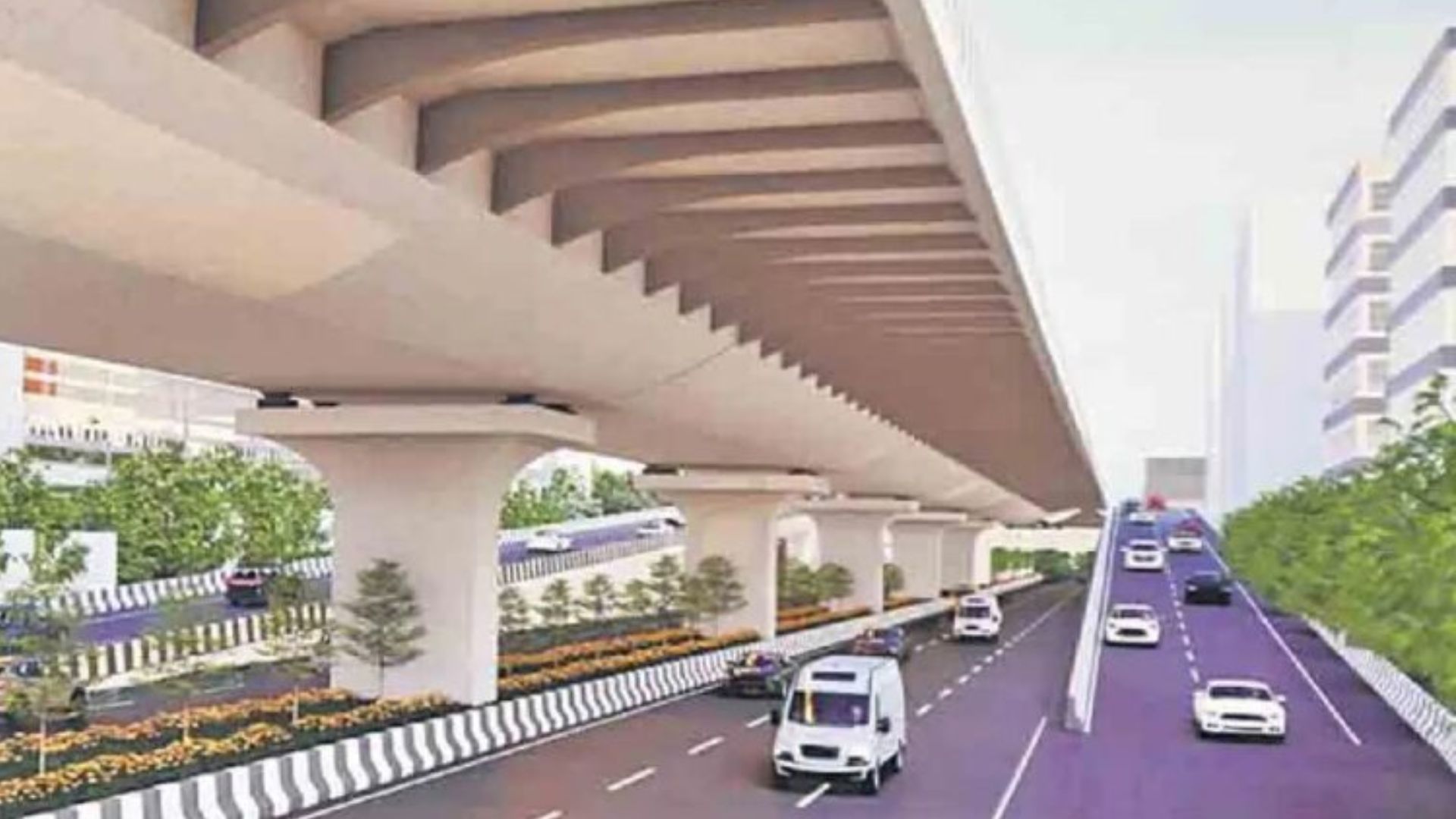
Pune: Authorities are advancing plans for a new elevated transport corridor along the Mutha river to address persistent congestion on Sinhagad Road, one of the city’s most strained arterial routes. The proposed alignment, linking Vitthalwadi to Nanded City, is expected to create an alternative east–west connection, easing pressure on existing infrastructure while reshaping mobility patterns in Pune’s rapidly expanding western suburbs.
Traffic volumes along this stretch have risen sharply over the past two decades, driven by residential growth and increased inflow from the Pune–Bengaluru highway. Despite incremental upgrades, including flyovers and internal diversions, peak-hour congestion remains a daily challenge for commuters travelling towards Dhayari, Khadakwasla and adjoining areas. The Pune elevated corridor is being positioned as a parallel route to absorb a share of this load. Officials in the urban development system indicate that a detailed project report is being prepared for submission to the state government. The proposal reflects a broader push to rethink mobility infrastructure in high-growth zones where road widening alone has proven insufficient. By introducing grade-separated movement, planners aim to reduce travel time variability and improve connectivity to peripheral residential clusters.
The alignment along the river, however, introduces environmental and regulatory sensitivities. A previous attempt to develop a riverside road in the same belt faced legal intervention and was eventually dismantled, highlighting the complexity of building within ecologically sensitive corridors. In response, the current plan adopts an elevated design supported on pillars, which experts say could limit ground-level disruption and preserve natural drainage patterns. Urban planners caution that while the Pune elevated corridor may offer immediate congestion relief, its long-term success will depend on integrated planning. Without parallel investments in public transport and non-motorised mobility, new road capacity risks inducing additional traffic demand. There is also growing emphasis on ensuring that riverfront infrastructure aligns with flood resilience strategies, particularly as climate variability intensifies rainfall patterns in the region.
From a real estate perspective, improved connectivity is likely to influence development dynamics in the Sinhagad Road belt and beyond. Enhanced accessibility often accelerates housing demand in peripheral areas, potentially reshaping land values and urban density. Industry observers note that such projects must be complemented by social infrastructure and services to ensure balanced growth. Transport experts also highlight the importance of design considerations such as entry-exit points, safety barriers, and integration with existing road networks. Poorly planned access could shift congestion rather than resolve it, especially at junctions where local traffic merges with through movement.
As the proposal moves towards state-level evaluation, it represents a critical test case for how Pune navigates the intersection of infrastructure expansion and environmental stewardship. The coming months will determine whether the Pune elevated corridor can deliver both mobility efficiency and sustainable urban outcomes in a city facing accelerating growth pressures.
Pune Elevated Corridor Plan To Ease Congestion