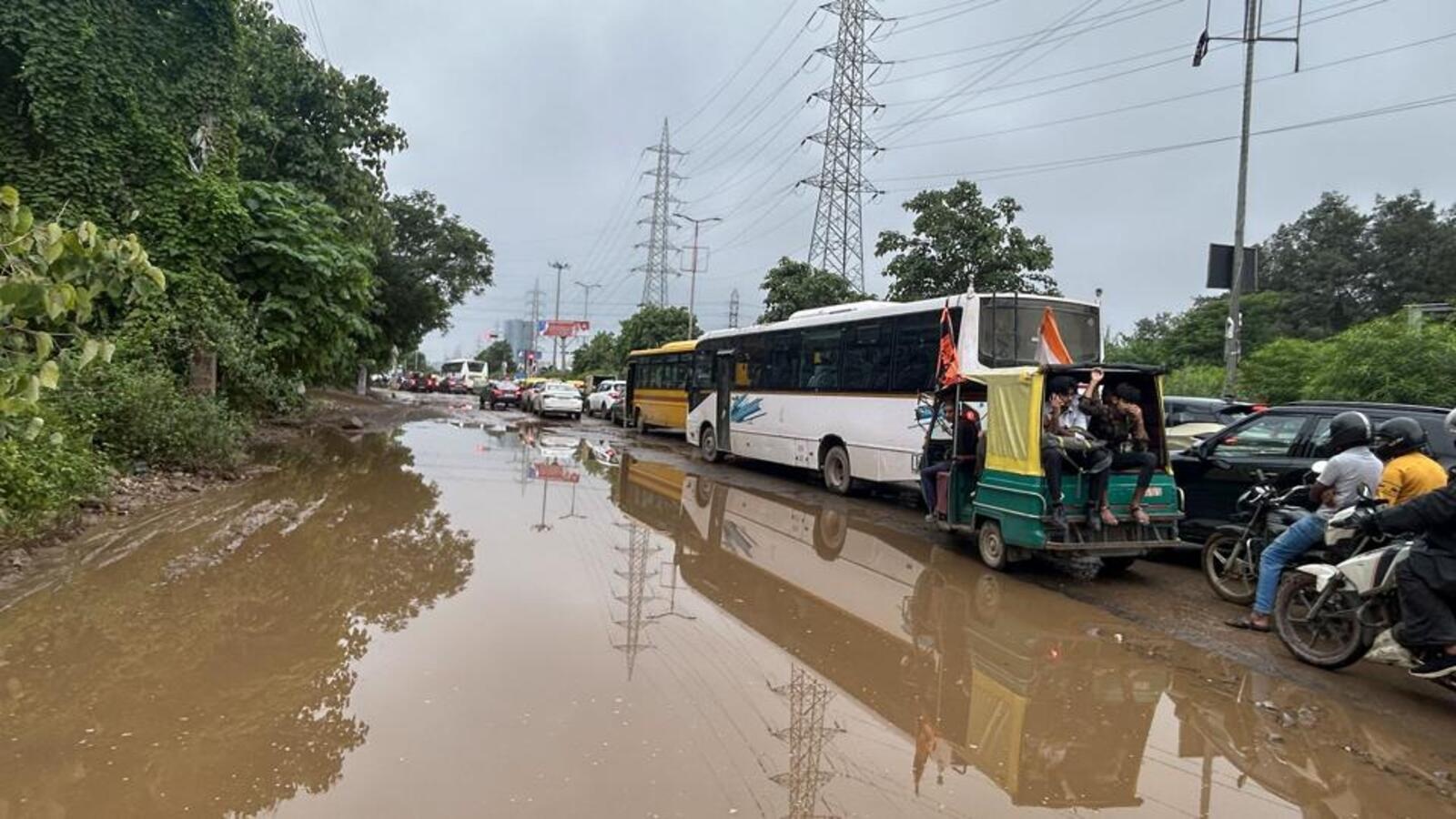
Urban mobility concerns are intensifying in Gurugram as commuters and residents report persistent congestion, deteriorating road safety infrastructure, and weak enforcement across several of the city’s busiest corridors. The emerging Gurugram road safety concerns highlight a growing mismatch between expanding traffic volumes and the city’s ability to manage safe and efficient movement. Daily commuters travelling across major routes say congestion and infrastructure gaps are increasingly shaping risky driving behaviour. On key arterial roads, long traffic signal cycles, poorly maintained surfaces, and encroachments have created bottlenecks that slow traffic flow and raise accident risks during peak hours.
Several stretches, including those connecting major residential and commercial districts, have developed recurring congestion points where vehicles frequently queue for extended periods. Transport observers note that these areas have become predictable choke points, particularly during morning and evening commuting peaks Field observations across multiple locations suggest that inadequate enforcement is compounding the problem. In the absence of consistent traffic monitoring, riders on two-wheelers and delivery vehicles often resort to driving against traffic to bypass long delays. Such practices significantly increase the likelihood of collisions, especially on narrow carriageways and poorly marked intersections. The state of road safety infrastructure has also raised concerns. Impact protection devices such as crash barriers and tyre cushions installed at junctions appear damaged or poorly maintained in several locations. These installations are intended to absorb collision impact and reduce injury severity, yet many appear faded, displaced, or structurally compromised. Urban transport analysts say the condition of such infrastructure directly influences Gurugram road safety, particularly in high-speed corridors and intersections where crash mitigation devices are critical. When protective equipment is not maintained, the safety benefits originally intended during installation are significantly reduced.
Officials involved in traffic management acknowledge that multiple safety markers and hazard indicators have been installed across the city in recent years. However, urban mobility experts point out that monitoring mechanisms to evaluate their effectiveness remain limited. Without systematic assessment, authorities may struggle to determine whether these interventions are actually reducing accidents or improving road behaviour. Residents say the broader issue lies in fragmented responses to civic complaints. Temporary fixes—such as short-term patchwork repairs or minor adjustments to signage—are often implemented, but structural improvements to road design, signal coordination, and enforcement capacity remain slow. The broader implications extend beyond commuter inconvenience. Congestion-driven inefficiencies increase fuel consumption, worsen local air pollution, and affect productivity for thousands of workers travelling between Delhi and Gurugram each day. For a rapidly expanding economic hub, the need to strengthen Gurugram road safety and mobility planning is becoming increasingly urgent.
Urban planners suggest that coordinated traffic management, better infrastructure maintenance, and improved enforcement systems will be critical to ensuring safer roads. As Gurugram continues to attract businesses and residents, the effectiveness of these measures will play a central role in shaping the city’s future mobility landscape.