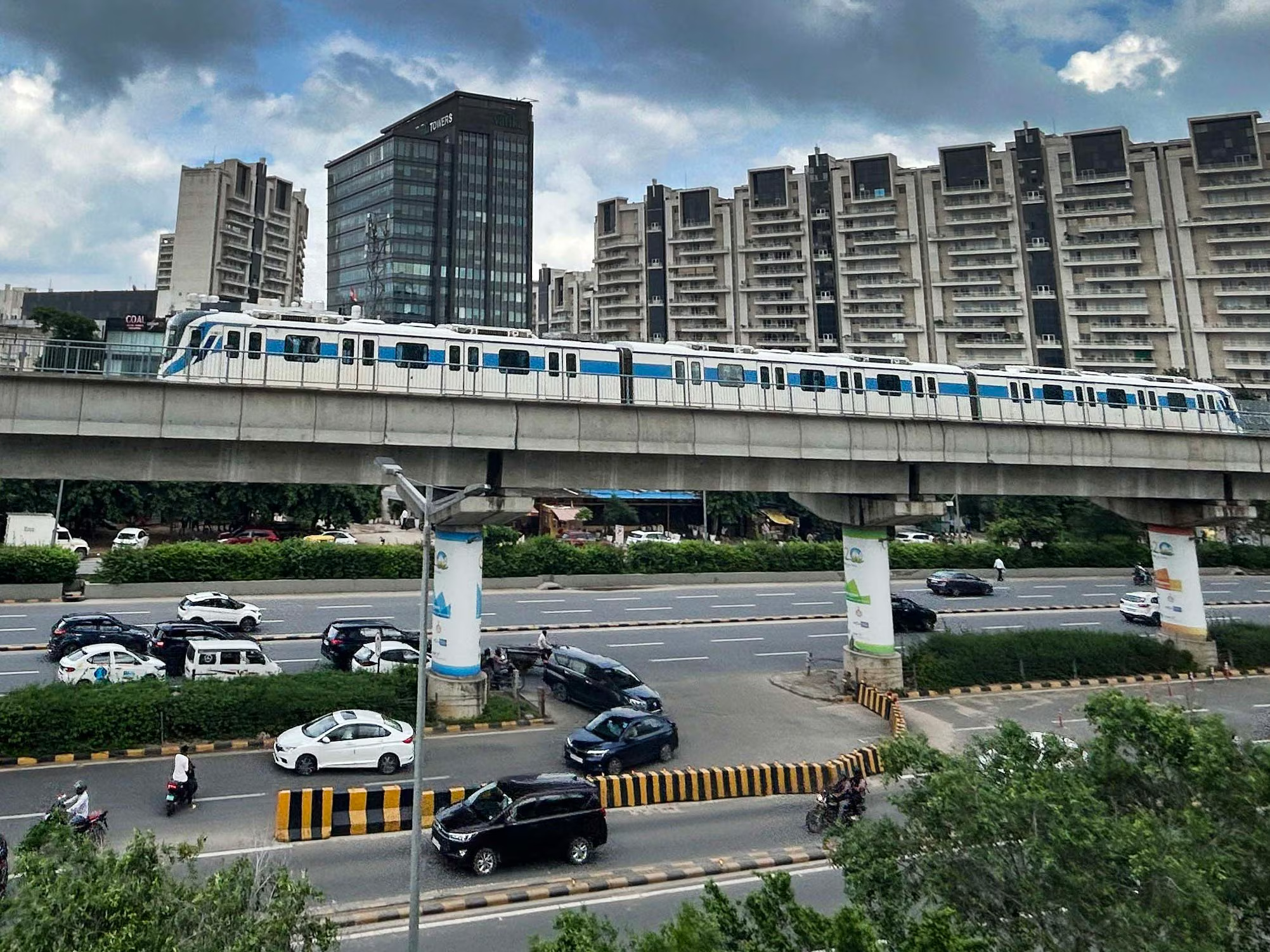
Gurugram Revises Metro Flyover Plan For NH Corridor
Urban transport planning in Gurugram has taken a new turn after authorities decided to abandon a proposed stacked infrastructure design that would have combined a metro line and elevated roadway along the same corridor. Instead, planners are moving forward with independent structures for both projects, a move officials say will improve engineering feasibility and reduce long-term operational risks in one of the city’s busiest mobility corridors. The revised plan affects the stretch linking Hero Honda Chowk and Umang Bhardwaj Chowk along the NH-352W corridor. Urban infrastructure agencies involved in the project have now agreed to develop a dedicated elevated road while allowing the metro system to run on a separate alignment. Officials believe this approach will provide greater flexibility for construction and reduce conflicts between transport systems during implementation.
Under the updated proposal, a 3.3-kilometre flyover designed to ease road congestion will be constructed as part of the highway expansion works. The structure is estimated to cost about ₹182 crore and will serve as a six-lane elevated route aimed at reducing traffic pressure on the surface carriageway. Transport planners say the project is expected to improve traffic flow at a major junction that connects industrial, residential and logistics zones within Gurugram. The decision to abandon the earlier double-deck concept followed a series of technical discussions among transport authorities responsible for metro development, highway construction and regional planning. The original concept had envisioned a shared structure to accommodate both the metro corridor and elevated road in order to optimise land use in a densely developed urban stretch. However, detailed assessments indicated that maintaining separate structures would reduce construction complexity and ensure smoother project execution. Urban mobility experts note that while stacked infrastructure can be efficient in space-constrained cities, it often requires higher engineering precision, longer construction timelines and more complex maintenance systems.
As part of the revised design, planners are now adjusting the proposed alignment of two upcoming metro stations located in the vicinity of Sector 10 and Sector 37. The modification is intended to ensure that metro infrastructure does not conflict with the right-of-way required for the elevated road. Officials involved in the planning process say these adjustments are necessary to create an uninterrupted construction corridor for both projects. Another factor influencing the redesign involves land availability and environmental clearances. Sections of the corridor fall within forest land zones where utilities and service lines will need relocation before construction can begin. Authorities are currently working through approvals to ensure that the required right-of-way is available for both the road and metro infrastructure. For Gurugram, one of India’s fastest-growing urban centres, transport integration remains a critical challenge. Rapid expansion of residential districts, corporate hubs and logistics networks has placed increasing pressure on road infrastructure. Urban planners say that coordinated investments in metro rail and highway upgrades will be essential to manage congestion while supporting sustainable urban growth.
Once implemented, the revised project could play a key role in improving east-west connectivity and strengthening the city’s transport backbone. Officials say the next stage will involve securing formal approvals and advancing detailed project execution plans, ensuring that both road and metro systems move forward without further design conflicts.