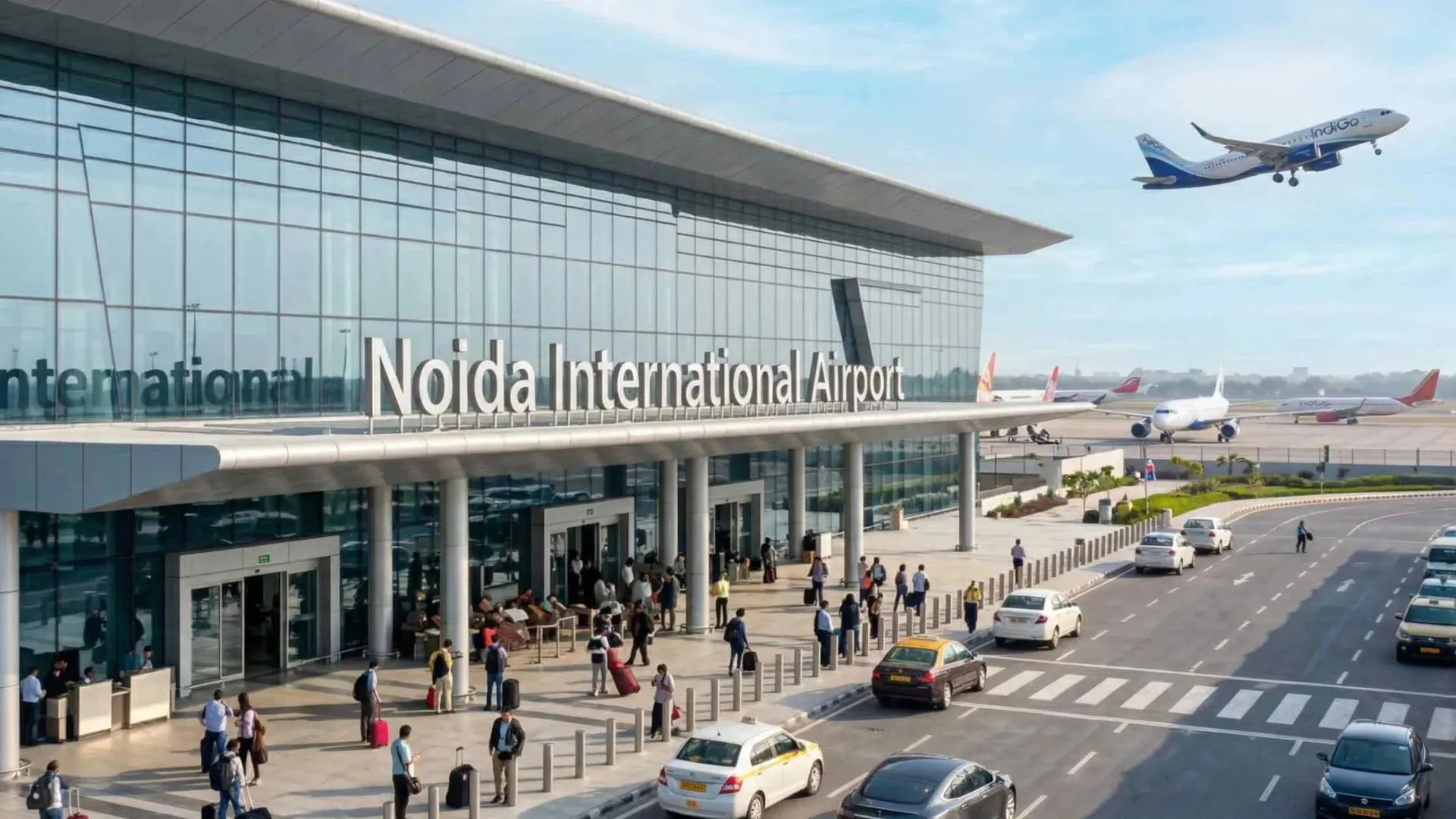
Infrastructure expansion around the upcoming international aviation hub in the National Capital Region is reshaping property markets, with the Yamuna Expressway corridor witnessing rapid appreciation in both residential plots and apartment values. Real estate analysts indicate that the development of the airport-linked economic zone is triggering a structural shift in demand patterns, positioning the region as one of northern India’s fastest-growing property markets. Recent industry assessments show that land and housing prices across the Yamuna Expressway belt have increased significantly since 2020, reflecting growing investor confidence and accelerated infrastructure activity. Market projections now suggest that property values may continue rising in the near term, with residential plots potentially appreciating by close to 28 percent and apartment prices by about 22 percent over the next two years as construction milestones approach.
The infrastructure catalyst behind this transformation is the large-scale aviation project being developed near Jewar in western Uttar Pradesh. Once operational, the airport is expected to dramatically expand aviation capacity for the National Capital Region while also triggering economic activity through logistics hubs, industrial clusters and commercial centres. Urban planners note that such mega-infrastructure investments often reshape surrounding land markets by improving connectivity, attracting businesses and creating employment corridors. Property consultants tracking the corridor say apartment prices have already multiplied over the past five years in several micro-markets, while land parcels have also recorded notable gains. Certain pockets along the expressway have witnessed particularly sharp increases as developers rush to launch residential and mixed-use projects aimed at both end-users and long-term investors. Urban development experts describe the emerging model as an “aerotropolis-led growth corridor,” where aviation infrastructure becomes the anchor for integrated urban expansion. The concept blends airports with logistics networks, business districts, residential zones and commercial centres to create self-sustaining urban clusters.
Global examples such as Amsterdam’s aviation-linked economic region are often cited as benchmarks for this type of development. Improved connectivity is also expected to play a decisive role in sustaining the property momentum. The expressway network connecting Noida, Greater Noida and Agra, along with planned transit links and logistics corridors, is likely to reduce travel times across the region. For residents and businesses alike, faster connectivity between the airport, commercial districts and industrial zones could strengthen the corridor’s appeal as a long-term investment destination. However, urban planners caution that rapid growth must be balanced with sustainable planning. Adequate public infrastructure, climate-resilient urban design and responsible land use will be critical to ensuring that the expansion benefits both residents and regional economies without triggering uncontrolled sprawl.
For the broader NCR housing market, the emerging airport corridor signals a shift in development geography. Areas that were previously considered peripheral are now evolving into major growth centres, suggesting that infrastructure-led urbanisation will continue to redefine real estate demand across northern India in the coming decade.