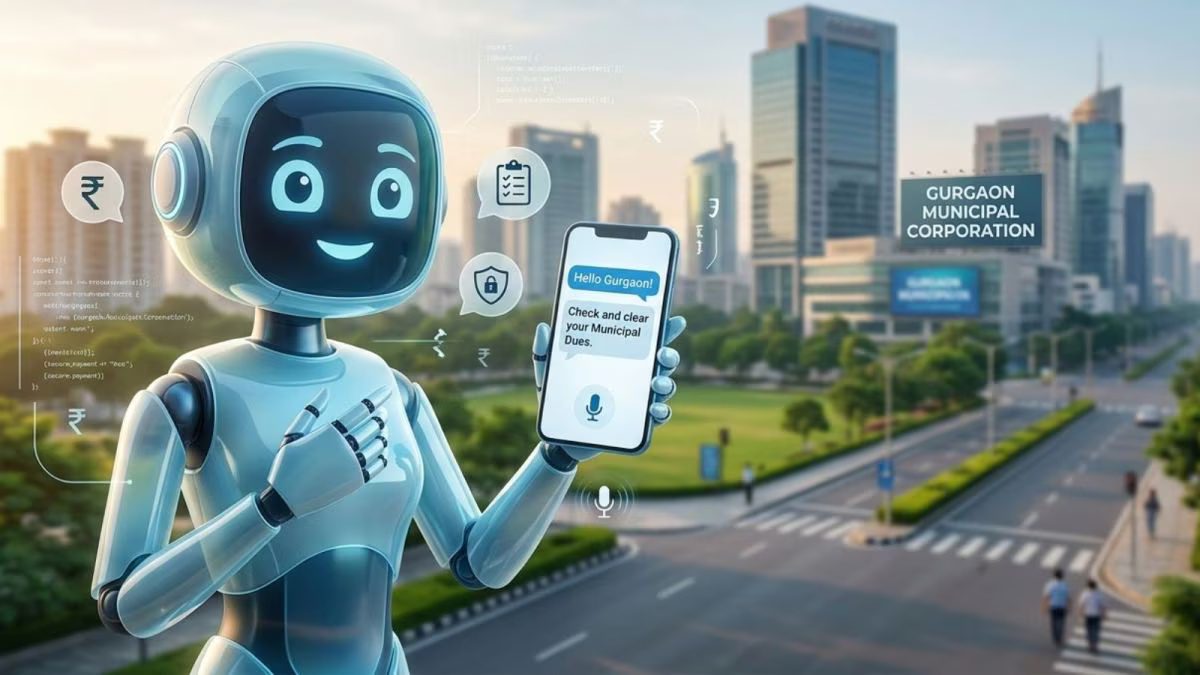
In a move to modernise civic service delivery, the national capital is preparing to introduce an AI chatbot for water complaints as part of a broader effort to digitise urban utilities and improve response times for residents. The initiative forms a key element of the city’s summer preparedness strategy, aimed at addressing recurring water supply challenges through technology-enabled governance. The proposed AI chatbot for water complaints will operate alongside a newly introduced mobile application and upgraded backend systems designed to streamline grievance redressal. Officials indicate that the platform will allow residents to register service issues through multiple channels, including mobile interfaces, websites and call centres, with each complaint mapped geographically and routed to field engineers in real time.
Urban governance experts view this as a shift from fragmented complaint handling towards integrated service management. By embedding geo-intelligence and automated escalation mechanisms, the system is expected to reduce delays that have historically affected response timelines in large and complex urban networks. Complaints that remain unresolved within defined timeframes will be escalated automatically to higher administrative levels, improving accountability within service agencies. The deployment of an AI chatbot for water complaints is being developed in collaboration with a leading technical institution, with ongoing work focused on ensuring that the system can interpret citizen queries, categorise issues accurately and trigger appropriate responses. Officials suggest that such tools could reduce the administrative burden on frontline staff while enabling residents to track the status of their complaints more transparently. The initiative comes against the backdrop of recurring supply disruptions in parts of the city, where ageing infrastructure and operational inefficiencies have periodically affected water availability.
Authorities are simultaneously working on infrastructure upgrades, including the replacement of older pipelines and improvements to treatment facilities, to support more reliable service delivery. In parallel, digital monitoring systems are being expanded across tanker operations, which continue to serve as a supplementary supply mechanism in water-stressed areas. Real-time tracking and geo-tagging of tanker movements are being introduced to curb misuse and ensure equitable distribution during peak demand periods. While tanker supply remains a temporary solution, officials emphasise that long-term investments are being directed towards strengthening pipeline networks and treatment capacity. The city’s broader water strategy also includes efforts to augment supply through inter-state coordination and improvements in reservoir storage capacity. Planning is underway to increase treatment capacity significantly over the coming decades, aligned with projected population growth and new housing development.
For rapidly expanding urban centres, the integration of digital tools such as an AI chatbot for water complaints reflects a wider transition towards data-driven infrastructure management. As cities grapple with climate pressures and resource constraints, the effectiveness of such systems will depend not only on technology adoption but also on parallel investments in physical infrastructure and institutional capacity.