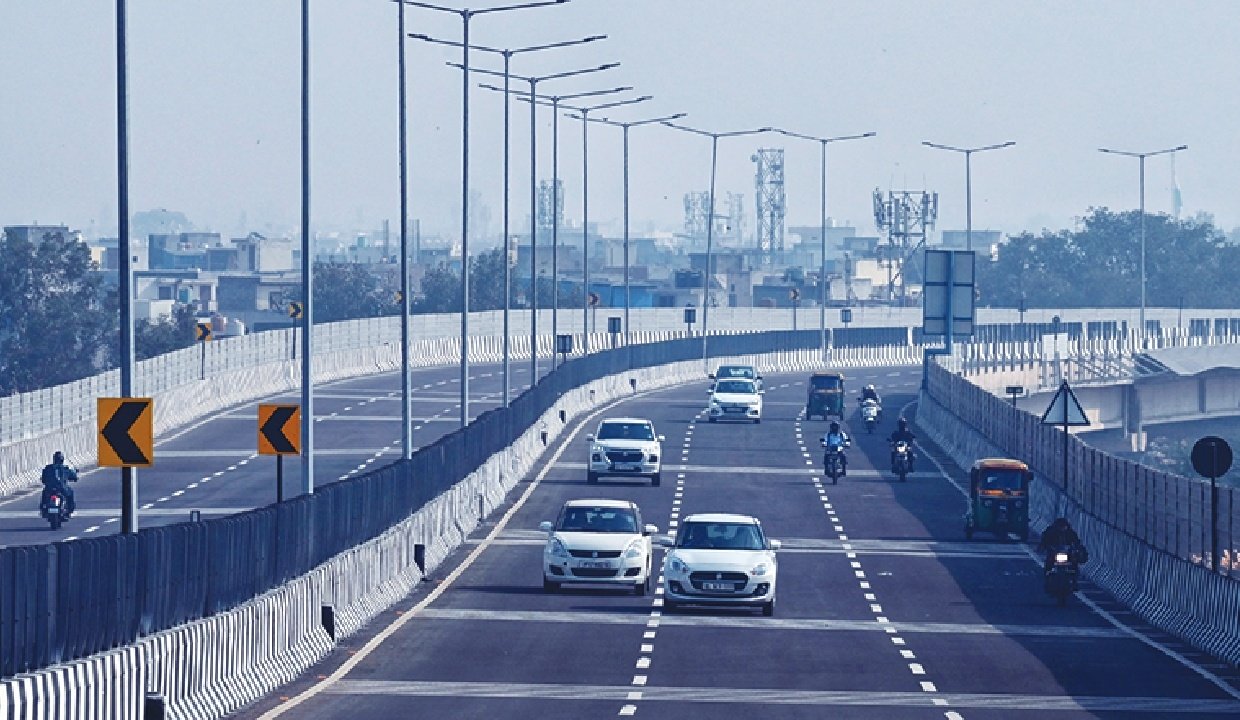
Authorities in the national capital have cleared a major infrastructure project aimed at easing congestion along one of south Delhi’s busiest arterial routes. The proposed MB Road elevated corridor, approved at an estimated cost of about ₹1,471 crore, is expected to transform mobility along the Mehrauli–Badarpur stretch by introducing a multi-level transport structure combining metro operations and road traffic. The Expenditure Finance Committee has sanctioned the project earlier this year, allowing detailed planning and execution to proceed. The corridor will run for roughly five kilometres between Saket G-Block and Pul Prahladpur, a heavily trafficked segment that connects residential neighbourhoods, institutional areas and commercial corridors across south Delhi.
Transport planners say the MB Road elevated corridor is designed as a double-decker structure that separates different modes of transport vertically. Under the proposal, vehicular traffic will use a six-lane elevated roadway on one level, while metro rail infrastructure will be developed on the upper deck. The integrated design aims to accommodate both public transport expansion and road capacity improvements within a limited urban footprint. Officials involved in the project indicate that the initiative is intended to address chronic congestion along the Mehrauli–Badarpur corridor. The route currently carries heavy commuter traffic linking south Delhi with neighbouring districts and employment clusters. Rapid urbanisation in surrounding localities has further increased pressure on the corridor, often resulting in long travel times and bottlenecks during peak hours. Beyond the elevated roadway, the project also includes the construction of two underpasses and related road improvements intended to streamline traffic movement at critical intersections. Engineers say these elements are necessary to ensure smooth entry and exit points for the corridor while maintaining continuity with the existing road network.
Implementation responsibilities have been assigned to the city’s metro rail agency, which will develop the MB Road elevated corridor in stages. Authorities expect construction to progress through phased execution, with the target of completing the entire project by December 2027. Urban mobility specialists view the project as part of a broader shift towards integrated transport infrastructure in large Indian cities. As land availability becomes increasingly constrained, planners are turning to multi-level designs that combine roadways, metro lines and utility corridors within the same structural footprint. Such approaches can expand transport capacity while limiting the need for large-scale land acquisition The corridor’s location is particularly significant for the wider south Delhi region. Areas along the Mehrauli–Badarpur axis have seen steady growth in housing, retail activity and institutional development. Improving mobility along this corridor could therefore support economic activity while reducing daily travel stress for commuters. Urban development analysts note that projects like the MB Road elevated corridor highlight the importance of balancing mobility expansion with sustainable planning principles. Integrating metro infrastructure with road development may encourage greater reliance on public transport while reducing congestion across parallel routes.
As construction planning advances, authorities will focus on managing traffic diversions, minimising environmental impact and ensuring safe integration with existing neighbourhoods. If delivered on schedule, the corridor could become a significant addition to Delhi’s evolving urban mobility network, shaping travel patterns across the southern part of the capital.