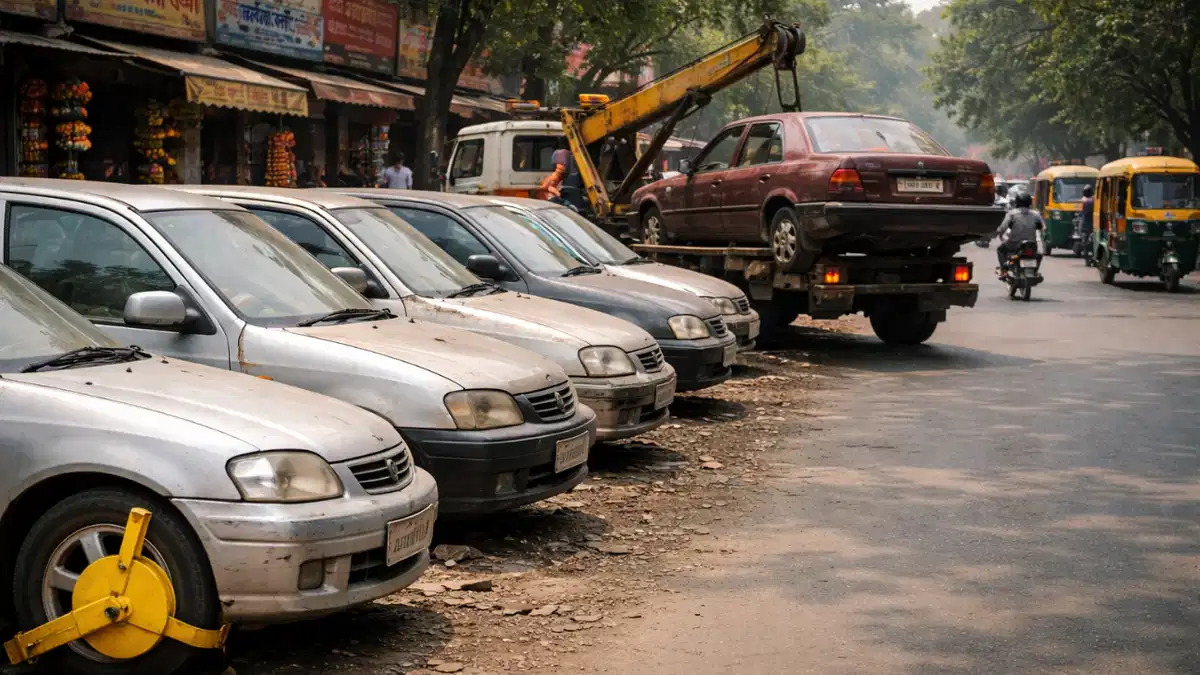
Maharashtra has moved to tighten its response to vehicular pollution by approving higher levies on ageing vehicles, signalling a policy shift that could reshape urban mobility choices across the state. The revised Maharashtra green tax framework, cleared by the state legislature, introduces steeper charges on older vehicles, including a notable increase for two-wheelers, a segment that dominates city roads.
The decision comes at a time when cities such as Mumbai, Pune and Nagpur are grappling with deteriorating air quality linked to traffic emissions. Older vehicles, often lacking modern emission control technologies, are widely seen by policymakers as a significant contributor to particulate pollution. By increasing the cost of retaining such vehicles, authorities aim to accelerate their phased replacement with cleaner alternatives. Under the updated Maharashtra green tax regime, owners of ageing vehicles will face higher one-time or periodic charges depending on vehicle category and age. For two-wheelers, which form a substantial share of daily commuters, the revised levy is expected to influence household transport decisions, particularly in lower- and middle-income segments where older vehicles are more prevalent.
Transport economists note that fiscal disincentives such as green taxes can be effective when paired with viable alternatives. “Pricing older vehicles out of the system works only if public transport and cleaner mobility options are accessible and affordable,” said a mobility expert familiar with state policy trends. Without such parallel investments, the burden may fall disproportionately on users who rely on older vehicles for cost reasons rather than choice.
The policy also intersects with the broader transition towards electric mobility. Maharashtra has already introduced incentives for electric vehicles (EVs), and the strengthened Maharashtra green tax could further tilt the economics in favour of EV adoption. However, industry observers caution that upfront costs, charging infrastructure gaps and resale uncertainties remain barriers for many consumers. From an urban planning perspective, the move aligns with efforts to reduce transport-related emissions, which account for a growing share of city-level carbon footprints. Cleaner vehicle fleets can contribute to improved air quality, lower public health costs and more climate-resilient urban systems. Yet, experts emphasise that taxation alone cannot address congestion or emissions at scale.
There are also implications for the used vehicle market and informal mobility economy. Higher ownership costs may lead to faster scrappage rates, affecting resale values and potentially disrupting livelihoods linked to repair and maintenance ecosystems. Officials indicate that the revised tax structure is part of a broader strategy to align state-level transport policies with national environmental goals. As implementation begins, attention will shift to enforcement mechanisms, compliance levels and the state’s ability to channel revenues into sustainable mobility infrastructure. For Maharashtra’s cities, the effectiveness of the Maharashtra green tax will ultimately depend on whether it triggers a structural shift towards cleaner, more efficient transport systems — or simply adds another layer of cost to an already strained urban commute.
Maharashtra Raises Green Tax On Old Vehicles