


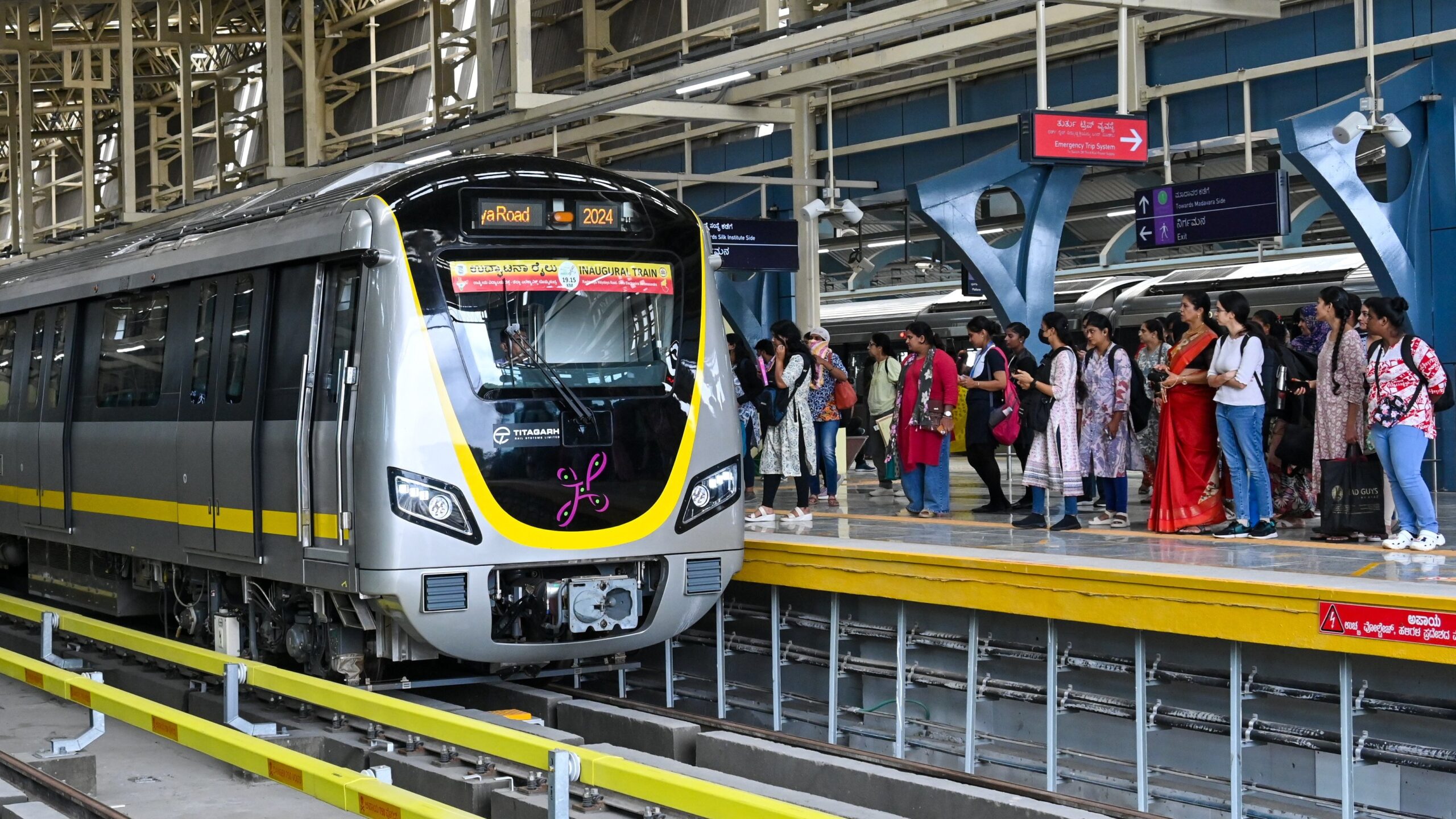
Bengaluru’s metro network is set to improve peak-hour efficiency with the addition of new trains on the Yellow Line, a move expected to significantly reduce waiting times and enhance commuter experience.
The upgrade reflects ongoing efforts to strengthen mass transit capacity in a city grappling with rapid population growth and increasing travel demand.The deployment of additional rolling stock is likely to bring down train intervals during busy hours, addressing one of the key challenges faced by daily commuters—overcrowding and long wait times. The Bengaluru Yellow Line upgrade is particularly relevant as the corridor connects important residential and employment hubs, making it a critical link in the city’s transport network.Transport experts note that frequency improvements can have a direct impact on ridership. Shorter wait times not only improve convenience but also encourage a shift from private vehicles to public transport. In a city where traffic congestion remains a persistent issue, such measures are essential for optimising existing infrastructure before expanding new corridors.From an urban planning perspective, the Bengaluru Yellow Line upgrade highlights the importance of operational efficiency alongside infrastructure expansion. While new metro lines attract attention, incremental improvements in service quality—such as increased frequency—can deliver immediate benefits to commuters and maximise the utility of existing assets.
The move also aligns with broader sustainability goals.
By making metro travel more reliable and accessible, authorities aim to reduce dependence on road-based transport, thereby lowering emissions and improving air quality. Electrified rail systems are considered a cornerstone of low-carbon urban mobility, particularly in rapidly growing cities like Bengaluru.Economic implications are equally significant. Enhanced metro services can improve productivity by reducing commute times and increasing workforce accessibility across different parts of the city. Additionally, areas along the Yellow Line may witness increased real estate interest, as improved connectivity often drives demand for both residential and commercial spaces.However, experts caution that frequency improvements must be supported by adequate infrastructure, including station capacity, signalling systems and maintenance facilities. Without these, the benefits of additional trains may be constrained. Integration with feeder services and last-mile connectivity will also be critical to ensuring that more commuters can access the metro network efficiently.The Bengaluru Yellow Line upgrade comes at a time when cities are re-evaluating transport strategies to prioritise efficiency, sustainability and user experience.
As demand for public transport continues to grow, such targeted interventions are likely to play a key role in shaping more resilient urban mobility systems.Looking ahead, the focus will be on sustaining service quality while expanding network coverage. For Bengaluru, balancing capacity enhancements with long-term infrastructure development will be essential to building a transport system that meets the needs of a dynamic and expanding urban population.
Also Read:Bengaluru Gas Pipeline Project Faces Adoption Challenges
Bengaluru Metro adds trains to ease peak congestion
