


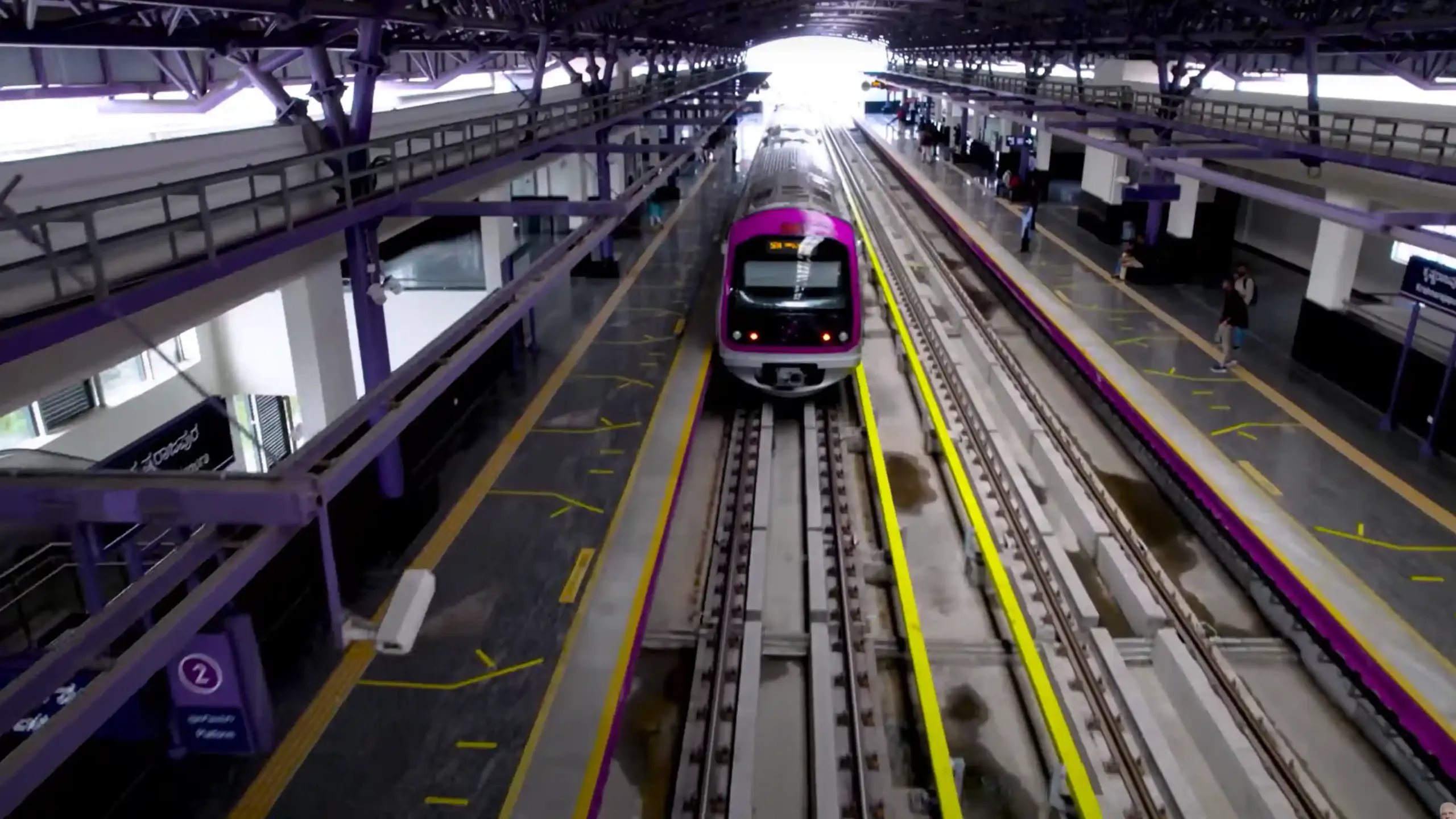
Bengaluru’s metro network continues to strengthen its role in urban mobility, with services on the Purple Line gaining traction as a key east-west transit corridor.
The line, which connects major residential, commercial and industrial zones, is increasingly central to efforts aimed at reducing congestion and improving commuter efficiency in the city.The operational progress of the Bengaluru Purple Line reflects broader investments in mass transit infrastructure designed to accommodate rising travel demand. As one of the busiest corridors in the metro network, it serves a diverse commuter base, including office workers, students and daily wage earners. The improved service frequency and connectivity are expected to enhance reliability and reduce travel time across critical stretches.Transport planners highlight that the Bengaluru Purple Line plays a strategic role in integrating different parts of the city, linking densely populated neighbourhoods with employment hubs. By offering a high-capacity alternative to road transport, the metro line helps alleviate pressure on arterial roads, which are often prone to severe congestion during peak hours.From a sustainability perspective, metro systems such as the Bengaluru Purple Line contribute to reducing the city’s carbon footprint by encouraging a shift away from private vehicles.
Electrified rail transport produces lower emissions per passenger compared to conventional modes, aligning with long-term climate goals and efforts to improve urban air quality.The expansion and optimisation of services also have economic implications. Enhanced connectivity can stimulate commercial activity along transit corridors, influencing real estate development and land use patterns. Areas with improved metro access often see increased demand for both residential and commercial properties, supporting transit-oriented development models.Urban development experts note that the success of the Bengaluru Purple Line depends not only on infrastructure but also on last-mile connectivity. Efficient integration with feeder buses, pedestrian pathways and non-motorised transport options is essential to maximise ridership and accessibility. Without these linkages, the full potential of metro systems may remain underutilised.There are also operational challenges to consider, including maintaining service reliability, managing peak-hour crowding and ensuring passenger safety. Continuous monitoring and upgrades to signalling and rolling stock are necessary to sustain performance as ridership grows.
As Bengaluru continues to expand, the role of metro corridors like the Purple Line will become increasingly significant in shaping urban mobility patterns. Strengthening such infrastructure is key to building a more efficient, inclusive and environmentally sustainable transport system, capable of supporting the city’s long-term growth and resilience.
Also Read:Bengaluru Governance Reform Introduces Multi Corporation Model
