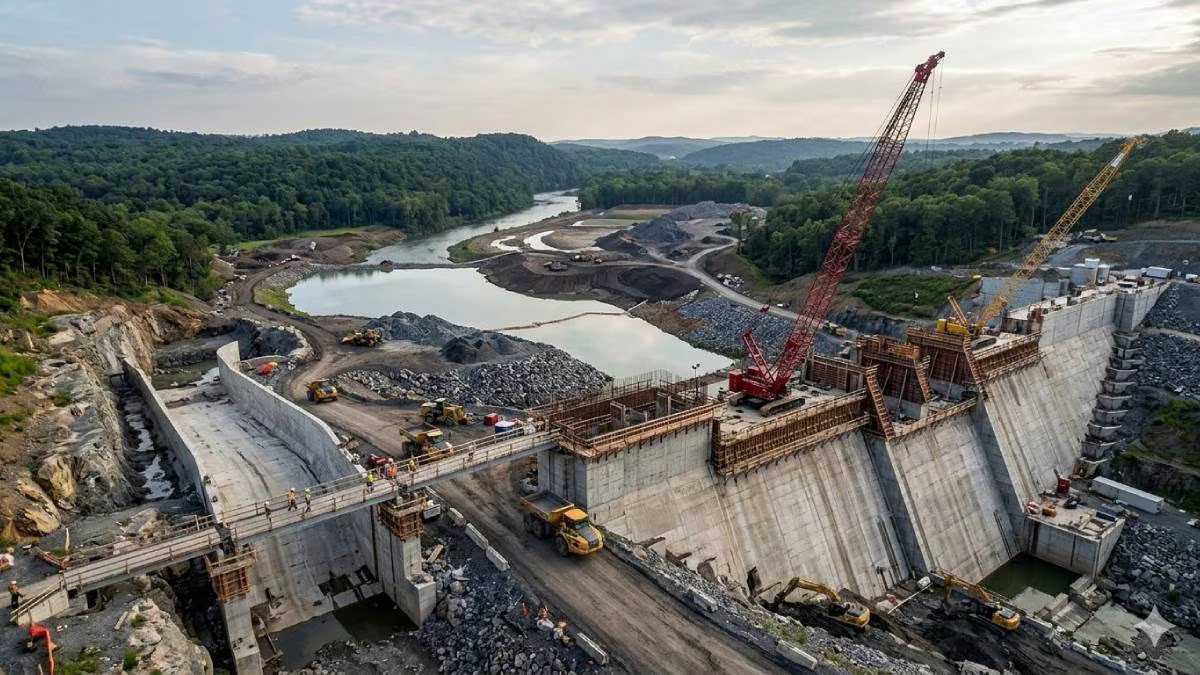
Mumbai’s long-delayed plan to augment its drinking water capacity is back in focus after a revised financial proposal for the Gargai dam project is set to be reconsidered by the civic authority’s key decision-making committee. The development follows a renegotiation process that significantly reduced the project cost, potentially easing earlier concerns over financial prudence while keeping the city’s future water security in view.
The Gargai dam, proposed in Palghar district, is expected to become Mumbai’s first major addition to its reservoir network in over a decade. Officials indicate that after multiple rounds of discussions with the selected contractor, the project cost has been brought much closer to the municipal estimate. This reduction is seen as critical in reviving the proposal, which had earlier faced resistance over a higher-than-expected bid. For a city that relies heavily on distant water sources, the Gargai dam is positioned as a strategic intervention to meet rising demand driven by population growth and urban expansion. Once operational, the project is projected to add hundreds of millions of litres of water per day to Mumbai’s supply, potentially easing seasonal shortages and reducing dependence on existing reservoirs.
Urban infrastructure experts note that cost rationalisation in large-scale public works is increasingly becoming a focal point of governance, particularly in projects with long gestation periods. In this case, civic authorities appear to have leveraged negotiations to align contractor pricing with realistic risk assessments and project timelines, improving financial viability without altering core project scope. However, the path ahead is not without challenges. The project is still awaiting environmental and forest-related approvals, reflecting the complex trade-offs between infrastructure development and ecological preservation. The proposed site lies within a sensitive zone, requiring clearances from multiple regulatory bodies before construction can begin.
Officials suggest that the initial phase, if approved, will focus on preparatory work, including land-related processes and rehabilitation measures for affected settlements. Construction activities are expected to follow in subsequent years, alongside the integration of energy-efficient systems such as a small hydropower unit to offset operational electricity needs. From a sustainability perspective, projects like the Gargai dam raise broader questions about how cities balance water security with environmental impact. While additional storage capacity is crucial, experts argue that parallel investments in demand management, recycling, and leak reduction are equally important to build a climate-resilient urban water system.
As Mumbai prepares to revisit the Gargai dam proposal, the outcome will not only influence the city’s water infrastructure pipeline but also signal how future large-scale projects are evaluated in terms of cost discipline, ecological sensitivity, and long-term urban resilience.
Mumbai Gargai Dam Proposal Returns After Cost Revision