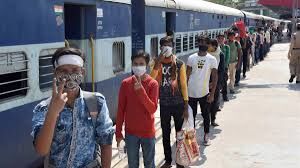
Patna Darbhanga Daily Trains Sought By Migrant Workers
Growing pressure on India’s inter-state transport network has resurfaced as migrant workers from Bihar living in southern states demand daily train services connecting them directly to Patna and Darbhanga. The demand highlights the widening gap between travel demand and rail capacity on one of the country’s most heavily used migration corridors, particularly during peak seasons and festival periods.
Transport officials and passenger groups say thousands of workers based in Telangana and neighbouring regions depend on trains for regular travel to northern Bihar, especially to cities such as Patna and Darbhanga, which serve as key entry points for smaller towns and rural districts. Existing trains are often fully booked weeks in advance, forcing passengers to rely on long waiting lists or multiple train changes, a situation that has become more frequent in recent years as migration has intensified. The demand for daily services is not new but appears to be gaining urgency as travel volumes rise. Data from railway reports and earlier news coverage show that millions of migrants return to Bihar every year during festivals such as Holi and Chhath, placing enormous pressure on the East Central Railway network. In some years, authorities have had to run hundreds of special trains to handle the rush, underscoring how seasonal demand far exceeds the capacity of regular services. Urban and transport planners say the issue reflects a deeper structural challenge. While migration from Bihar to southern states has expanded rapidly due to construction, service-sector and industrial jobs, rail capacity along these long-distance routes has grown far more slowly.
For example, long-distance trains connecting southern cities to Bihar remain limited compared to the number of passengers travelling on the route, which leads to overcrowded general compartments and long waiting lists even for reserved seats. Cities such as Darbhanga have also emerged as major transport hubs in recent years, serving not only their own districts but also neighbouring regions in north Bihar. With the city now connected to major rail corridors and even operating a commercial airport, passenger demand has increased significantly, making the case for more frequent long-distance train services stronger than before. The demand for daily trains is therefore being viewed not just as a transport issue but as a broader urban-mobility and economic concern. Reliable connectivity affects how easily workers can travel between employment centres and their home regions, influencing labour mobility, remittance flows and even long-term migration patterns. For rapidly growing cities in Bihar, improved long-distance connectivity can also support economic growth by making it easier for businesses, students and workers to move between regions.
If railway authorities respond by increasing train frequency or introducing additional daily services, the impact could extend well beyond convenience for travellers. It could help reduce overcrowding, improve safety on long-distance routes and strengthen the role of smaller cities such as Darbhanga as key nodes in India’s evolving migration-driven urban network.