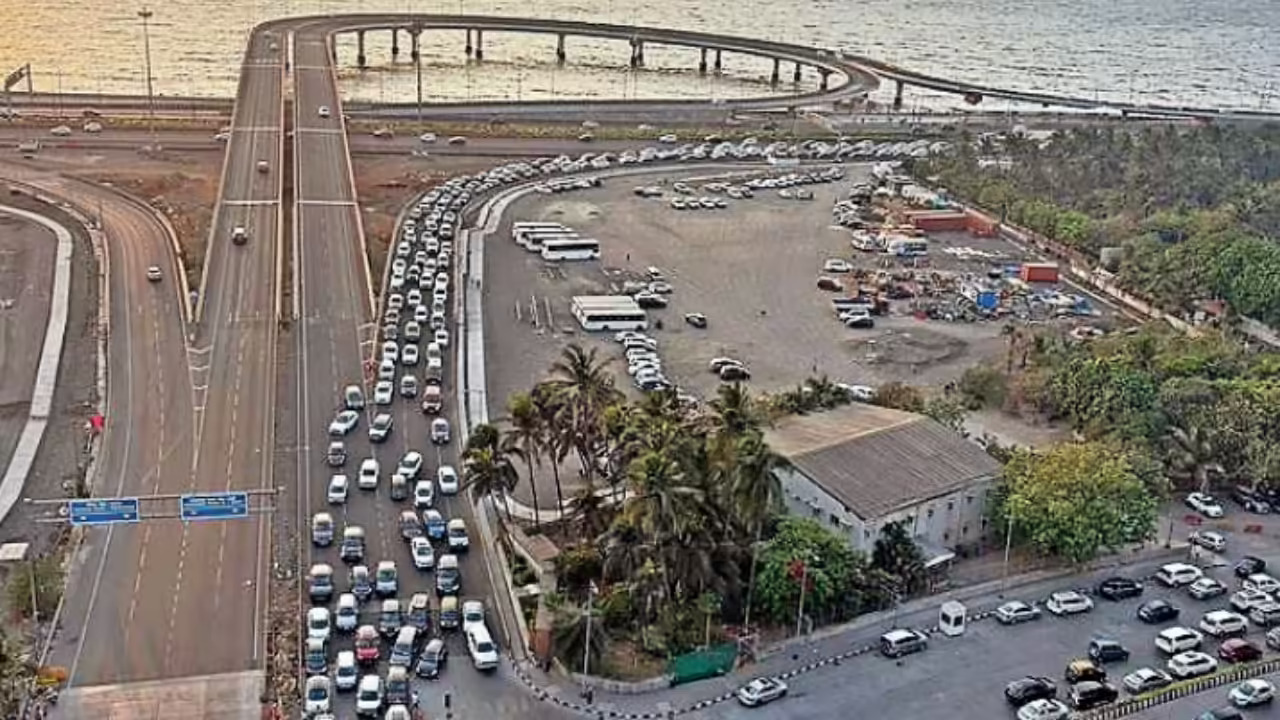
A growing traffic choke point at the southern end of Mumbai’s coastal corridor is prompting residents to seek design changes, with calls intensifying for an additional exit near Nepeansea Road to ease mounting congestion around Breach Candy. The issue has surfaced despite the high-speed corridor significantly cutting travel time across the city’s western seaboard, highlighting how last-mile planning gaps can undermine large-scale infrastructure gains.
The Mumbai coastal road, positioned as a transformative urban mobility project, has reduced travel durations between key nodes such as the Bandra-Worli stretch and south Mumbai to under ten minutes. However, commuters report that vehicles often spend far longer navigating the final approach into the Breach Candy area, where traffic merges onto narrower internal roads. This imbalance between corridor speed and exit capacity has created a daily bottleneck affecting both private vehicles and local neighbourhood traffic. Urban planners note that such congestion points are not uncommon in high-capacity express corridors that lack distributed entry and exit points. In this case, the absence of a planned Nepeansea Road interchange is being cited as a critical gap. Residents argue that an additional dispersal route would allow traffic to spread across multiple neighbourhood streets rather than funnelling into a single junction, thereby reducing peak-hour gridlock.
The demand has also drawn attention to how earlier project blueprints evolve over time. Planning-stage provisions for a Nepeansea Road exit were reportedly dropped during final design approvals, reflecting trade-offs between land availability, environmental considerations, and project costs. However, with traffic volumes now stabilising post-launch, the real-world impact of such omissions is becoming clearer. From a broader urban development perspective, the situation underscores the importance of integrating high-speed infrastructure with local street networks. Experts point out that without adequate exit planning, even projects designed to reduce emissions and improve mobility can inadvertently increase idling time, fuel consumption, and neighbourhood-level pollution—contradicting the goals of sustainable, low-carbon urban transport.
Civic authorities have acknowledged receiving representations regarding the proposed exit and are in discussions with state-level agencies over land requirements. Any modification at this stage would involve complex engineering adjustments, regulatory clearances, and coordination across multiple stakeholders. For Mumbai, where infrastructure expansion is increasingly tied to climate resilience and liveability, the episode serves as a reminder that mobility projects must balance speed with accessibility. As authorities evaluate the feasibility of a Nepeansea Road exit, the outcome could shape how future phases of the Mumbai coastal road integrate with dense, mixed-use urban districts.
South Mumbai Voices Grow For Nepeansea Road Coastal Access