


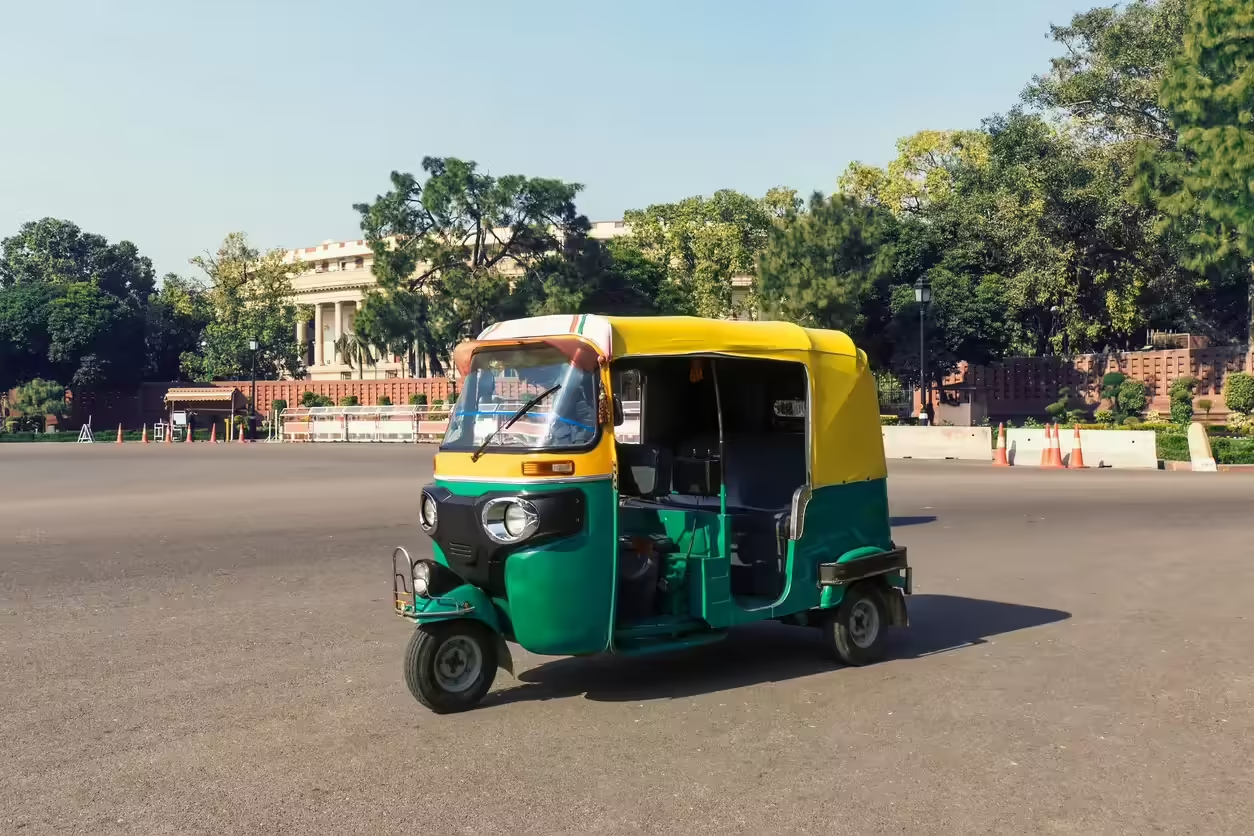
A recent operational shift in Kolkata’s shared auto-rickshaw services—allowing up to five passengers per vehicle—has triggered debate over commuter safety, regulatory enforcement and the pressures facing urban mobility systems.
The move reflects growing demand for affordable, last-mile connectivity in a city where public transport networks are often stretched during peak hours.The revised practice, now visible across several routes, effectively increases carrying capacity in vehicles originally designed for fewer passengers. While transport operators argue that the change helps address commuter demand and improves earnings for drivers, urban mobility experts caution that such adjustments may compromise passenger safety and vehicle stability. The Kolkata auto rule change has therefore become a focal point in discussions around balancing efficiency with regulation.Shared autos form a critical part of Kolkata’s informal transport network, bridging gaps between metro stations, bus routes and residential neighbourhoods. Their flexibility and low cost make them indispensable for daily commuters, particularly in areas with limited formal transit coverage. However, the sector operates within a loosely regulated framework, where enforcement often varies across locations.
Transport analysts note that increasing passenger limits without parallel upgrades in vehicle design, road infrastructure or safety oversight could amplify risks. Overcrowding may affect braking efficiency, increase wear and tear, and heighten the likelihood of accidents, especially on congested urban roads. From a planning perspective, the Kolkata auto rule change underscores the need for clearer policy direction on intermediate public transport systems.
The issue also highlights broader challenges in urban mobility planning. As cities expand and travel demand rises, reliance on informal transport modes continues to grow. Experts argue that integrating such services into formal transport strategies—through licensing reforms, route rationalisation and safety standards—could improve both efficiency and commuter protection. In Kolkata’s case, this may involve revisiting vehicle specifications and enforcing passenger limits aligned with safety norms.There are economic considerations as well. For drivers, higher passenger capacity can translate into improved daily income, particularly amid rising fuel costs and operational expenses. Yet, without structured fare regulation and financial support mechanisms, such practices risk becoming short-term fixes rather than sustainable solutions.From an environmental standpoint, optimising shared mobility can reduce the number of vehicles on the road, potentially lowering emissions. However, this benefit depends on maintaining safety and efficiency standards. Urban planners emphasise that sustainable transport must balance affordability, accessibility and safety, rather than prioritising one at the expense of others.
As Kolkata continues to modernise its transport infrastructure, including metro expansions and bus network upgrades, the role of shared autos will remain significant. The challenge for authorities lies in formalising this segment without undermining its flexibility. The Kolkata auto rule change serves as a reminder that incremental adjustments in urban transport systems must be accompanied by robust planning and enforcement to ensure long-term resilience and commuter well-being.
Also Read:Kolkata Reading Spaces Shape Urban Cultural Economy
