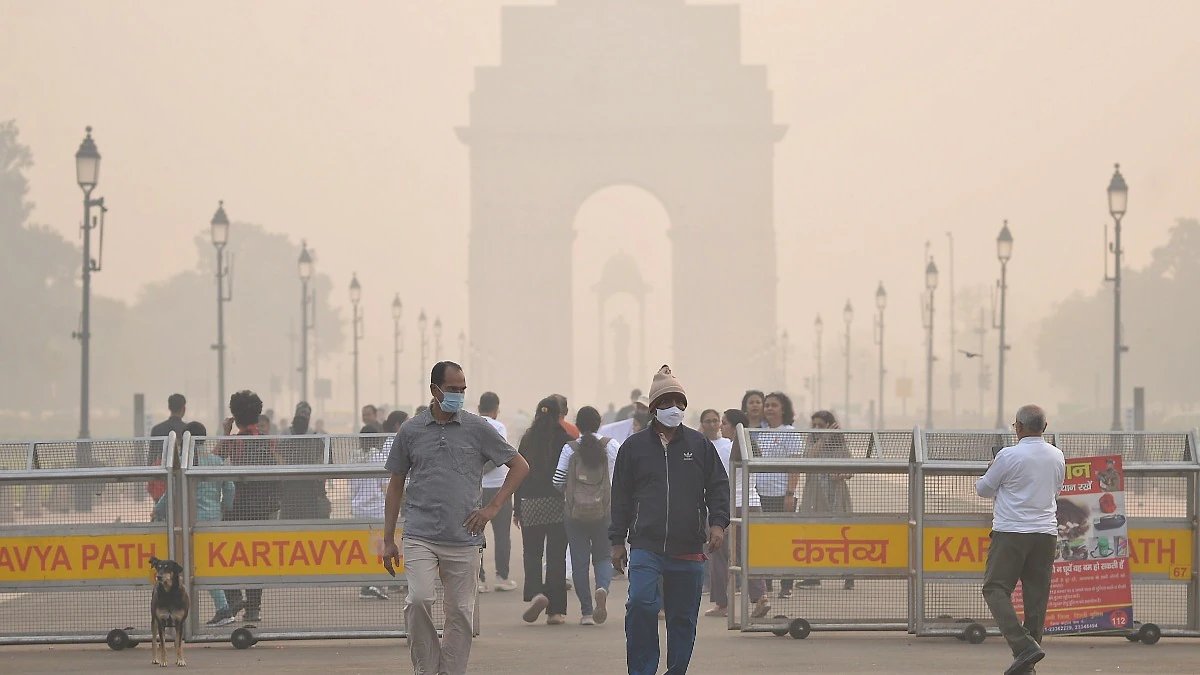
India recorded a modest decline in national fine particulate pollution in 2026, but the improvement has done little to stabilise the Delhi AQI, which continues to experience sharp seasonal spikes and hazardous pollution episodes. Environmental monitoring data indicates that while annual averages have marginally improved, short-term surges remain a serious public health concern in the capital and across the Indo-Gangetic Plain. Air quality researchers note that India’s average PM2.5 concentration fell slightly in recent assessments, signalling incremental progress in national pollution control efforts. However, the situation in the national capital remains far more volatile. The Delhi AQI still fluctuates dramatically during certain months, driven by a mix of seasonal meteorological conditions and persistent emission sources.
Spring dust storms have emerged as a significant factor influencing short-term air quality in northern India. Environmental monitoring agencies observed a notable pollution surge in April when a large regional dust event swept across several northern states, raising particulate levels in the capital. Scientists say such natural events, intensified by land degradation and changing climatic patterns, are increasingly interacting with urban emissions to amplify pollution episodes. Winter continues to represent the most challenging season for Delhi’s air quality management. During colder months, stagnant atmospheric conditions trap pollutants close to the ground, leading to rapid deterioration in the Delhi AQI. Agricultural residue burning in neighbouring states, vehicular emissions, industrial activity and construction dust collectively contribute to severe pollution peaks during this period. The problem extends beyond the capital. The wider Indo-Gangetic Plain remains one of the world’s most polluted regions, with several cities recording significant increases in fine particulate concentrations during peak pollution months. Air quality experts say this regional pattern highlights the interconnected nature of pollution sources and the limitations of city-specific interventions.
Healthcare professionals in Delhi report that fluctuations in the Delhi AQI continue to correlate with increased hospital visits during high-pollution periods. Respiratory illnesses, asthma attacks and cardiovascular complications tend to rise when particulate levels climb sharply, particularly during winter smog episodes. Policy analysts say India’s national air pollution control strategy has delivered mixed results. Programmes aimed at reducing emissions have helped raise awareness and introduce monitoring systems, but implementation has varied widely across regions. Experts argue that current mitigation efforts often focus heavily on road dust management while giving comparatively less attention to other major sources such as biomass burning, transport emissions and industrial pollution. Urban planners emphasise that improving air quality requires coordinated action across multiple sectors. Cleaner mobility systems, stronger industrial emission standards, better construction practices and agricultural transition policies are widely seen as essential components of long-term air quality management.
For rapidly expanding metropolitan regions like Delhi, addressing air pollution is increasingly linked to broader goals of building healthier, climate-resilient cities. Experts say sustained structural reforms, rather than short-term emergency measures, will be critical if the capital hopes to stabilise the Delhi AQI and reduce pollution exposure for millions of residents.