


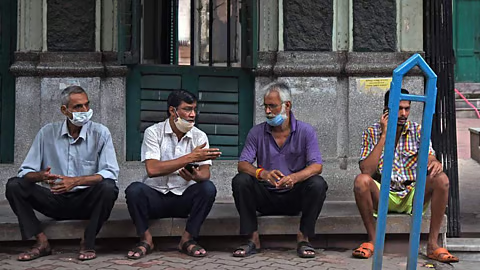
A growing network of artists, writers and performers in Kolkata is reshaping how the city’s past and present are understood, using storytelling as a tool to reinterpret its layered urban identity.
Through public events, performances and independent initiatives, these creators are revisiting histories of neighbourhoods, migration and cultural change, offering alternative narratives that reflect the lived realities of a rapidly transforming metropolis.At the centre of this movement are Kolkata storytellers, who are drawing from oral histories, personal archives and community memory to document the city beyond official records. Their work spans multiple formats—live readings, theatre, digital media and heritage walks—bringing attention to voices often absent from mainstream urban discourse. This shift is particularly significant in a city where informal settlements, ageing infrastructure and shifting demographics continue to shape everyday life.
Urban experts note that such cultural practices are increasingly intersecting with city planning and development conversations. As Kolkata navigates pressures of densification, climate vulnerability and economic restructuring, storytelling initiatives are helping map intangible heritage—stories tied to streets, markets and public spaces that risk being overlooked in formal redevelopment processes. By foregrounding these narratives, Kolkata storytellers are contributing to a broader understanding of what constitutes urban value.
The resurgence of interest in local storytelling also reflects a wider global trend, where cities are turning to cultural documentation as a means of strengthening community resilience. Industry observers suggest that storytelling can act as a bridge between policymakers and citizens, making complex urban challenges—such as displacement, environmental stress and infrastructure gaps—more accessible and relatable. In Kolkata, this approach is helping reframe conversations around who the city is being designed for.There are also economic dimensions to this shift. Cultural events and storytelling platforms are creating micro-economies within the creative sector, generating opportunities for independent artists, curators and small businesses. As cities increasingly recognise the role of the creative economy in urban growth, such initiatives could influence how cultural infrastructure is supported, from adaptive reuse of historic buildings to the development of community-led public spaces.Importantly, the narratives being produced are not confined to nostalgia. Many Kolkata storytellers are engaging with contemporary issues, including migration patterns, gender dynamics and the changing nature of work. By situating these themes within everyday experiences, they offer insights into how urban transitions are felt at the ground level, complementing data-driven approaches to city planning.
As Kolkata continues to evolve, the role of storytelling in shaping its identity is likely to expand. For city administrators and developers, integrating these perspectives into planning frameworks could help ensure that growth remains inclusive and sensitive to local context. The work of Kolkata storytellers highlights a broader shift in urban thinking—where cultural memory and community voices are seen not as peripheral, but as essential to building sustainable and people-centric cities.
Also Read:Kolkata Entrepreneur Durham High Sheriff Role Significance
