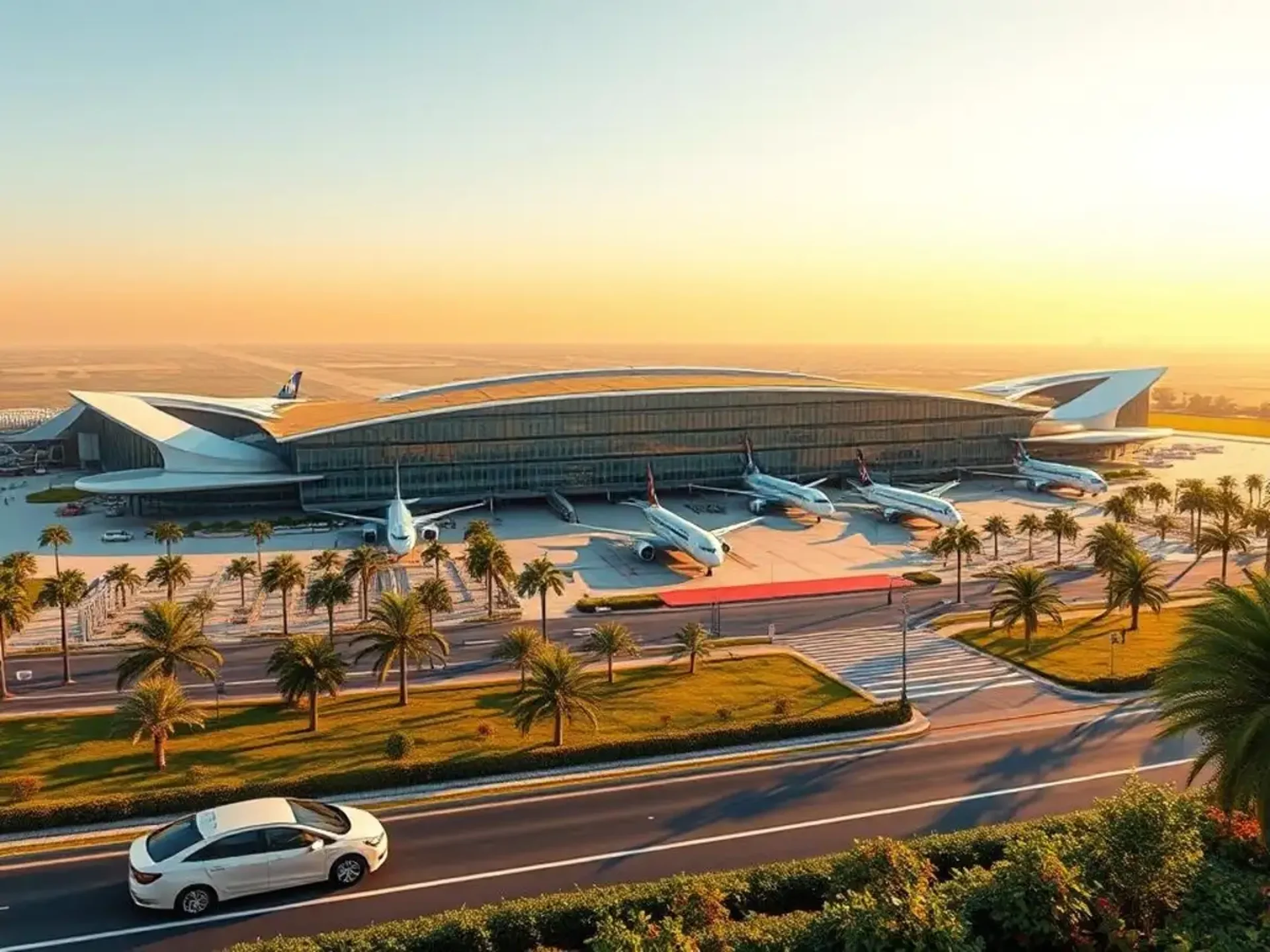
Noida Airport Opening Reshapes NCR Real Estate Growth
The operational launch of the Noida International Airport at Jewar is set to alter development patterns across the National Capital Region (NCR), with early signals pointing to a gradual shift in real estate and economic activity towards the eastern corridors of the metropolitan region. Urban economists and property analysts view the Noida Airport as a long-term infrastructure anchor that could rebalance growth away from saturated hubs such as central Delhi and Gurugram. While immediate impacts are expected to remain measured, the project introduces a second aviation node that may reshape land use, investment flows, and housing demand over the coming decades.
The Noida Airport enters service with a relatively modest initial passenger handling capacity compared to the region’s primary aviation hub. However, planners emphasize that its significance lies in phased expansion, which is expected to scale substantially over time. As capacity increases, the airport is likely to support logistics networks, business districts, and employment clusters, particularly along the Yamuna Expressway and adjoining areas. Real estate activity in the vicinity has already shown early movement, with land values witnessing incremental growth in recent years. Market observers attribute this to a mix of speculative interest and anticipation of infrastructure-led demand. However, the pace of appreciation has remained moderate, suggesting that end-user-driven demand is yet to fully materialize. In the near term, the Noida Airport is expected to benefit affordable and mid-income housing segments, as job creation linked to construction, logistics, and airport operations begins to take shape. This aligns with broader trends in infrastructure-led urbanization, where early-stage growth is often anchored by workforce housing and essential services.
Commercial real estate, including office spaces, hospitality, and organized retail, is Most Usedlikely to see a more gradual build-out. Analysts indicate that these segments typically follow once passenger traffic stabilizes and supporting infrastructure—such as metro connectivity, road networks, and social amenities—reaches maturity. From an urban planning perspective, the emergence of the Noida Airport presents both opportunities and challenges. The development of a new growth corridor offers scope for planned expansion, potentially reducing pressure on existing urban centers. At the same time, it raises questions around sustainable land use, environmental management, and infrastructure readiness. Experts highlight the importance of integrating the airport-led growth model with climate-responsive planning. Given the scale of development anticipated, ensuring efficient public transport, green building practices, and water resource management will be critical to avoiding the pitfalls of unplanned urban sprawl. The airport’s role as a counterbalance within the NCR’s aviation network could also improve regional connectivity and resilience. By distributing passenger traffic and logistics operations across multiple nodes, the region may achieve greater operational efficiency while reducing congestion at existing facilities.
As the Noida Airport begins its operational journey, its long-term impact will depend on coordinated planning, infrastructure delivery, and policy alignment. The coming years will determine whether this new gateway can evolve into a sustainable urban catalyst, shaping a more balanced and resilient NCR growth model.