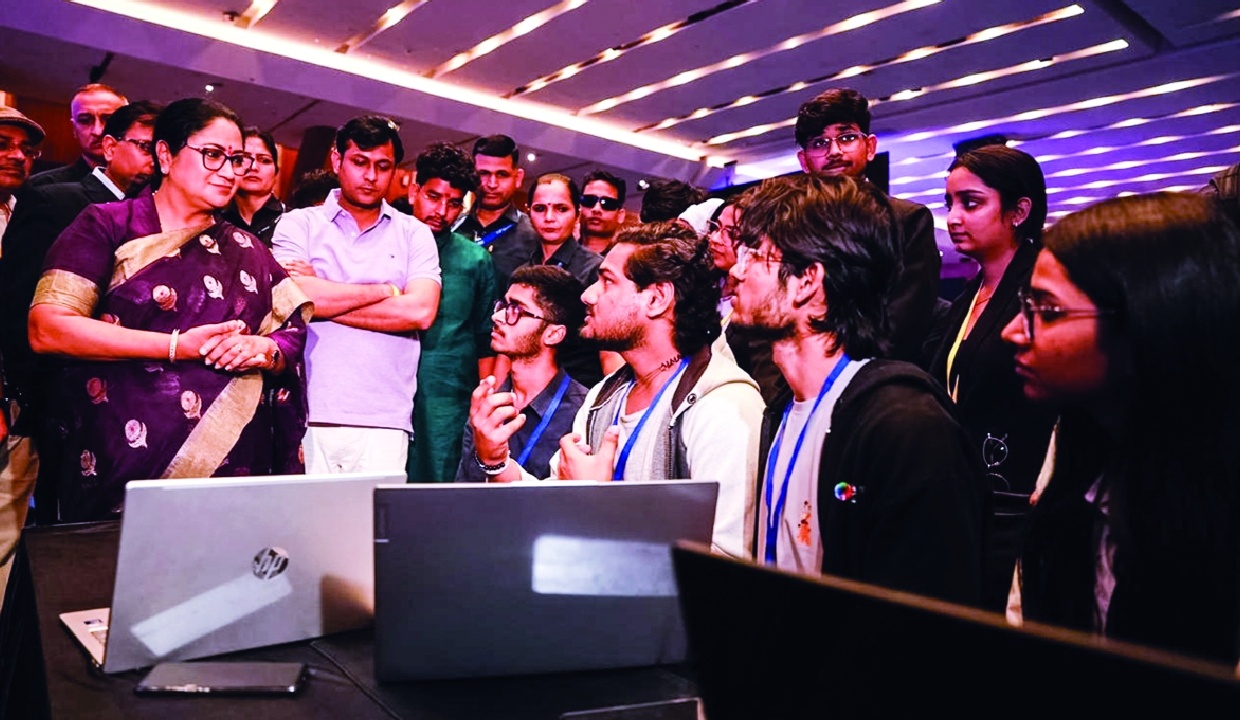
Delhi’s push to position itself as a future-ready urban hub gained momentum at a major national hackathon, where policymakers emphasised the role of youth-led innovation in shaping a more inclusive, technology-driven city. At the centre of discussions was the evolving concept of Delhi 2.0, a framework that seeks to integrate digital tools, civic participation, and sustainable planning into the capital’s next phase of development. The initiative reflects a growing recognition that urban challenges—from mobility and governance to environmental management—require solutions that combine technology with social insight.
Officials indicated that the event showcased a wide spectrum of ideas, many focused on improving public service delivery, enhancing transparency, and addressing gaps in urban infrastructure. From data-driven governance tools to solutions aimed at reducing resource inefficiencies, the projects highlighted how innovation ecosystems are increasingly aligned with real-world city needs. Urban planners note that the emphasis on Delhi 2.0 signals a shift in policy thinking, where cities are no longer viewed solely as physical spaces but as dynamic systems shaped by data, citizen engagement, and adaptive infrastructure. In this context, hackathons and innovation platforms are emerging as testing grounds for scalable solutions that can be integrated into governance frameworks. The focus on youth participation also reflects broader demographic and economic trends. With a large share of India’s population under the age of 35, cities like Delhi are looking to harness this demographic dividend to drive problem-solving at scale. Industry experts suggest that such initiatives can bridge the gap between policy design and on-ground implementation by bringing fresh perspectives into public systems.
Beyond technology, the discussions underscored the importance of inclusivity in urban innovation. Solutions that address accessibility, affordability, and equitable service delivery are increasingly being prioritised, particularly in a city marked by socio-economic diversity. This aligns with global trends where smart city initiatives are being redefined to focus on people-centric outcomes rather than purely digital infrastructure. Environmental considerations also formed an implicit layer within the Delhi 2.0 narrative. As the capital grapples with air quality concerns and climate-related risks, integrating sustainability into innovation frameworks is becoming essential. Projects that promote energy efficiency, reduce emissions, or optimise resource use are likely to gain traction in future policy support mechanisms. Observers point out that while such events generate momentum, the challenge lies in translating ideas into deployable solutions. This requires institutional support, funding pathways, and regulatory clarity to ensure that promising innovations do not remain confined to pilot stages. For Delhi, the emergence of Delhi 2.0 as a guiding vision represents an attempt to align technological advancement with governance reform and environmental responsibility.
If effectively implemented, it could reshape how the city approaches urban development—moving towards systems that are not only smarter but also more resilient and inclusive. The coming years will determine whether this innovation-driven approach can deliver measurable improvements in urban living, setting a benchmark for other Indian cities navigating similar transitions.