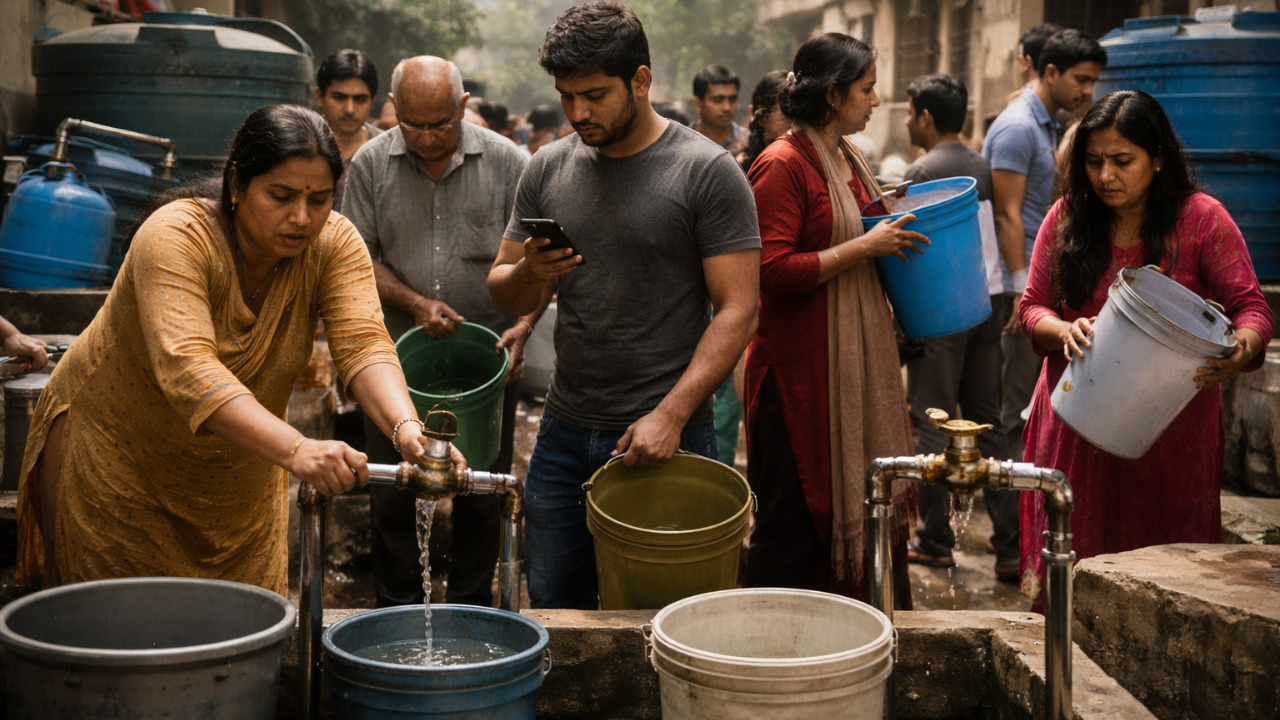
A temporary but widespread Delhi water supply disruption has affected several central and northern parts of the capital, exposing the fragility of urban water infrastructure at a time when demand continues to rise. Repair work at a major treatment facility has reduced supply capacity, prompting emergency measures and raising questions about system resilience in one of India’s most water-stressed megacities. The disruption follows technical faults linked to pipeline damage at a key treatment plant that serves densely populated and high-demand zones. While partial restoration has been achieved, officials indicate that the system is currently operating below its designed output, leading to restricted supply schedules in multiple neighbourhoods. Areas with mixed residential, institutional and commercial demand have reported reduced or limited water availability, particularly outside designated supply hours.
To bridge the gap, authorities have deployed additional tanker services across affected zones. While this provides short-term relief, urban planners note that tanker-based distribution is neither sustainable nor equitable, often favouring accessible areas while leaving vulnerable communities underserved. The reliance on such measures highlights the need for more decentralized and resilient water systems. The ongoing Delhi water supply disruption also underscores the operational challenges within ageing infrastructure networks. Much of the city’s water distribution system was not designed to handle current population densities or consumption patterns. Experts point out that leakages, delayed maintenance cycles, and limited redundancy in supply networks make the system prone to cascading failures when a single node is compromised. From an economic perspective, disruptions of this nature carry ripple effects. Commercial establishments, healthcare institutions and hospitality hubs depend on uninterrupted water supply for daily operations. Even short-term interruptions can increase operational costs, especially when businesses turn to private water sourcing solutions.
Environmental implications are equally significant. Intermittent supply often leads to over-extraction of groundwater as households and establishments attempt to compensate for shortages. This intensifies pressure on already declining aquifers, complicating long-term sustainability goals. Urban development experts stress that cities must move towards integrated water management systems that combine surface water, groundwater recharge, recycling and demand-side efficiency. The incident also brings attention to the importance of infrastructure planning aligned with climate resilience. With increasing variability in rainfall patterns and rising temperatures, cities like Delhi face compounded risks to water security. Strengthening treatment capacity, upgrading pipelines, and incorporating smart monitoring systems are seen as critical steps to mitigate such disruptions in the future.
As restoration efforts continue, the episode serves as a reminder that infrastructure reliability is central to liveability and economic stability. Ensuring consistent water access will require not only technical upgrades but also governance reforms, investment in maintenance, and a shift towards more sustainable urban water practices.