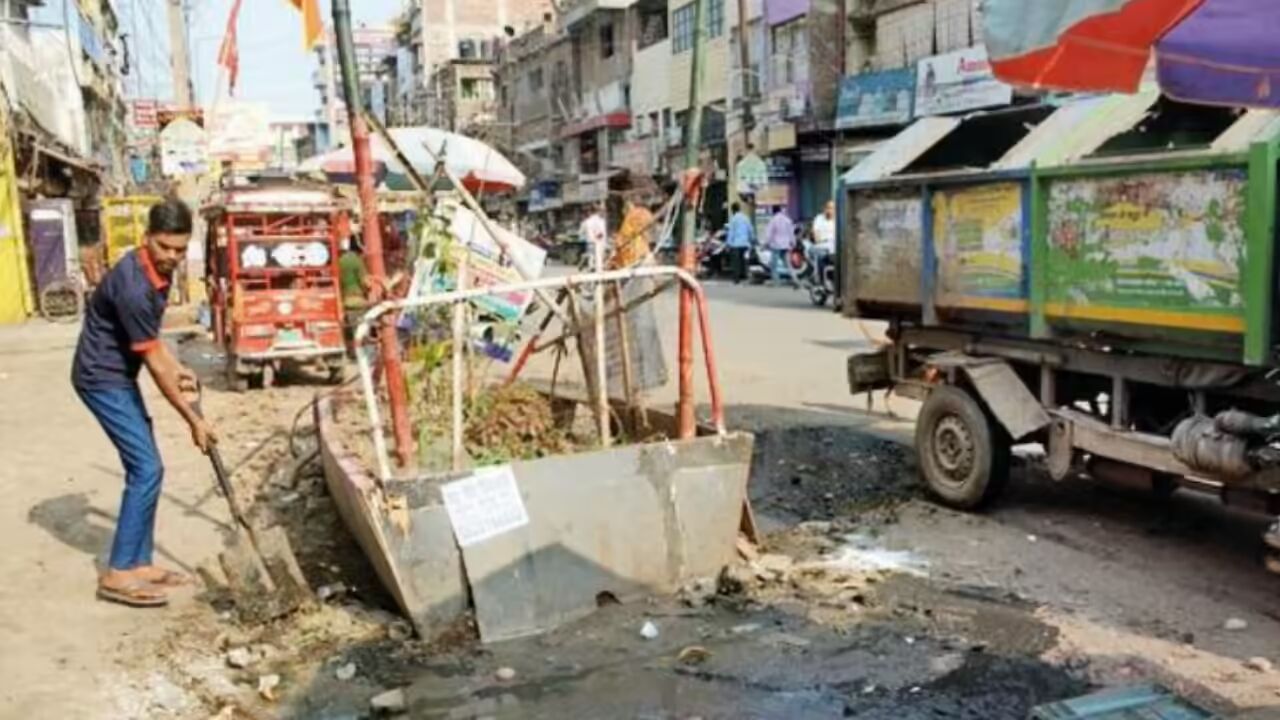
Patna’s municipal administration has approved a civic budget of just over ₹3,000 crore for the 2026–27 financial year, placing solid waste infrastructure and basic urban upgrades at the centre of the city’s next phase of growth. The financial plan reflects a shift in priorities as rapidly expanding cities like Patna confront rising population pressure, environmental risks and the need for more resilient urban services.
The newly cleared Patna municipal budget outlines higher spending compared to the previous year and includes funding from both state and central governments along with local revenue sources. Officials said the financial roadmap is built around multiple infrastructure projects, with waste management, public lighting, regulated street vending zones and market redevelopment forming the backbone of the spending plan. One of the most significant components is a large-scale integrated solid waste management system expected to become operational in the next few years. Land has already been identified for the project, which will include transfer stations, a waste-to-energy facility and expanded collection capacity. Urban planners say the investment is critical for a city where population growth has outpaced civic infrastructure, increasing the pressure on landfill sites and public health systems.
The Patna municipal budget also highlights efforts to modernise the urban economy through asset monetisation and structured vending zones. Municipal authorities are planning to reorganise informal markets and redevelop older commercial areas near major transport hubs. Experts note that such moves, if implemented carefully, could improve urban mobility and create more inclusive spaces for small businesses, particularly in cities where informal employment remains a major economic driver. Technology-based infrastructure upgrades form another key pillar of the financial plan. The city has proposed large-scale installation of energy-efficient street lighting and digital systems for civic services, along with traffic-related improvements designed to make high-footfall areas safer for pedestrians. These investments are increasingly being viewed as essential in mid-sized Indian cities seeking to balance economic growth with environmental sustainability and energy efficiency.
At the same time, the budget reflects growing financial ambitions at the municipal level. Authorities are exploring new revenue streams, including bond-based financing and higher local resource mobilisation. Urban economists say this marks an important step toward strengthening the financial independence of civic bodies in emerging urban centres, especially as infrastructure costs continue to rise. However, the approval process was not without friction, with concerns raised during the meeting over revenue assumptions and long-term fiscal sustainability. Such debates are becoming more common as municipal bodies attempt to expand spending while still relying heavily on state and central transfers.
For residents, the real impact of the Patna municipal budget will depend on execution. If the proposed waste systems, public facilities and infrastructure upgrades are delivered on time, the plan could significantly improve urban liveability while helping the city move toward more climate-resilient and resource-efficient growth.