


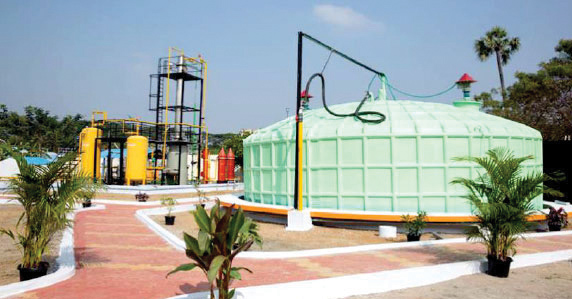
Surat has begun integrating locally produced compressed biogas (CBG) into its commercial gas supply network, marking a significant step in linking urban waste management with energy production. The initiative positions the city at the forefront of circular economy practices, where municipal waste is converted into usable fuel to support urban energy needs. The project, led by the municipal corporation in partnership with a private developer, is currently processing around 50 tonnes of organic waste daily to generate nearly two tonnes of biogas. With production crossing this threshold, the fuel is now being supplied to gas distribution networks serving commercial users.
At full capacity, the facility is expected to handle up to 120 tonnes of waste per day and produce about five tonnes of gas, significantly expanding its contribution to the city’s energy mix. The output has the potential to meet the daily fuel needs of public transport fleets or thousands of households, highlighting its scalability as a decentralised energy source. This Surat biogas supply initiative comes at a time when global fuel disruptions have exposed vulnerabilities in conventional energy systems. With India relying heavily on imported natural gas, fluctuations in international supply chains have impacted both prices and availability. By contrast, locally generated biogas offers a more stable and predictable alternative, reducing dependence on external sources. Urban experts see the development as a model for integrating waste and energy systems within city planning. The plant sources feedstock from hundreds of bulk waste generators, including hotels, markets, and residential complexes, creating a closed-loop system that diverts organic waste away from landfills. In addition to gas, the process produces organic fertiliser, adding an agricultural value chain to the urban waste ecosystem. The Surat biogas supply also aligns with national policy directions encouraging renewable gas adoption. Government mandates on blending compressed biogas with conventional fuels are expected to create sustained demand, making such projects commercially viable while supporting climate goals. From an infrastructure perspective, integrating biogas into city gas distribution networks requires coordination between municipal bodies, private operators, and utility companies. Surat’s ability to operationalise this linkage reflects growing institutional capacity in managing complex urban systems. However, scaling such models across cities will depend on consistent waste segregation, reliable feedstock supply, and investment in processing infrastructure. Without these, the efficiency and output of biogas plants can vary significantly.
For rapidly growing cities, the implications extend beyond energy. Waste-to-energy systems can reduce landfill pressure, lower methane emissions, and create local employment opportunities, contributing to more resilient urban ecosystems. As Surat expands its renewable energy footprint, the focus will shift to increasing capacity, improving efficiency, and integrating similar projects into other parts of the city. The broader takeaway is clear: urban sustainability is no longer confined to policy frameworks—it is increasingly being built through infrastructure that turns everyday waste into critical resources for the future.
ALSO READ – Surat Mangaluru Special Train Extended Till May End
Surat Biogas Supply Expands Into Commercial Gas Network
