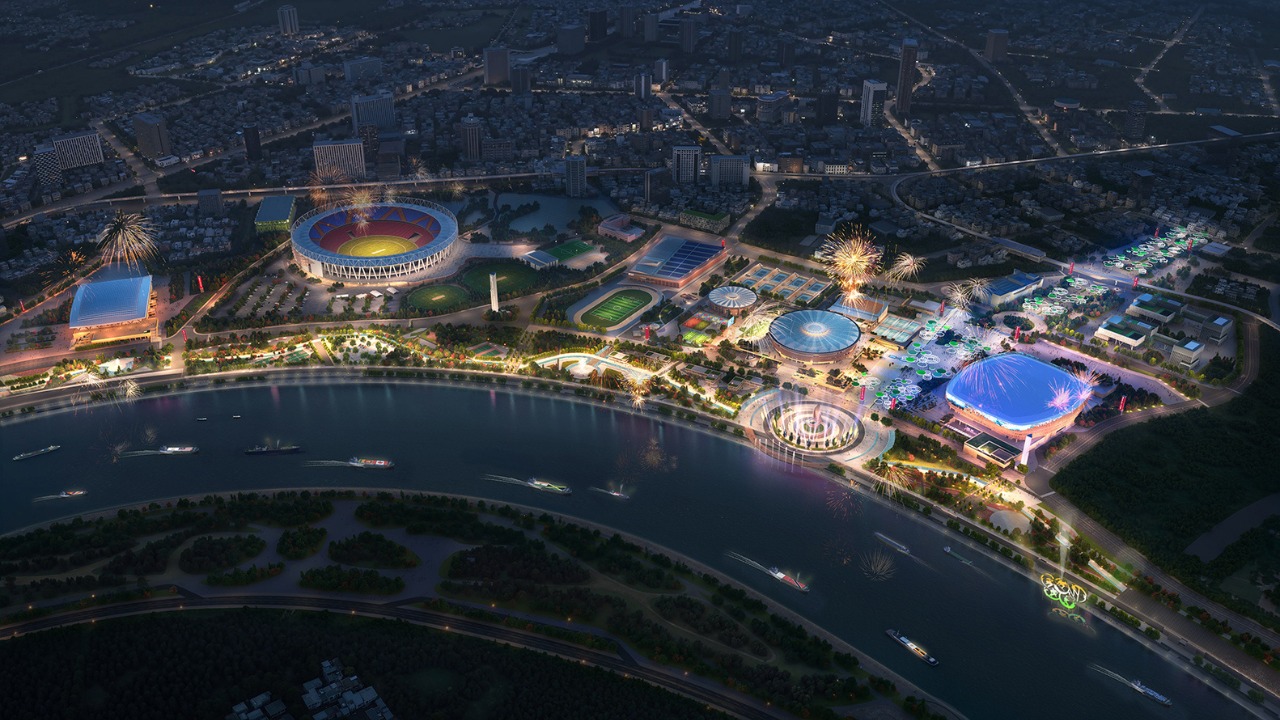
Ahmedabad has unveiled an ambitious plan to develop a large-scale sports-focused urban district along the Sabarmati riverfront, signalling a strategic shift towards positioning the city as a global destination for sporting events and allied economic activity. The proposed development is expected to combine high-performance venues with public spaces, creating a new layer of urban infrastructure that extends beyond episodic event hosting.
The Ahmedabad sports enclave is being planned as a multi-functional precinct anchored by the existing cricket stadium, with additional facilities designed to accommodate a range of indoor and outdoor sports. Urban planners indicate that the project is aligned with the city’s long-term vision to leverage upcoming international sporting events as catalysts for infrastructure investment and regional economic growth. A defining feature of the masterplan is its emphasis on integration rather than isolation. Instead of standalone stadiums, the Ahmedabad sports enclave is conceived as an interconnected district, linking training centres, spectator venues, hospitality zones, and open public spaces. This approach reflects a broader global shift towards mixed-use sports infrastructure that remains active beyond tournament cycles.
The development is expected to include a large indoor arena, a dedicated aquatic complex, and a tennis facility capable of hosting international competitions. These venues are being designed with adaptability in mind, allowing them to transition into community and recreational spaces once major events conclude. Such flexibility is increasingly seen as essential to avoid underutilised infrastructure—a common challenge in host cities after large-scale sporting events. From an economic standpoint, the project is likely to stimulate employment across construction, hospitality, retail, and tourism sectors. Industry observers estimate that sports-led urban districts can act as investment magnets, particularly when aligned with global event calendars. Ahmedabad’s positioning within upcoming international sporting circuits could further strengthen its appeal as a destination for both domestic and international visitors.
Environmental considerations are also central to the planning framework. The riverfront location is being reimagined to incorporate shaded public areas, landscaped corridors, and climate-responsive design elements such as natural ventilation and passive cooling systems. Urban design experts note that integrating green infrastructure within large developments is critical for mitigating heat stress in rapidly expanding cities like Ahmedabad. At the same time, the scale of the project raises questions about long-term urban integration. Connectivity to public transport, equitable access for residents, and balanced land use will be key to ensuring that the enclave does not function as an exclusive zone but as a shared civic asset. Planners emphasise that successful sports districts globally are those that remain accessible and relevant to local communities throughout the year.
The initiative reflects a broader trend among Indian cities to align infrastructure development with global visibility and economic diversification. For Ahmedabad, the challenge will lie in translating this vision into a resilient, inclusive, and sustainable urban district that delivers value beyond headline events. As planning progresses, attention will increasingly shift towards execution ensuring that the project strengthens the city’s urban fabric while meeting evolving environmental and social expectations.
Ahmedabad Sports Enclave Plan Reshapes Riverfront District