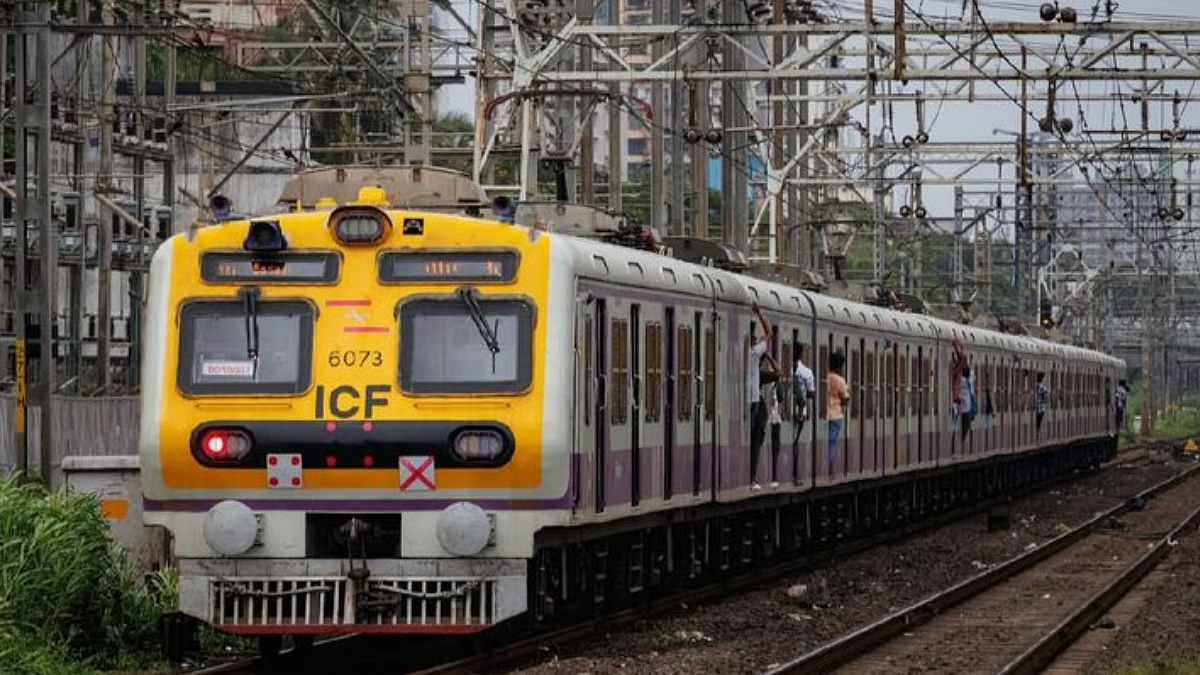
Mumbai’s suburban rail network, often described as the city’s economic lifeline, is set to face significant service interruptions this weekend as extensive maintenance work takes priority across key corridors. The planned shutdowns, spanning parts of the Central, Trans-Harbour, and Western lines, are expected to affect hundreds of local train services, prompting authorities to advise commuters to adjust travel plans.
The scale of the Mumbai train disruptions reflects the growing complexity of maintaining one of the world’s busiest rail systems while simultaneously upgrading it to meet future demand. Sections of the Central line will see altered operations during midday hours, with trains rerouted onto fast corridors, temporarily bypassing several intermediate stations. Meanwhile, services on the Trans-Harbour route will be suspended across a major stretch, effectively disconnecting key suburban nodes for several hours. On the Western Railway, the impact is expected to be more pronounced due to a prolonged engineering block linked to bridge reconstruction work. The closure of select platforms and cancellation of a large number of services over nearly an entire day underscores the intensity of the intervention. Such large-scale blocks, though disruptive, are increasingly necessary as ageing infrastructure is upgraded to support higher capacity and improved safety standards.
Railway engineers indicate that the ongoing works are tied to long-term network enhancements, including bridge strengthening, track modernisation, and preparatory steps for route extensions. One such upgrade involves structural work that will support the future expansion of suburban connectivity further north, a move that could redistribute passenger loads and reduce congestion in the long run. From an urban systems perspective, the Mumbai train disruptions highlight a recurring trade-off in rapidly growing cities: short-term inconvenience versus long-term resilience. Mumbai’s rail network carries millions daily, and even limited disruptions can ripple across the metropolitan economy, affecting productivity, informal sector earnings, and service accessibility.
Transport planners note that while maintenance blocks are unavoidable, their impact can be mitigated through better multimodal integration. Increased coordination with bus services, metro lines, and shared mobility options can provide alternative routes during such shutdowns. The episode also underscores the need for diversified urban transport systems, reducing overdependence on a single mode. There are also environmental considerations at play. Strengthening rail infrastructure aligns with broader climate goals, as reliable suburban rail systems help reduce reliance on private vehicles, lowering emissions in a densely populated urban region. Ensuring the longevity and efficiency of this network is therefore critical not just for mobility, but for sustainable urban growth.
For Mumbai’s commuters, the immediate concern remains navigating the disruption. However, the broader picture suggests a system undergoing necessary transformation—one where periodic inconvenience is part of a larger effort to build a more robust, future-ready transport backbone.
Mumbai Train Disruptions Due To Sunday Maintenance