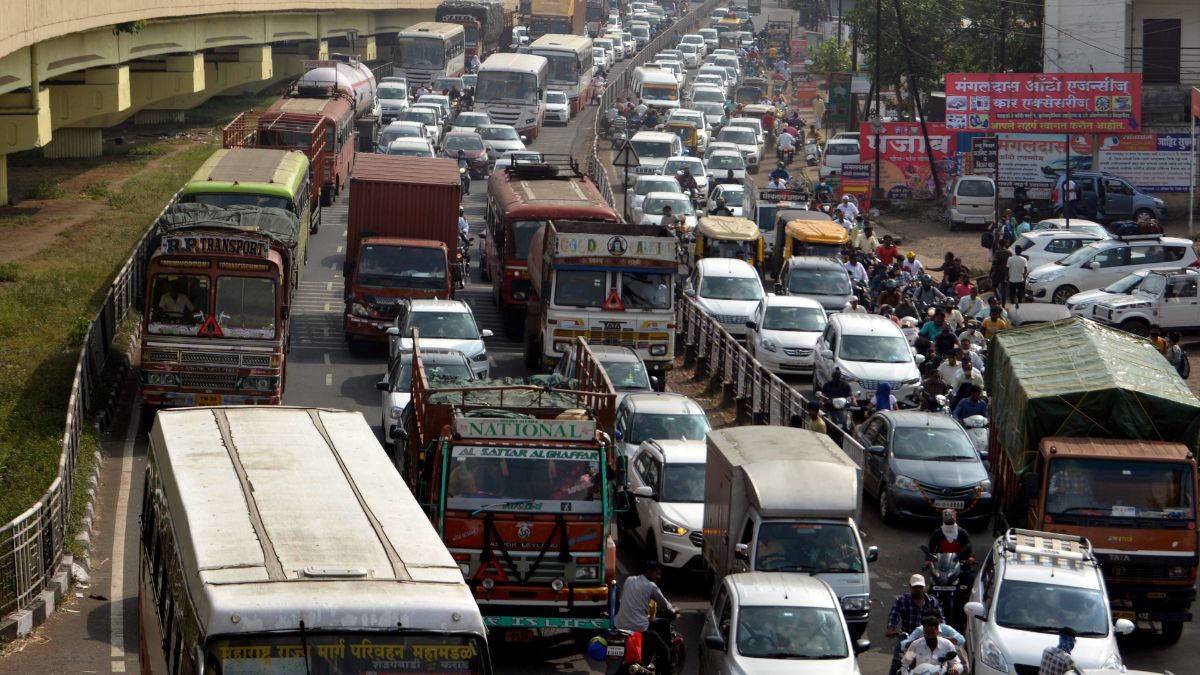
Pune’s western corridor, a critical link between the city’s residential clusters and its largest IT hub, is set for a significant infrastructure upgrade as civic authorities move forward with a ₹200 crore mobility plan. The proposed intervention along the Chandani Chowk to Bhugaon stretch aims to reduce chronic congestion while improving access to Hinjewadi, a key employment centre driving the region’s economic growth.
The plan, currently under consideration for administrative clearance, combines road widening with grade-separated structures to address long-standing bottlenecks. Urban planners tracking the Pune Hinjewadi traffic project say the corridor has struggled to keep pace with rapid urban expansion, with sections narrowing to less than optimal carriageway widths. This mismatch between road capacity and traffic volume has resulted in prolonged peak-hour delays, affecting both daily commuters and freight movement.
Officials involved in the proposal indicate that the project will be executed in phases, with investment distributed over multiple financial cycles. Early-stage spending has already been directed towards technical assessments and design planning, suggesting that groundwork for execution is underway even as approvals are finalised. Such phased financing is increasingly common in urban infrastructure, allowing municipalities to manage fiscal constraints while addressing urgent mobility needs.
At the core of the intervention are grade separators and elevated corridors designed to segregate through-traffic from local movement. One key structure is planned near an educational hub, where intersection delays have been a persistent issue. Another elevated stretch is expected to streamline vehicular flow across multiple junctions that currently experience heavy merging traffic. In addition, a widened bridge over a local river is intended to remove a critical choke point that disrupts continuity along the route.
The Pune Hinjewadi traffic project is not only about easing congestion but also about safeguarding the city’s economic productivity. Hinjewadi’s IT ecosystem employs a large workforce, and inefficient connectivity can translate into lost work hours and increased logistics costs. Industry experts note that reliable transport infrastructure is essential to sustaining investment momentum in such high-growth zones. However, mobility experts caution that capacity expansion alone may not provide a long-term solution. Without parallel investments in public transport, non-motorised mobility, and land-use planning, new road infrastructure can quickly become saturated. There is also growing emphasis on integrating climate resilience into road design, including better drainage systems and material choices that can withstand extreme weather patterns.
For residents along the corridor, the project could improve daily travel conditions and enhance access to jobs, education, and services. Yet its broader success will depend on execution quality, traffic management during construction, and the ability to align infrastructure upgrades with sustainable urban mobility goals. As Pune continues to expand westward, the challenge will be to ensure that infrastructure keeps pace not just with growth, but with the evolving needs of a more connected, climate-conscious city.
Pune Hinjewadi traffic project set for approval