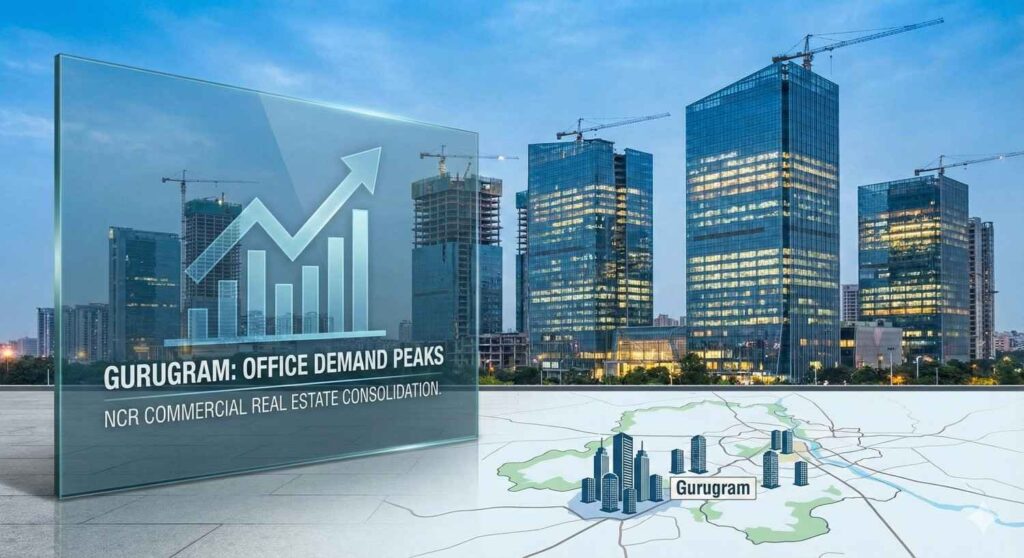
Gurugram Commercial Leasing Gains Momentum In 2026
A significant commercial transaction in Gurugram’s Sector 42 has underscored the continued strength of the region’s Grade A office market, as a managed workspace operator secures over 1.4 lakh sq ft in a multi-year lease. The deal highlights sustained demand for flexible, high-quality office environments in India’s leading corporate corridors, even as companies recalibrate post-pandemic workplace strategies.
The five-year agreement, commencing early 2026, involves space across multiple upper floors of a premium office tower. Industry estimates suggest an initial monthly rental commitment exceeding ₹2.8 crore, with structured annual escalations. Such long-tenure commitments reflect growing confidence among workspace providers in the stability of Gurugram’s commercial ecosystem. Gurugram office leasing activity has been buoyed by its proximity to the national capital, established infrastructure, and concentration of multinational firms. Urban planners note that the clustering of high-grade office developments along key corridors has created a self-reinforcing cycle of demand, particularly for managed and plug-and-play office formats. These formats allow enterprises to scale operations quickly while reducing upfront capital expenditure.
The latest transaction also points to a broader shift in occupier preferences. Instead of traditional long-term office ownership or fit-outs, businesses are increasingly opting for flexible leasing models that can adapt to fluctuating workforce sizes. This trend has accelerated the expansion of managed workspace operators across major Indian cities, including Mumbai and Bengaluru. From an urban development perspective, the rise in Gurugram office leasing raises questions about infrastructure readiness. While the city has emerged as a corporate hub, challenges remain around traffic congestion, last-mile connectivity, and environmental sustainability. Experts argue that large commercial deals should be complemented by investments in public transport, pedestrian-friendly design, and energy-efficient building systems to ensure long-term resilience. The environmental footprint of large office spaces is also under scrutiny. With increasing awareness around climate goals, developers and occupiers are being nudged towards green building certifications, efficient energy use, and water management practices. Industry observers suggest that future leasing decisions may increasingly factor in sustainability credentials alongside location and cost.
Meanwhile, the expansion of managed office providers into premium districts reflects a maturing market where quality, flexibility, and employee experience are becoming central to real estate decisions. The integration of amenities, wellness features, and digital infrastructure within office spaces is now seen as essential to attract and retain talent. As Gurugram office leasing continues to gain traction, the focus is likely to shift towards balancing rapid commercial growth with inclusive urban planning. Ensuring that infrastructure, housing, and environmental considerations keep pace with corporate expansion will be critical in shaping the city’s next phase of development.