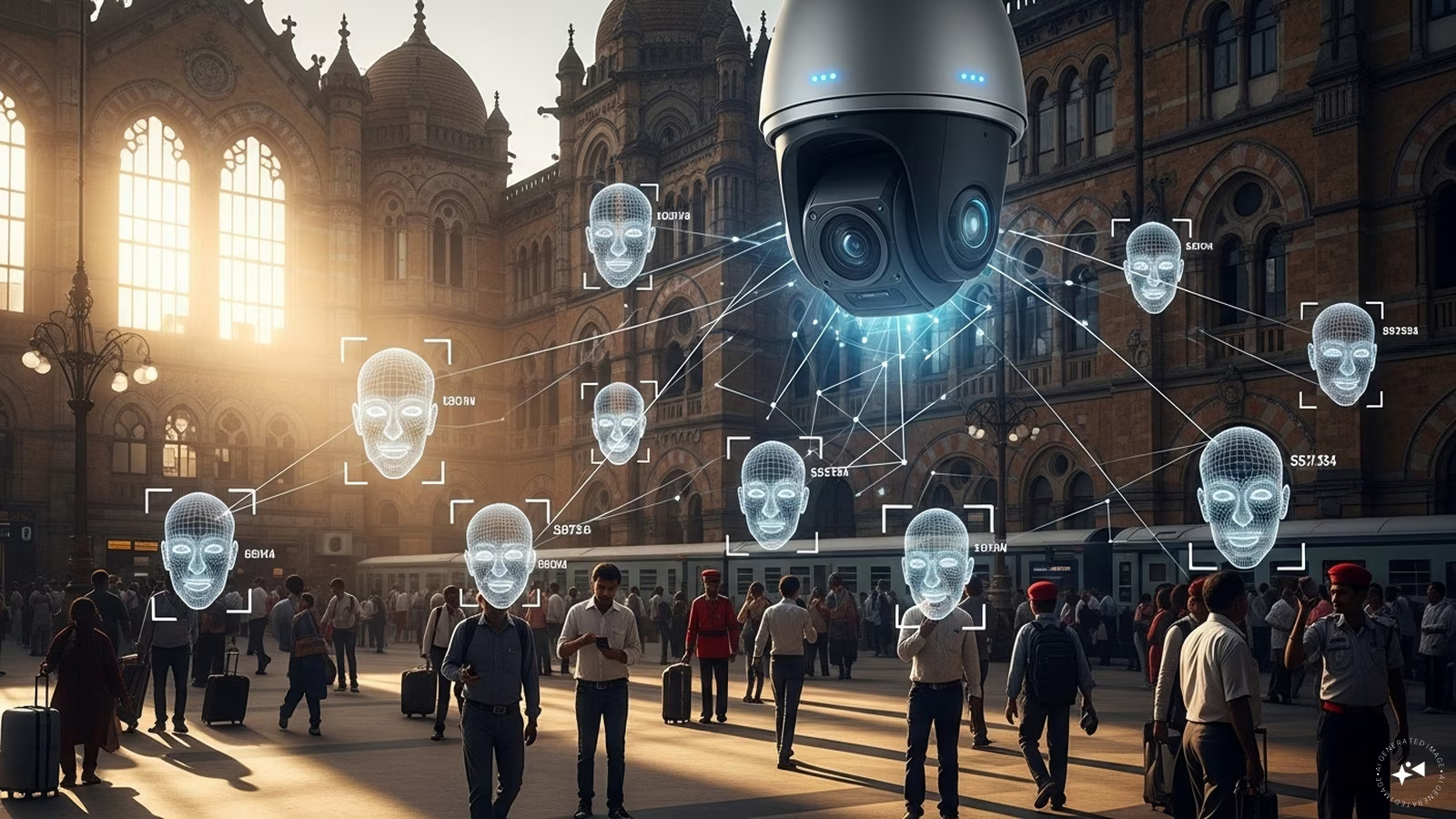
Mumbai’s suburban rail network is undergoing a significant surveillance upgrade, with Western Railway accelerating the deployment of artificial intelligence-driven monitoring systems across stations. The initiative is aimed at strengthening commuter safety, improving crowd management, and modernising operational oversight in one of the world’s busiest transit systems.
More than 4,500 AI surveillance cameras have already been installed across the Western Railway network, covering entry and exit points, platforms, ticketing areas, and other high-density zones. The rollout forms part of a larger plan to scale the system to approximately 7,500 cameras, creating an integrated digital monitoring grid across suburban stations. At the core of this upgrade is the use of facial recognition technology, enabling authorities to identify individuals, track movement patterns, and respond more effectively to potential security threats. Railway officials indicate that the system is being used not only for crime detection but also for preventive monitoring, helping agencies identify unusual behaviour and intervene before incidents escalate.
The AI surveillance system is also expected to play a key role in managing passenger flows. With millions of commuters using Mumbai’s suburban trains daily, crowd density at stations often fluctuates rapidly. Real-time visual data can assist authorities in deploying staff, regulating access points, and reducing bottlenecks, particularly during peak hours. Security agencies, including railway police units, are integrating these systems into their operations to improve response times. By enabling faster identification of suspects and missing persons, the technology could enhance coordination between different enforcement bodies working within the rail ecosystem.
Urban mobility experts point out that such digital infrastructure is becoming essential in high-capacity transit networks. However, they also emphasise the need for robust data governance frameworks to address concerns around privacy, data storage, and ethical use of surveillance technologies. Ensuring transparency in how facial recognition systems are deployed will be critical to maintaining public trust. From an infrastructure perspective, the expansion of AI surveillance aligns with broader efforts to modernise legacy rail systems. As cities like Mumbai invest in new metro corridors and multimodal integration, upgrading existing suburban networks remains equally important to ensure safety and efficiency across the entire mobility ecosystem.
The move also reflects a shift towards technology-enabled urban management, where data-driven decision-making can enhance both security and service delivery. By combining surveillance with analytics, authorities can better understand commuter patterns and plan interventions accordingly. As the remaining cameras are installed in phases, the focus will be on ensuring seamless integration and operational reliability. If implemented effectively, the AI surveillance network could set a benchmark for other urban rail systems seeking to balance high passenger volumes with safety, efficiency, and accountability in an increasingly complex urban environment.
Mumbai Stations Get AI Surveillance Boost Across Network