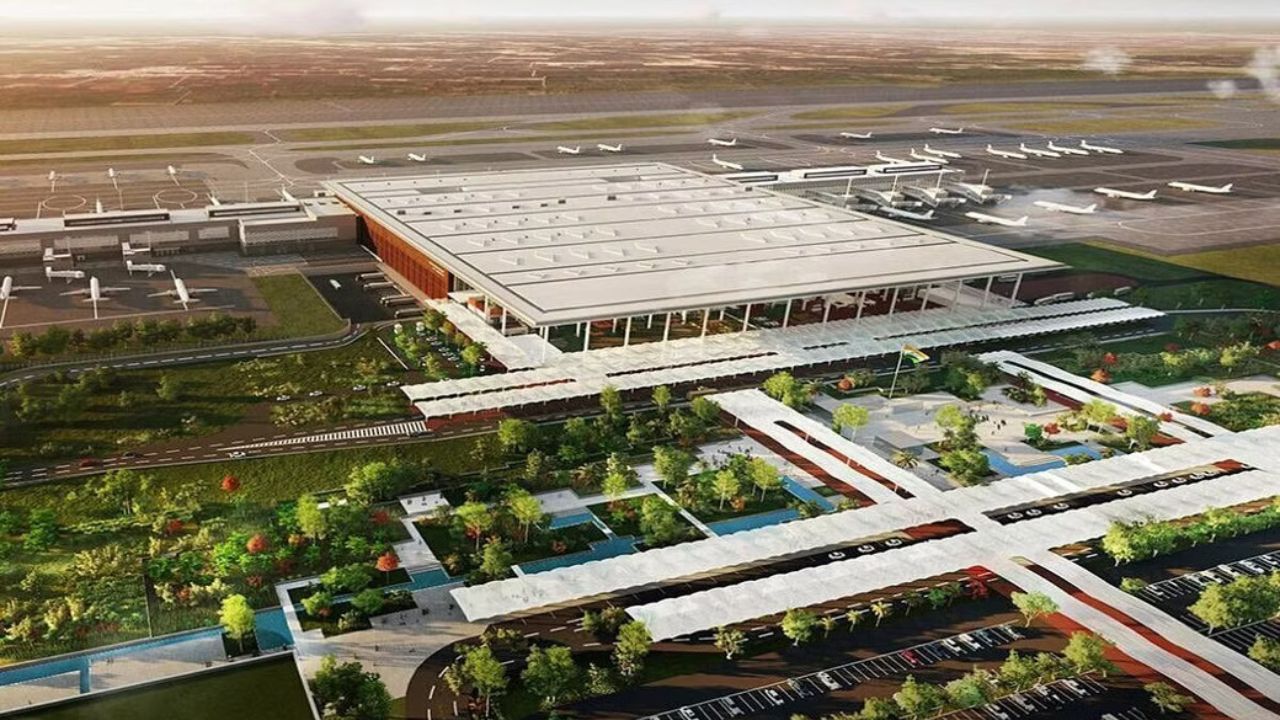
The launch of Noida International Airport on March 28 marks a pivotal shift in how the National Capital Region expands, linking infrastructure with long-term urban growth. Located in western Uttar Pradesh, the project is expected to ease aviation pressure on Indira Gandhi International Airport while unlocking new real estate and logistics corridors across the Yamuna Expressway belt.
Conceived as a greenfield aviation hub, the airport begins operations with capacity for 12 million passengers annually, with phased expansion planned to rival India’s largest transit nodes. Developed by Yamuna International Airport Private Limited, backed by Zurich Airport International AG, the project operates under a long-term concession framework with state and central government support.Urban planners suggest that the Noida International Airport impact extends far beyond aviation. Improved connectivity is already influencing land values and development intensity along the Yamuna Expressway, where residential and mixed-use projects are gaining traction. Industrial land aggregation, warehousing demand, and data centre interest are also rising, indicating a shift toward an integrated economic zone rather than a standalone airport ecosystem.
Officials indicate that the airport’s design integrates passenger movement with cargo logistics, positioning it as a multi-modal hub. This is particularly significant as India aims to strengthen supply chains and reduce logistics costs. Enhanced air freight capacity could accelerate manufacturing clusters in western Uttar Pradesh, aligning with broader national goals of boosting exports and decentralising industrial growth.The Noida International Airport impact is also visible in early hospitality investments. Hotel operators and serviced apartment developers are entering the region ahead of peak passenger flows, signalling confidence in sustained business travel demand. Industry observers note that airport-adjacent hospitality is increasingly being designed as digitally enabled, resource-efficient infrastructure reflecting a shift toward smarter, lower-emission built environments. Beyond commercial gains, the project raises important questions around sustainable urbanisation. Rapid land conversion and rising property prices could reshape local communities, making it essential to balance growth with inclusive planning, affordable housing, and environmental safeguards.
Experts highlight the need for transit-oriented development, water-sensitive design, and low-carbon construction practices to ensure long-term resilience.Comparisons are already being drawn with airport-led growth seen in cities like Hyderabad and Bengaluru, where aviation infrastructure catalysed new economic districts. However, the scale and timing of this development place greater responsibility on regional authorities to manage growth equitably. As the Noida International Airport impact unfolds, the focus will increasingly shift to how infrastructure-led expansion translates into liveable, climate-conscious urban spaces determining whether the region’s next growth phase can be both economically robust and socially balanced.