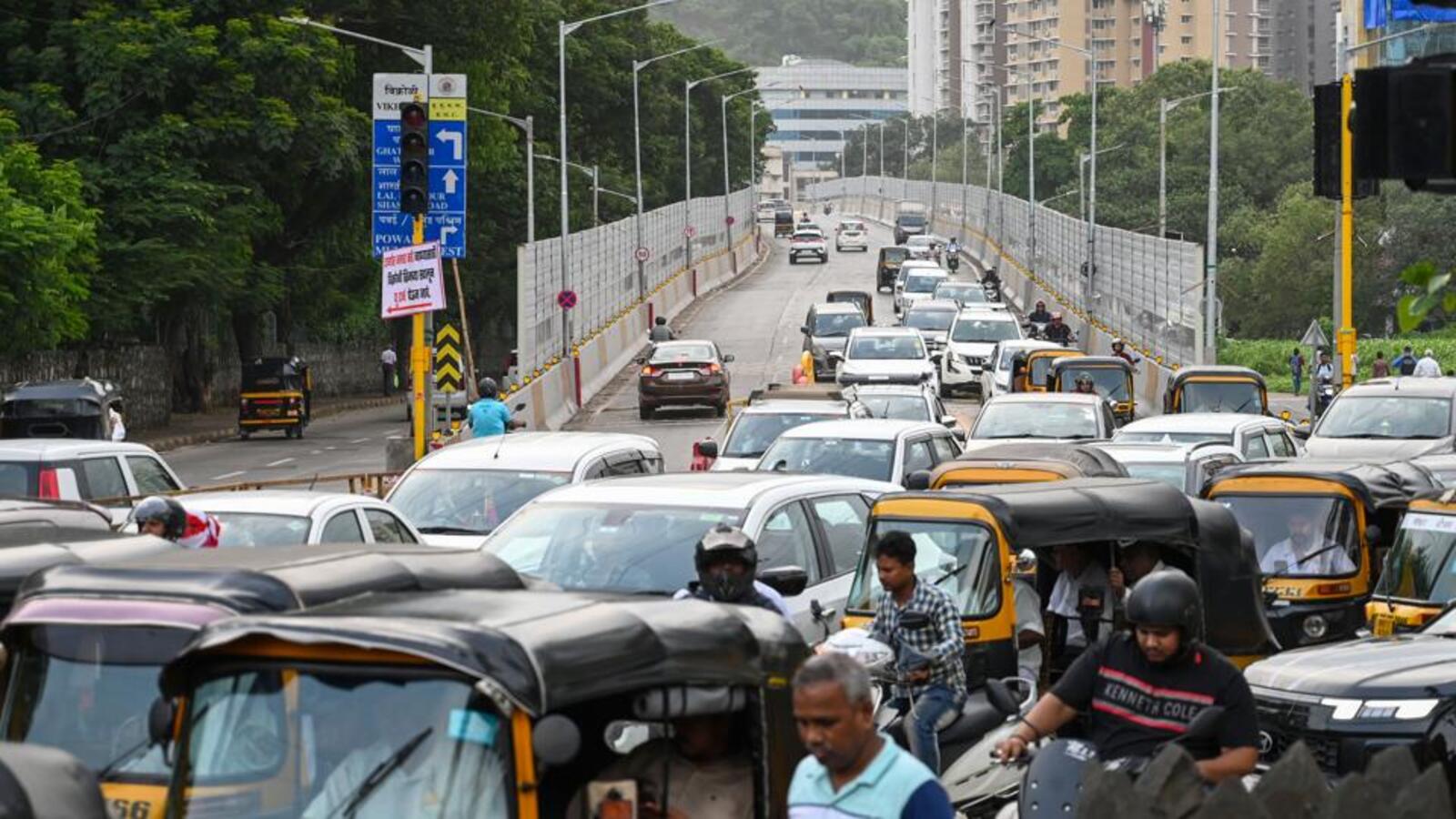
Mumbai’s traffic authorities have introduced new parking restrictions along a critical access road in Vikhroli, aiming to improve traffic flow and pedestrian movement in one of the city’s densely used commuter zones. The intervention reflects a growing shift towards managing limited road space more efficiently in high-density urban areas.
The designated stretch, connecting a key junction to Vikhroli’s eastern railway access point, has now been declared a no-parking corridor on both sides. The decision follows sustained feedback from residents and daily commuters who have long reported severe congestion caused by indiscriminate roadside parking. Officials from the traffic department indicated that the presence of parked vehicles had significantly reduced the effective width of the carriageway, creating choke points during peak hours. With thousands of commuters using the route daily to access suburban rail services, even minor disruptions tend to cascade into wider traffic delays across the surrounding network.
Beyond congestion, the move also addresses safety concerns. Urban mobility experts highlight that roads encroached by parked vehicles often force pedestrians onto active traffic lanes, increasing the risk of accidents. In areas with high footfall, such as railway station approaches, this becomes a critical issue affecting elderly commuters, children, and persons with limited mobility. The new regulation has been formalised under provisions of the Motor Vehicles Act, giving enforcement agencies the authority to penalise violations. Emergency vehicles, however, remain exempt, ensuring that ambulances and fire services retain unobstructed access during critical situations.
The Vikhroli no-parking zone is part of a broader pattern of targeted traffic management interventions across Mumbai. In another suburban location, authorities have experimented with time-bound or alternating parking rules to manage narrow roadways where full restrictions may not be immediately feasible. Such measures are increasingly being deployed as interim solutions in areas awaiting long-term infrastructure upgrades. Transport planners suggest that while parking restrictions can offer immediate relief, they must be complemented by systemic changes. These include better last-mile connectivity, designated parking facilities, and improved public transport integration to reduce dependence on private vehicles. Without such parallel measures, enforcement alone may face resistance or limited effectiveness over time.
The focus on the Vikhroli corridor also underscores the importance of station-area planning in Mumbai’s mobility ecosystem. Railway stations act as major urban nodes, and the efficiency of surrounding road networks directly impacts commuting experience and economic productivity. As enforcement begins, authorities are expected to monitor compliance levels and assess the impact on travel times and congestion patterns. If successful, similar interventions could be expanded to other high-pressure corridors across the city.
In the longer term, such steps point towards a gradual rebalancing of Mumbai’s road space—prioritising movement, safety, and accessibility over unregulated parking in a city where every metre of urban infrastructure carries significant value.
Mumbai Bans Parking Near Vikhroli Station To Reduce Traffic