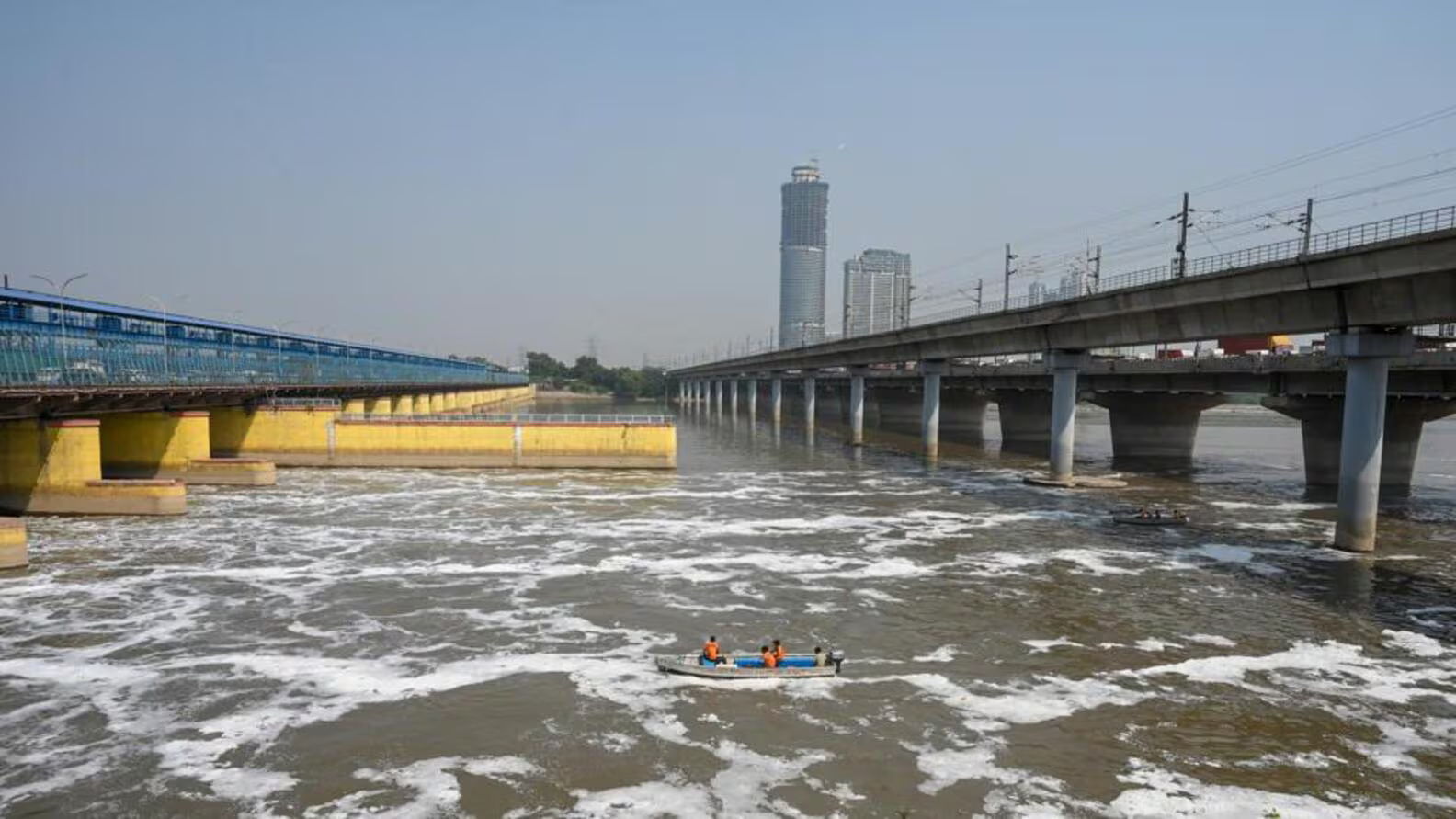
Authorities in Gurugram have tightened timelines for drain remediation and wastewater management as part of a broader push to improve the health of the Yamuna river system. The move reflects growing urgency among regulators to address untreated sewage flows and strengthen urban water infrastructure in one of the fastest-growing regions of the National Capital Region. At a recent inter-agency review, officials assessed progress on multiple interventions aimed at reducing pollution loads entering the Yamuna. The focus was on accelerating on-ground execution, improving coordination between departments, and ensuring measurable outcomes within defined deadlines.
A key component of the Gurugram drain cleanup strategy involves strengthening sewage treatment systems. Regulators have called for renewed sampling of treatment plants to verify compliance with discharge standards, alongside time-bound corrective measures. Ensuring that treated water is effectively reused—particularly for irrigation—has also been prioritized, signalling a shift towards circular water management practices in urban areas. Another critical directive centers on eliminating the flow of untreated wastewater between different phases of the city’s drainage network. By enforcing diversion and treatment protocols within short timelines, authorities aim to reduce direct contamination of stormwater channels that ultimately feed into the Yamuna. Urban planners highlight that the Gurugram drain cleanup effort underscores a persistent challenge in Indian cities: the mixing of sewage and stormwater systems. To address this, agencies have been tasked with preparing standardized operating procedures for drain maintenance and identifying unauthorized connections. Mapping pollution sources across key zones is expected to provide a clearer basis for targeted interventions over the coming months.
Solid waste management within drains has also emerged as a priority. Officials have emphasized the need for systematic assessment, documentation and scientific disposal of waste extracted from water channels. This approach is expected to improve monitoring and reduce recurring blockages that exacerbate flooding and pollution. Enforcement mechanisms are being strengthened alongside infrastructure upgrades. Local authorities have been directed to regulate tanker operations more strictly, including identifying unauthorized activities that contribute to illegal discharge. Physical measures such as fencing along drains are also being reviewed to prevent dumping and encroachment—common issues that undermine cleanup efforts. From an urban development perspective, the Gurugram drain cleanup initiative is closely linked to the region’s rapid expansion. As residential and commercial growth continues, the pressure on drainage and wastewater systems has intensified. Experts note that without parallel investment in environmental infrastructure, urbanization risks deepening water pollution and public health concerns. The broader objective remains the restoration of the Yamuna as a functional urban river system. However, experts caution that sustained progress will depend on long-term institutional coordination, consistent enforcement and integration of environmental planning into city growth strategies.
With multiple deadlines now in place, the effectiveness of the Gurugram drain cleanup will hinge on execution. For NCR cities navigating similar challenges, the outcome could serve as a benchmark for aligning infrastructure development with river conservation goals.