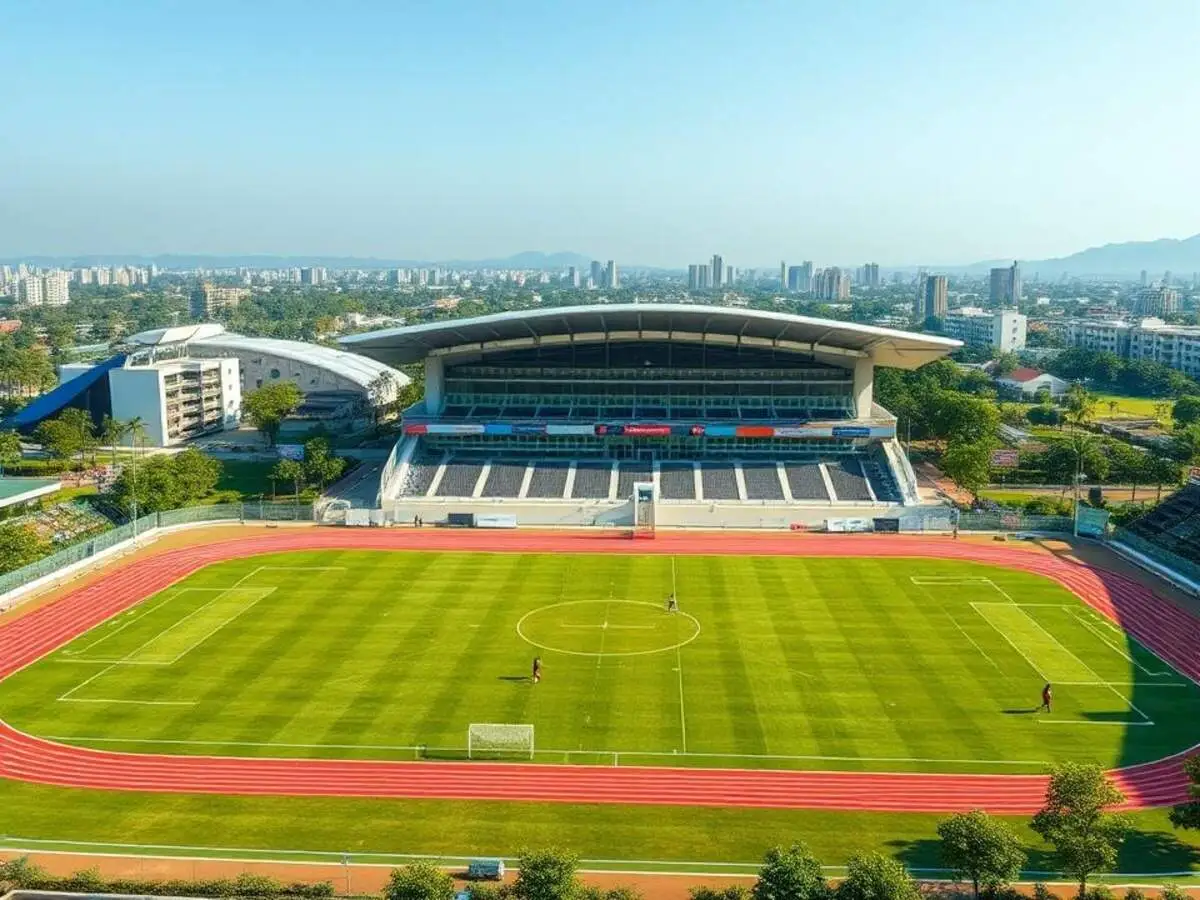
A proposed Delhi sports hub project in Dwarka is moving into a critical consultation phase, with the private developer initiating discussions with the city government to align regulatory, infrastructure, and planning requirements. The large-scale development, anchored by a 30,000-seat multi-sport stadium, signals a growing shift towards integrated sports and mixed-use urban districts in the national capital.
Planned on over 50 acres of land allotted by the city’s land-owning authority in 2024, the project is expected to draw investments of around ₹2,500 crore. Industry observers note that such developments increasingly serve multiple functions beyond sport acting as catalysts for local economic activity, employment generation, and urban regeneration in underutilised zones. Urban planners indicate that the Delhi sports hub project could significantly alter Dwarka’s development trajectory. The sub-city, originally planned as a residential extension, has long faced gaps in commercial vibrancy and public infrastructure activation. A project of this scale may trigger demand for hospitality, retail, and transit-oriented development, particularly given Dwarka’s proximity to the airport and upcoming regional connectivity upgrades.
However, the consultation with the government is likely to focus on more than just construction approvals. Issues such as traffic management, public transport integration, water usage, and environmental compliance are expected to be central to discussions. Large sports venues often face scrutiny over periodic congestion and underutilisation, making integrated planning crucial from the outset. Experts in sustainable urban development emphasise that projects of this nature must align with long-term climate and resource goals. A senior urban policy advisor highlighted that high-capacity stadiums should incorporate energy-efficient design, renewable power integration, and water-sensitive planning to reduce their environmental footprint. This becomes particularly relevant in Delhi, where air quality and resource stress remain persistent concerns. From a governance standpoint, the project also reflects a broader trend of public-private collaboration in city-building.
By leveraging private capital for large civic infrastructure, authorities aim to accelerate development without straining public finances. At the same time, ensuring accessibility, affordability, and equitable usage of such facilities remains a key challenge.Market analysts suggest that if executed with strong planning controls, the Delhi sports hub project could position Dwarka as a new urban node, balancing residential density with recreational and economic infrastructure. Yet, its long-term success will depend on how effectively it integrates with the surrounding urban fabric rather than functioning as a standalone destination. As consultations progress, the project’s evolution will be closely watched as a test case for how Indian cities approach large-format, privately developed urban infrastructure in a resource-constrained and rapidly urbanising context.