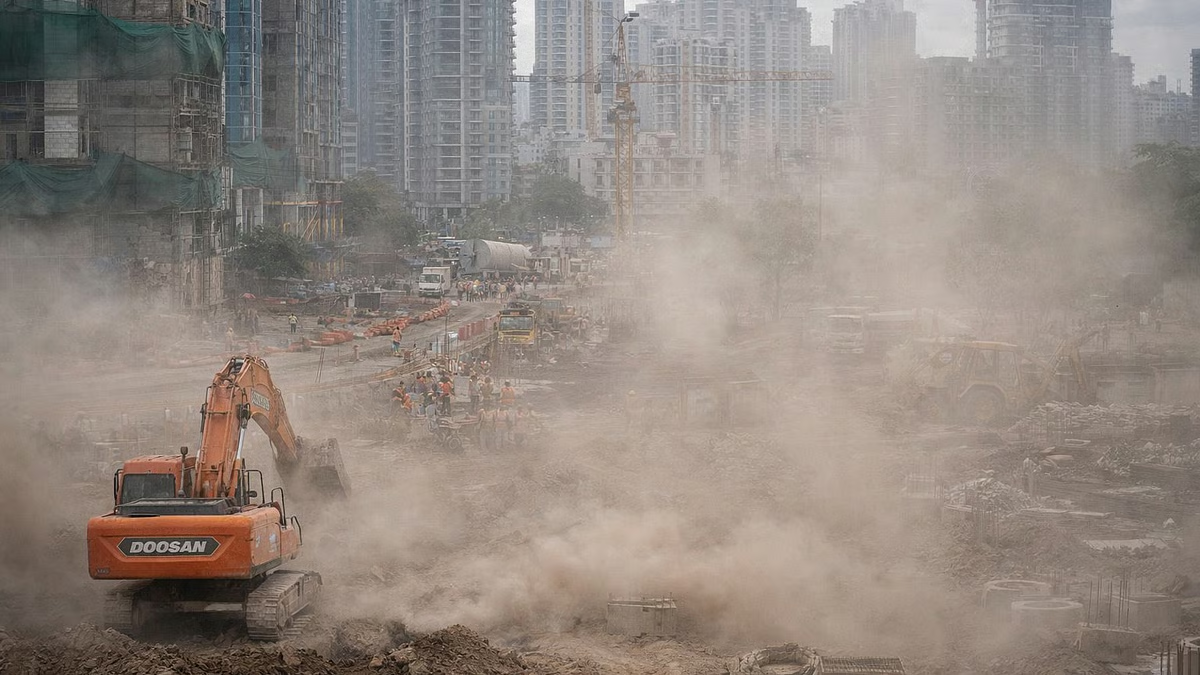
Pune’s municipal administration has introduced time-bound restrictions on construction and excavation work across the city, limiting activity to a 14-hour window each day. The move comes amid growing public concern over dust, noise, and health impacts, signalling a shift towards tighter environmental governance in one of India’s fastest-growing urban centres.
Under the new directive, construction operations are permitted only between morning and late evening hours, effectively curbing round-the-clock activity that has become common in high-growth corridors. Civic officials indicate that the decision follows a noticeable increase in citizen complaints linked to air quality deterioration and noise disturbance, particularly in densely populated residential zones. For a city witnessing sustained real estate expansion, the regulation reflects the emerging tension between infrastructure growth and liveability. Pune issues thousands of building approvals annually, and recent administrative changes have expanded its planning jurisdiction to newly merged peri-urban areas. This has accelerated construction activity, often outpacing the capacity of monitoring systems to enforce environmental safeguards.
Urban planners suggest that the Pune construction hours cap could help moderate immediate pollution exposure, especially for vulnerable groups such as children, the elderly, and those with respiratory conditions. However, they caution that limiting working hours alone may not address the full spectrum of construction-related impacts. Dust suppression systems, on-site waste management, and low-emission machinery are increasingly seen as essential components of responsible construction practices. Enforcement will be a critical factor. Officials have indicated that violations may trigger penalties, including temporary suspension of work. Residents are being encouraged to report breaches through civic helplines and administrative channels, reflecting a growing reliance on participatory governance to strengthen compliance. Experts argue that integrating technology—such as geo-tagged inspections and real-time monitoring—could enhance transparency and accountability.
The policy also has economic implications. Developers may face tighter project timelines and potential cost adjustments as work hours are compressed. While some industry stakeholders view this as a constraint, others see it as an opportunity to adopt more efficient construction methods, including prefabrication and mechanised processes that reduce on-site disruption. Importantly, the Pune construction hours regulation aligns with broader efforts to build climate-resilient and people-centric cities. Construction dust is a significant contributor to urban particulate pollution, and unchecked activity can undermine public health gains. By imposing structured limits, the city is signalling that growth must be balanced with environmental responsibility.
As Pune continues to expand, the effectiveness of such measures will depend on sustained enforcement and complementary reforms. Strengthening institutional capacity, encouraging greener building practices, and ensuring equitable application of rules across neighbourhoods will be key to maintaining both development momentum and quality of life.
Pune Limits Construction Hours To Curb Pollution