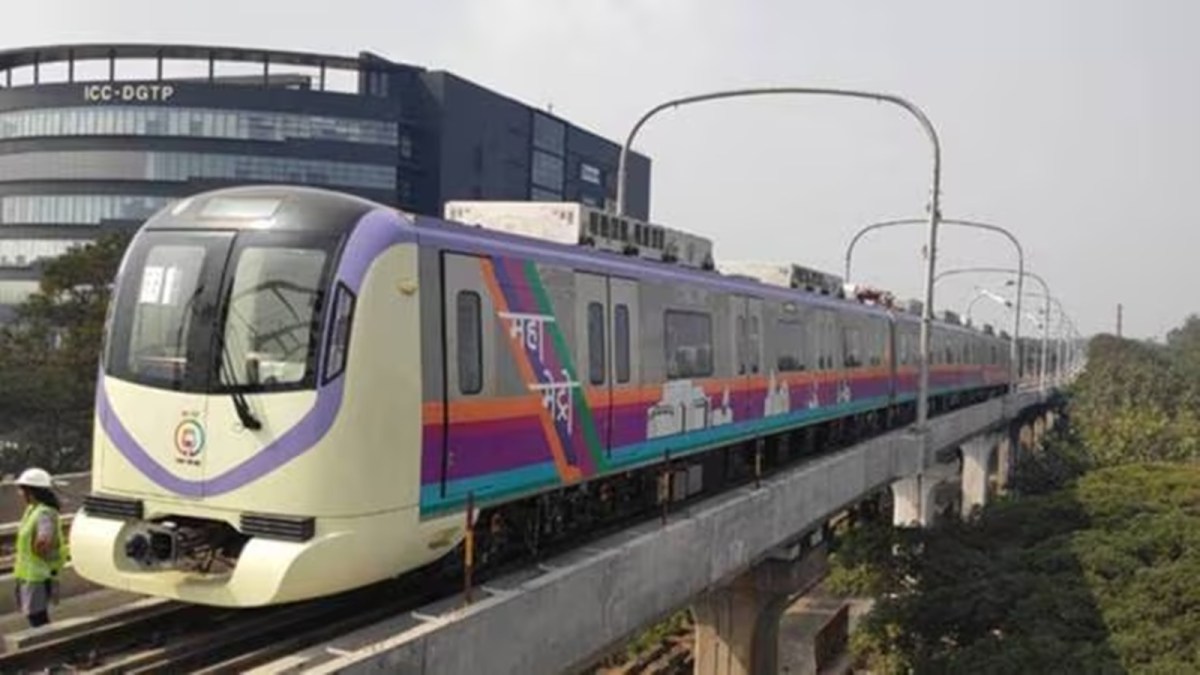
Pune is emerging as a strategic node in India’s evolving high-speed rail network, with early-stage planning underway for two proposed corridors linking the city to Mumbai and Hyderabad. If executed as envisaged, these lines could compress travel times dramatically, altering commuting patterns, regional economies, and the broader urban footprint across western and southern India.
The proposed Mumbai–Pune alignment is expected to cut journey time to under an hour, positioning the two cities as part of a more tightly integrated economic region. For a corridor already characterised by strong industrial and services linkages, such travel efficiency could enable daily intercity commuting at scale. Urban planners note that this shift may decentralise office demand, potentially easing pressure on Mumbai’s real estate while boosting Pune’s residential and commercial growth. The second corridor, connecting Pune to Hyderabad, is being examined as a high-speed link that could bring travel time down to roughly two hours. This has implications beyond passenger mobility. Both cities anchor major IT and manufacturing ecosystems, and improved connectivity may support faster talent movement, supply chain efficiency, and cross-market investments. Industry experts suggest that such corridors could reinforce tier-one cities as multi-nodal growth clusters rather than isolated economic centres.
These projects are part of a broader national push to expand high-speed rail infrastructure, with multiple corridors under consideration. Maharashtra’s positioning within this network reflects its role as a key economic engine, but it also raises questions about land use, financing, and environmental impact. Large-scale infrastructure of this nature requires careful alignment with climate-resilient planning, particularly in ecologically sensitive zones along proposed routes. Work on India’s first operational high-speed rail project between Mumbai and Ahmedabad continues to advance, offering a template for engineering complexity and execution timelines. Officials indicate that lessons from ongoing construction — including tunnelling, bridge-building, and land acquisition — are informing planning approaches for future corridors, including those involving Pune.
Beyond speed, the long-term value of Pune high speed rail will depend on how effectively it integrates with existing urban transport systems. Last-mile connectivity, multimodal hubs, and equitable access will be critical to ensure that benefits extend beyond business travellers to a wider cross-section of residents. Without this, the risk remains that high-speed networks could reinforce spatial inequalities rather than reduce them. At the same time, Pune high speed rail could contribute to lowering transport emissions if it successfully shifts passengers from road and short-haul air travel to electrified rail systems. For rapidly expanding urban regions, such transitions are central to balancing growth with sustainability. As feasibility studies and approvals progress, the focus will increasingly turn to execution frameworks, funding models, and urban integration. For Pune, the outcome may define not just how fast people travel, but how the city evolves within India’s next phase of infrastructure-led development.
Pune High Speed Rail Plans Reshape Travel