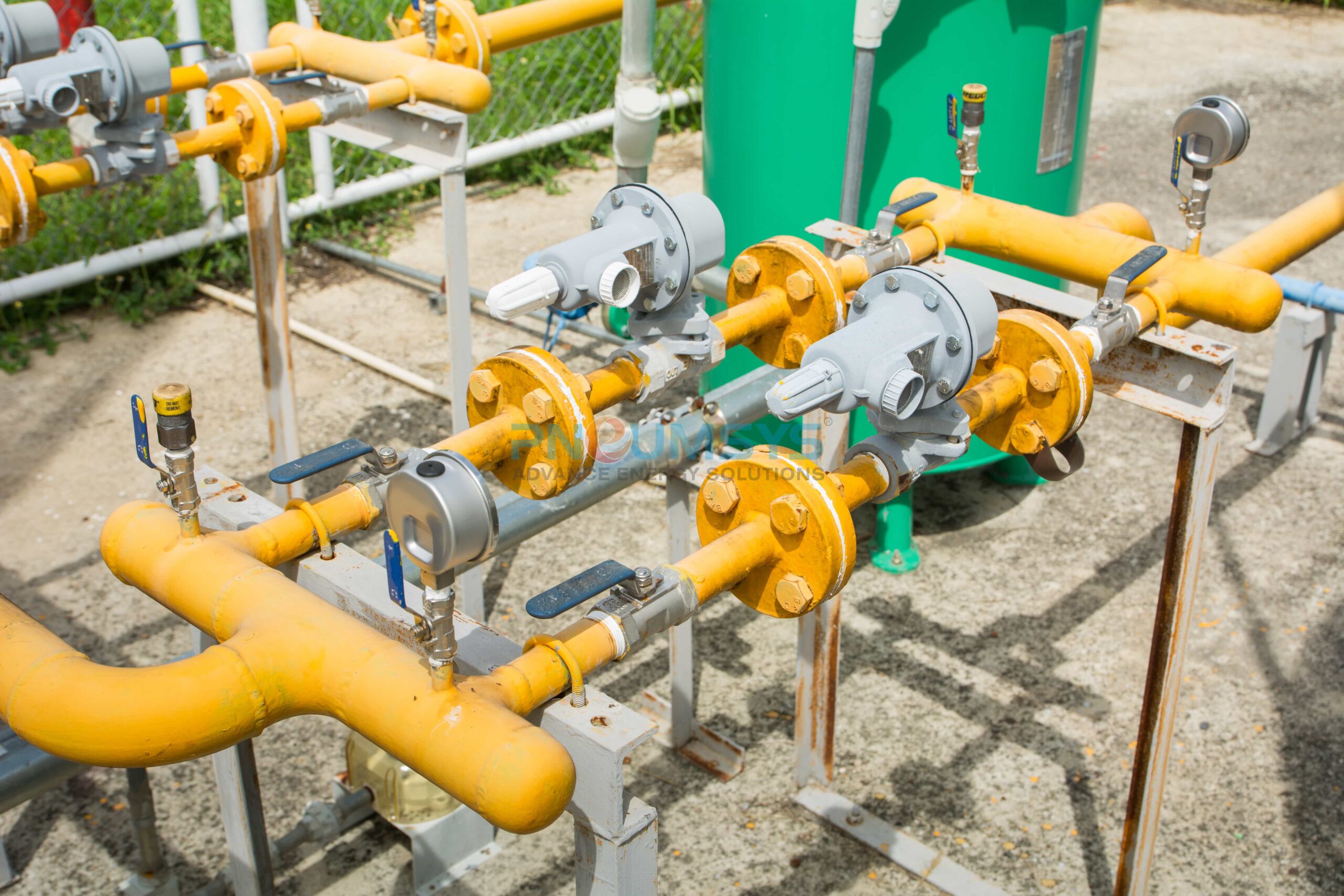
Hyderabad’s transition from traditional LPG cylinders to cleaner piped natural gas (PNG) is running up against a significant infrastructure bottleneck, leaving much of the city’s network underutilised and slowing efforts to decarbonise urban cooking and commercial energy use. Despite the central government’s push to expand city gas distribution (CGD) as a cleaner alternative to fossil fuels, delays in pipeline connectivity and coordination with civic agencies are constraining adoption in one of India’s fastest‑growing metropolitan regions.
Data from Bhagyanagar Gas Limited (BGL) — the entity authorised to develop and operate Hyderabad’s CGD network — show that more than 2.1 lakh PNG connections have technically been laid out across apartments and gated communities. Yet only around 80,000 households are actively using the supply, leaving over 60 per cent of the available infrastructure idle or unconnected to end users. This contrast highlights the gulf between infrastructure readiness and real‑world utilisation.The uneven uptake reflects both physical and administrative hurdles. Experts point to delays in securing permits and coordinating with the Greater Hyderabad Municipal Corporation (GHMC) and utility authorities for excavation and pipeline installation works in neighbourhoods such as Kompally, Shameerpet, Bachupally and Miyapur. These bottlenecks are delaying “last‑mile” connections, meaning that although the main distribution lines exist, households cannot yet access the gas at their burners. Urban gas distribution specialists describe this as a typical challenge in CGD projects where right‑of‑way and roadworks approvals often trail behind pipeline laying schedules, slowing customer onboarding.Despite the infrastructure gap, the demand side shows promise. Consumers who have adopted PNG — still a minority of overall connections — cite lower operational costs, 24/7 supply, enhanced safety and reduced carbon emissions relative to LPG cylinders. A larger shift to PNG could support cleaner residential energy ecosystems in dense urban zones, reducing particulate emissions from cylinders and logistics movements, and drawing cities closer to climate‑aligned utility mixes. In principle, piped natural gas also supports more predictable pricing for consumers and reduces transport and storage risks inherent in cylinder distribution.
However, urban energy analysts say systemic inertia could slow the transition if not addressed. Karachi‑style network expansion strategies — while robust in planning — require institutional coordination, streamlined permits and active traffic management to allow pipeline works in heavily trafficked urban corridors without disrupting streets and utilities. Cities such as Bhubaneswar and Thiruvananthapuram are concurrently integrating policy frameworks that accelerate CGD expansion by simplifying approvals and aligning utility excavations, underscoring the importance of policy‑infrastructure integration (see comparable CGD initiatives). (turn0news15; turn0news16)The slow commercial uptake — with only about 200 establishments connected in Hyderabad — illustrates that beyond residential kitchens, businesses and institutional users have been hesitant to switch. For developers and city planners, this signals the need for targeted subsidies, streamlined rolling permits and public‑private coordination that can bring pipeline gas into smaller businesses and community facilities.
Looking ahead, the infrastructure gap in Hyderabad implies that national and state efforts to expand PNG adoption must balance network rollout with proactive last‑mile execution and demand stimulation if urban energy transitions are to keep pace with climate and cost efficiency goals. Otherwise, well‑laid pipelines risk remaining symbolic rather than functional conduits for cleaner energy transitions in India’s cities.