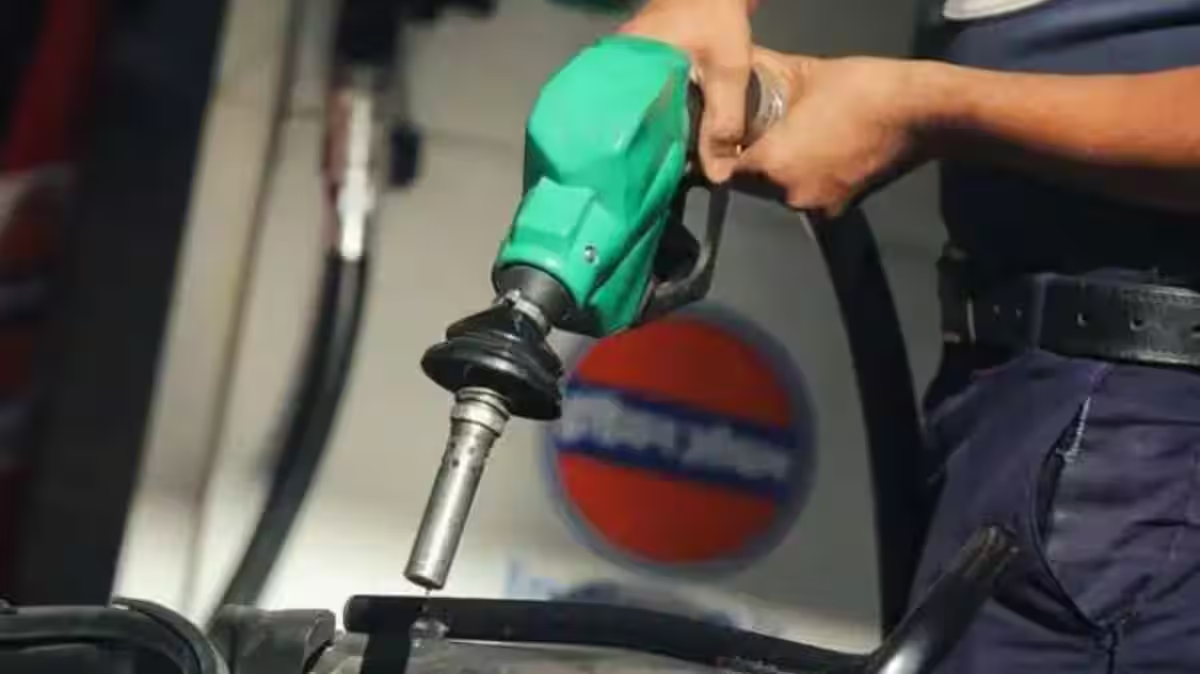
Hyderabad’s fuel retail network is showing signs of normalising after several days of unusual queues and supply anxiety at petrol and LPG stations, even as authorities continue to advise residents against panic‑driven purchasing. On the third consecutive day since reports of long lines emerged, the number of motorists waiting at fuel outlets has thinned in some areas, indicating a tentative easing of public concern — but the episode underscores how information gaps and urban demand dynamics can stress essential infrastructure in major Indian cities.
Earlier in the week, reports circulated of extensive lines at petrol pumps across neighbourhoods such as Amberpet, Banjara Hills and Kukatpally, where some stations were even displaying “no stock” signs. These conditions rippled through daily life, disrupting commutes for office‑goers and delivery services, and sparked traffic congestion and anxiety among residents reliant on private vehicles. Government and civic officials have maintained that fuel supply chains remain stable, with stocks of petrol, diesel and LPG reported to be sufficient to meet demand for at least the next three months. Daily deliveries by state and national oil marketing companies have reportedly outpaced local consumption, and buffer stocks were increased as a precaution following the surge in demand. Transport planners note that such periods of stress often reveal the delicate interplay between public perception, logistics capacity and urban mobility needs. Hyderabad’s reliance on road transport — with relatively limited rapid public transit penetration compared with some other metros — means that disruptions or rumours around fuel availability can quickly translate into behavioural changes, such as topping up tanks earlier than usual or storing fuel, further amplifying supply pressure at retail outlets.
Authorities, including the city police commissioner and civil supplies officials, have publicly urged residents to avoid stockpiling fuel and to rely on official updates rather than social media speculation. Law enforcement has also monitored fuel outlets to prevent hoarding and unsafe storage practices, which pose safety risks and can strain service operations. Urban economists point out that modern cities must prepare for such volatility not only through physical infrastructure resilience but also through robust communication strategies. Miscommunication or unchecked rumours can trigger self‑inflicted shortages, where normal supply is perceived as insufficient purely because of heightened demand triggered by fear. This can have cascading effects on traffic flow, delivery logistics, and even public transport utilisation patterns. For ride‑hail drivers and small businesses that depend on predictable fuel access, the episode has been more than an inconvenience. Extended waiting times and uncertainty can reduce productive hours and carry economic costs, particularly for gig workers whose earnings are closely tied to mobility.
Looking ahead, planners are emphasising the need for integrating real‑time supply chain data with public alerts and demand forecasting tools — especially during periods of geopolitical volatility and fluctuating global oil markets. If fuel availability stabilises as reported, the current phase could be seen as a stress test for urban systems and citizen behaviour, highlighting that resilient infrastructure must be paired with trusted information flows to sustain everyday life in fast‑growing cities like Hyderabad.