


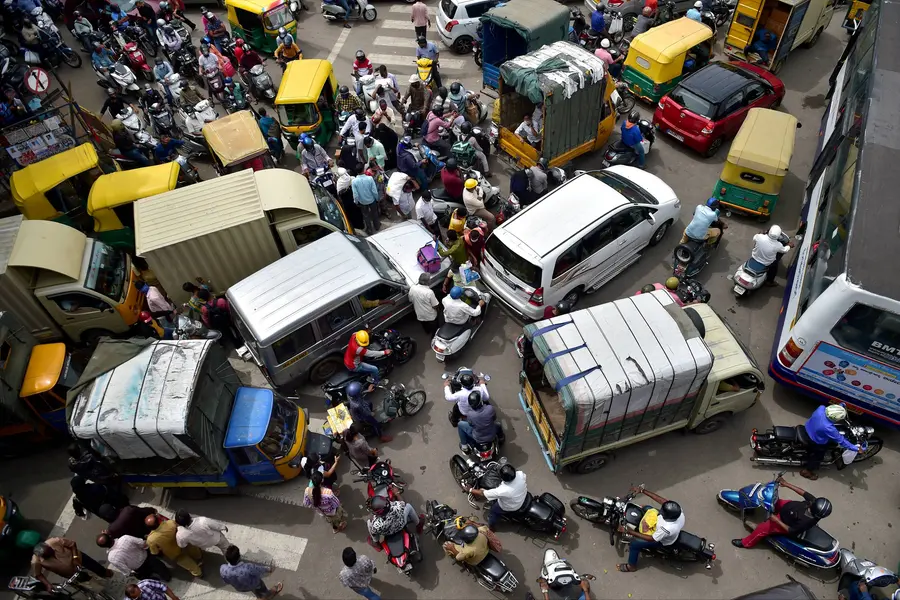
A renewed push for underground road infrastructure in Bengaluru has brought the proposed tunnel road plan into focus, with policymakers positioning it as a potential solution to the city’s chronic traffic congestion and mobility challenges.
Senior government officials have indicated that a tunnel road network could offer a more efficient alternative to surface-level expansion in a densely built urban environment. The proposal aims to decongest key arterial corridors by diverting through-traffic underground, freeing up surface roads for local movement and public transport.The Bengaluru tunnel road plan is being evaluated against the backdrop of rapidly increasing vehicle ownership, limited road widening possibilities, and mounting pressure on existing infrastructure. Urban mobility experts note that conventional approaches such as flyovers and signal redesign have delivered incremental improvements but are struggling to keep pace with demand.Supporters of the tunnel road concept argue that underground corridors can reduce travel time across the city, particularly for long-distance commuters.By separating fast-moving traffic from local flows, the model could improve efficiency while reducing bottlenecks at major junctions.However, the proposal has also triggered debate among planners and environmental experts. Concerns centre on the high capital costs associated with tunnelling, as well as potential risks related to groundwater systems, soil stability, and construction disruption in an already stressed urban ecosystem. Experts emphasise that detailed feasibility studies and environmental impact assessments will be critical before advancing the project.From a sustainability perspective, the Bengaluru tunnel road discussion highlights the tension between infrastructure expansion and climate-resilient planning.
While underground roads may ease congestion, they could also encourage higher private vehicle usage unless complemented by strong public transport systems. Urban planners stress the need for an integrated approach that prioritises mass transit, non-motorised mobility, and demand management.The economic implications of the tunnel road plan are also significant.Large-scale infrastructure projects can stimulate investment, create employment, and enhance connectivity across urban regions. Improved travel efficiency can benefit businesses by reducing logistics costs and increasing productivity. At the same time, financing such projects requires careful consideration of public expenditure, private participation, and long-term returns.Real estate dynamics could also be influenced by the development of underground corridors.Enhanced connectivity often leads to increased property values and new development opportunities along key routes.However, equitable access and balanced growth will remain important to ensure that benefits are distributed across different parts of the city.As Bengaluru continues to grapple with mobility constraints, the tunnel road plan represents a high-stakes intervention that could reshape how the city approaches infrastructure development. Its success will depend on aligning engineering feasibility with environmental safeguards and broader urban planning goals.
In the coming months, detailed studies and stakeholder consultations are expected to determine whether the Bengaluru tunnel road vision can transition from concept to implementation, and how it fits within the city’s long-term strategy for sustainable and inclusive mobility.
Also Read:Bengaluru Flexible Workspace Expansion Drives Office Market Growth
