


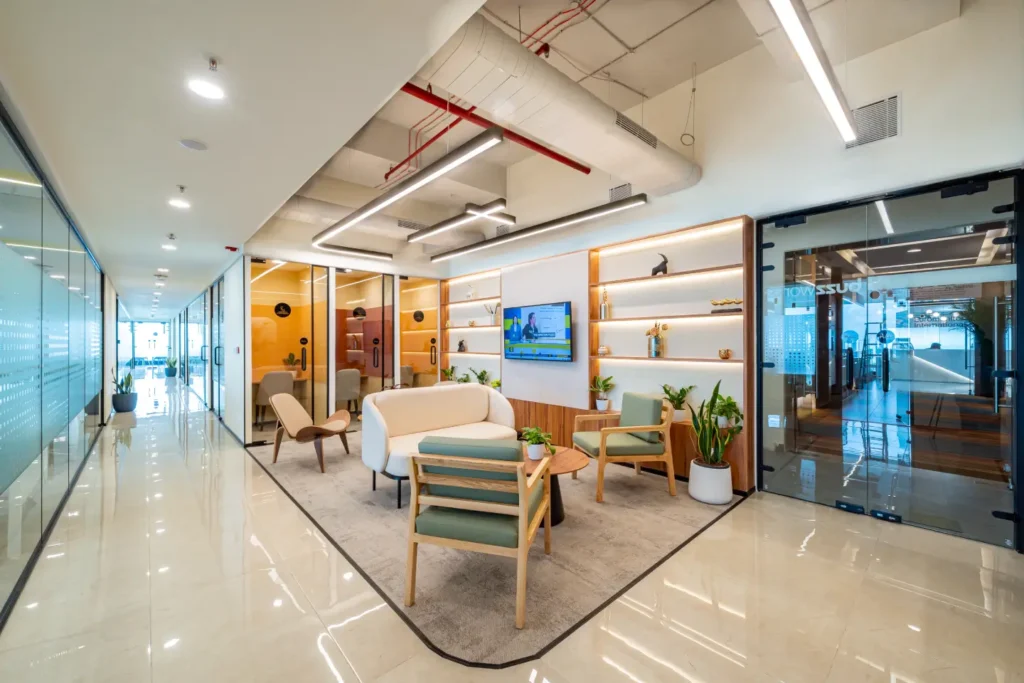
A significant expansion of flexible office space in Bengaluru is signalling renewed momentum in the city’s commercial real estate sector, as workspace providers scale up capacity to meet evolving corporate demand and hybrid work trends.
A leading managed workspace operator has added approximately 4.69 million square feet of office space in Bengaluru, marking one of the largest recent expansions in the city’s flexible workspace segment. The move reflects growing demand from enterprises seeking scalable, plug-and-play office solutions in a dynamic business environment.Industry experts indicate that Bengaluru’s position as India’s foremost technology and startup hub continues to drive office absorption, even as workplace strategies shift. Companies are increasingly opting for flexible workspace expansion to reduce long-term lease commitments, optimise costs, and accommodate fluctuating workforce sizes.A senior real estate consultant noted that the expansion is aligned with a broader structural shift in office demand, where flexibility, location, and sustainability are becoming key decision factors. Occupiers are prioritising high-quality, well-connected office environments that offer operational efficiency alongside employee-centric design.The flexible workspace expansion trend is also influencing how developers approach commercial real estate projects. Instead of traditional single-tenant buildings, there is a growing focus on mixed-use developments that integrate office, retail, and lifestyle amenities.
This model supports higher occupancy rates and enhances the long-term viability of urban assets.Urban planners suggest that such growth is reshaping Bengaluru’s spatial development patterns. As demand concentrates in key business districts and emerging corridors, infrastructure requirements—including public transport, road networks, and utilities—are evolving in response. The expansion of flexible workspaces often acts as a catalyst for improved connectivity and supporting infrastructure.Sustainability considerations are increasingly central to this transformation.Modern workspace providers are incorporating energy-efficient systems, green building certifications, and resource optimisation measures to align with corporate environmental goals. This reflects a gradual shift towards low-carbon commercial real estate, in line with broader urban climate commitments.From an economic perspective, the scaling up of flexible office space contributes to job creation across multiple sectors, including facility management, technology services, and urban amenities. It also strengthens Bengaluru’s appeal as a destination for global businesses looking to establish or expand operations in India.However, analysts caution that sustained growth will depend on balanced supply and demand dynamics. Oversupply risks in certain micro-markets and infrastructure bottlenecks could impact long-term stability if not addressed through coordinated planning and policy support.
The latest flexible workspace expansion underscores Bengaluru’s evolving office market, where adaptability and resilience are becoming defining characteristics. As hybrid work models continue to mature, the role of flexible workspaces is expected to deepen, shaping the future of commercial real estate and urban development in the city.
Also Read:Bengaluru Cricket Schedule Drives Urban Economic Growth
