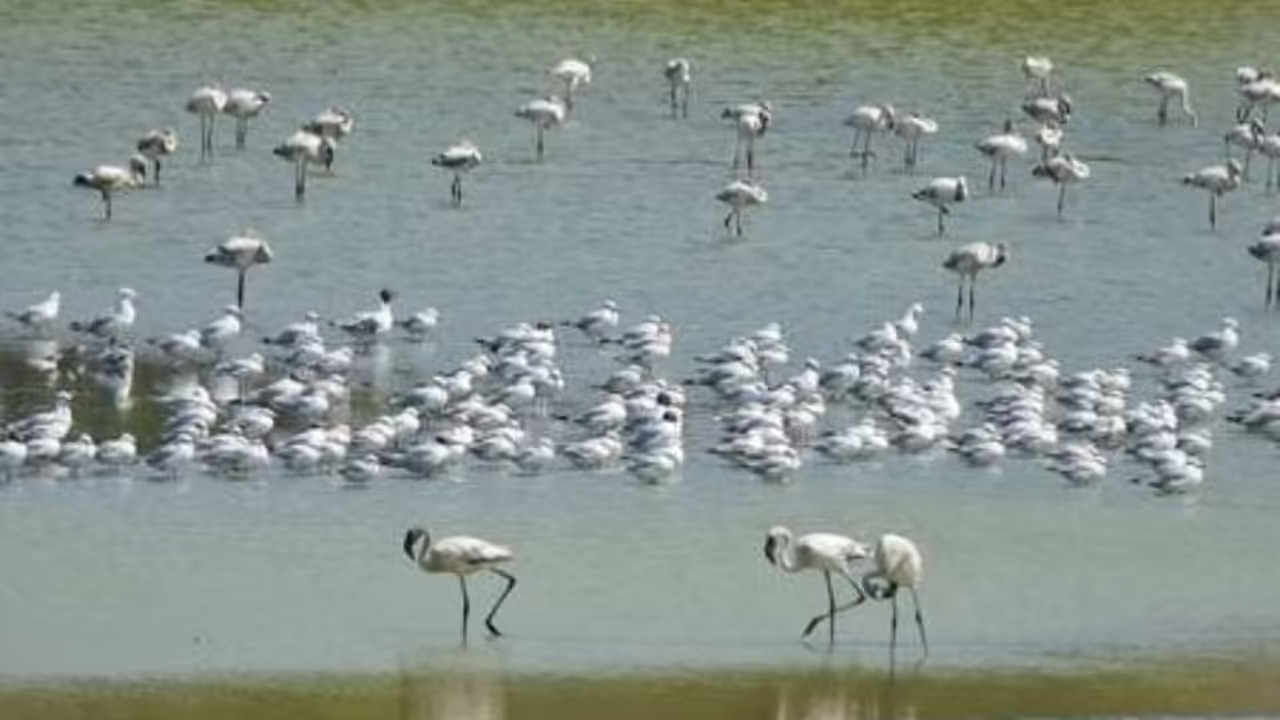
Concerns are mounting over the ecological health of key wetland zones in Navi Mumbai after recent assessments indicated deteriorating water quality in several lakes that support migratory flamingo populations. The development has raised fresh questions about the sustainability of urban expansion in environmentally sensitive coastal areas.
Preliminary findings from environmental monitoring suggest that multiple water bodies within the flamingo habitat network are experiencing stress due to declining water quality. Experts tracking the Navi Mumbai flamingo lakes pollution situation point to abnormal readings in critical parameters such as oxygen levels and organic load, which are essential indicators of aquatic ecosystem health. These shifts can significantly reduce the ability of wetlands to sustain both plant and animal life. The affected lakes form part of a broader interconnected system linked to the Thane Creek ecosystem, which serves as a crucial stopover for migratory birds. Urban ecologists note that any disruption in this network can have cascading effects on biodiversity, particularly for species like flamingos that depend on shallow, nutrient-rich waters for feeding.
A key factor contributing to the Navi Mumbai flamingo lakes pollution issue appears to be restricted tidal exchange. Wetlands in coastal cities rely on natural water movement to flush out contaminants and maintain ecological balance. However, infrastructure development, land reclamation, and physical barriers have increasingly altered these flows, leading to stagnation and pollutant accumulation over time. Urban planners and environmental experts have also highlighted the role of rapid construction activity in surrounding areas. As Navi Mumbai continues to grow as a residential and commercial hub, pressure on natural ecosystems has intensified. Encroachments and unregulated interventions near wetland zones can disrupt hydrological patterns, further weakening the resilience of these habitats.
Beyond biodiversity, the degradation of wetlands carries broader urban risks. Such ecosystems act as natural buffers against flooding, help recharge groundwater, and contribute to climate regulation in coastal cities. Their decline could therefore increase vulnerability to extreme weather events, an emerging concern for the Mumbai Metropolitan Region. Policy observers suggest that the current situation reflects gaps in monitoring and enforcement rather than a lack of regulatory frameworks. While environmental safeguards exist on paper, implementation often struggles to keep pace with the speed of urbanisation. Strengthening oversight mechanisms and ensuring coordination between planning authorities and environmental bodies are seen as critical next steps.
The issue also underscores the need to integrate ecological considerations into infrastructure planning more systematically. Sustainable urban growth in regions like Navi Mumbai will depend on preserving natural assets alongside built development, rather than treating them as competing priorities. As attention turns to corrective measures, experts emphasise the importance of restoring tidal connectivity, improving wastewater management, and conducting continuous water quality assessments. The trajectory of these wetlands in the coming years will likely serve as a key indicator of how effectively the region can balance development with environmental stewardship.
Navi Mumbai Flamingo Lakes Pollution Raises Ecological Concerns