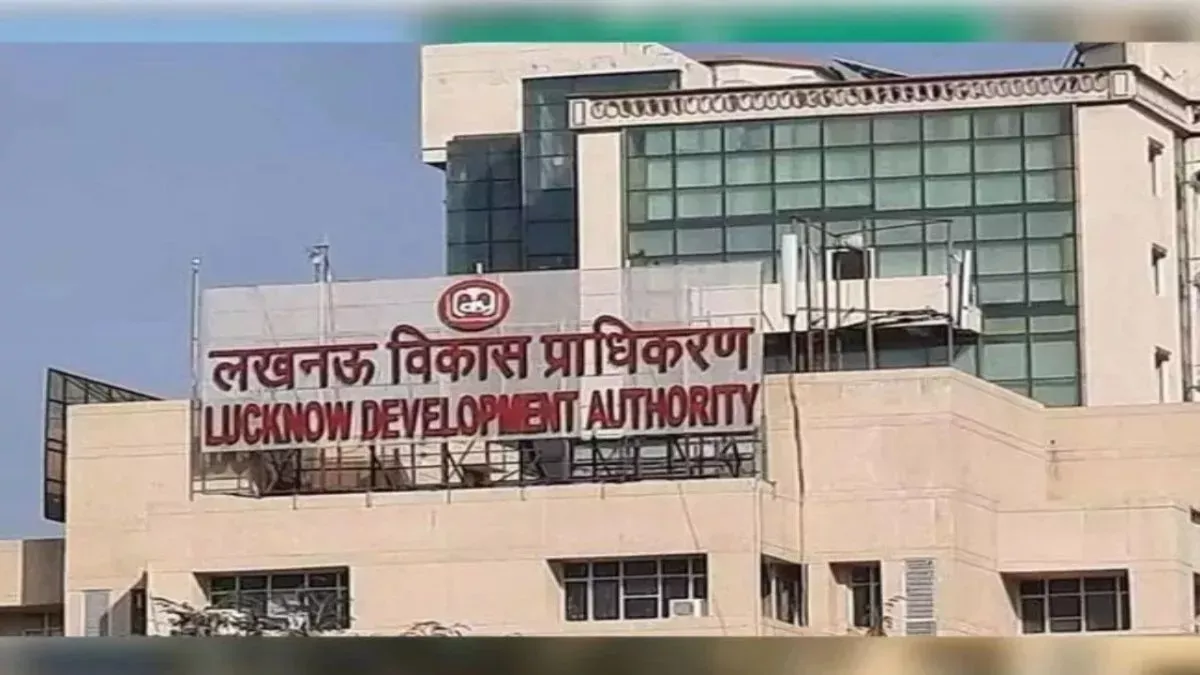
Lucknow Development Authority OTS Scheme Targets Defaulters
The Lucknow Development Authority OTS scheme is being positioned as a key step to revive stalled housing assets and recover long-pending dues in one of northern India’s fastest-growing real-estate markets. The scheme will allow buyers who defaulted on payments for residential, commercial and institutional properties to clear outstanding dues with reduced penalties and simplified interest rules.
Officials involved in the plan say thousands of payment defaults remain unresolved across housing-authority projects in Uttar Pradesh, particularly in cities such as Lucknow where demand for plots and flats has grown rapidly over the past decade. The new settlement window is expected to allow authorities to recover large amounts of unpaid dues while enabling allottees to regularise their properties and complete registrations that were delayed because of outstanding payments. The significance of the Lucknow Development Authority OTS scheme goes beyond short-term revenue recovery. Over the past few years, housing-authority projects in the city have faced a growing gap between property allotments and actual possession. In several schemes, allotments were cancelled or delayed because buyers could not pay full instalments on time, while others struggled with high penalty charges that accumulated over several years. Recent reports also highlighted hundreds of defaulting allottees at risk of losing their properties, reflecting a wider challenge in the city’s housing ecosystem. Urban-development experts say one-time settlement schemes are increasingly being used across Indian cities to address such structural issues.
By allowing only simple interest instead of compounding penalties and giving a limited-period window for payment, authorities aim to convert non-performing housing assets into active residential supply. This can also help reduce the number of vacant or partially completed properties that place pressure on urban land resources. The move also has implications for the broader real-estate market in Lucknow. Over the past decade, the city has expanded rapidly along corridors such as Gomti Nagar Extension and Sultanpur Road, with housing demand driven by middle-income buyers and new infrastructure projects. However, delayed payments and stalled projects have weakened buyer confidence in some public-sector schemes. Industry analysts say the new settlement policy could help rebuild trust by giving existing buyers a practical route to ownership while also improving the financial position of the development authority. From a policy perspective, the initiative also reflects a broader shift towards more flexible real-estate governance. Instead of cancelling allotments and restarting sales processes, authorities are increasingly focusing on regularisation and recovery, which helps reduce litigation, avoid wastage of built infrastructure and support more inclusive urban growth.
The success of the scheme, however, will depend on execution. If implemented effectively within the announced time window, the Lucknow Development Authority OTS scheme could unlock stalled housing stock and accelerate property registrations across the city. For urban planners, the real test will be whether the policy translates into faster occupancy and more sustainable use of existing housing infrastructure rather than simply short-term revenue gains.