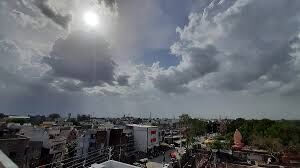
Lucknow Weather Rise Signals Early Summer Pressure
Temperatures across Lucknow, Noida and Prayagraj have surged to early-summer levels in the final week of March, signalling an unusually fast seasonal shift that could intensify pressure on urban infrastructure across Uttar Pradesh. Weather updates issued on March 26 indicate that several cities are already recording maximum temperatures close to 37°C, well before the traditional peak summer period begins.
The latest forecast suggests that Lucknow and Prayagraj are among the hottest cities in the state this week, with daytime temperatures rising sharply while nights remain warmer than usual. In Noida too, conditions are expected to remain hazy and warm, with temperature levels continuing to stay above seasonal averages. Weather officials have also indicated that air quality could worsen during the hotter afternoons, adding to discomfort for residents. For urban planners, the significance of this Uttar Pradesh weather heat surge lies in how early it has arrived. The India Meteorological Department has already warned that maximum and minimum temperatures in many parts of northern India have been running above normal this month. Official weather bulletins point to a pattern of rising heat conditions across the plains, with warmer nights and higher daytime temperatures becoming more frequent than in previous years. The impact goes beyond discomfort. Cities such as Lucknow and Noida have witnessed rapid construction activity over the past decade, with large residential corridors, new highways and commercial zones expanding rapidly.
Urban-development experts say such growth often increases heat retention because concrete surfaces absorb more heat while green cover reduces. As a result, cities tend to heat up faster than surrounding rural areas, a phenomenon widely known as the urban heat-island effect. The economic implications are equally significant. Higher temperatures increase electricity demand for cooling, particularly in densely populated neighbourhoods where access to reliable power is uneven. Construction activity, which plays a major role in urban employment, also slows down during intense heat conditions. Experts note that early-season heat waves can affect productivity across sectors such as transport, real estate and small businesses that depend heavily on outdoor labour. The trend also raises long-term planning concerns. Rising temperatures in March suggest that the duration of summer in northern India is gradually increasing. Urban-policy specialists say cities will need to respond by prioritising climate-resilient infrastructure, including better shaded public spaces, improved water-supply systems and stronger green-cover policies. Without these changes, rapidly expanding urban areas could face higher living costs and greater environmental stress in the coming years.
For now, the temperature rise is expected to continue through the coming days, with only minor fluctuations likely. For residents, it signals the arrival of summer earlier than expected. For urban planners, however, the Uttar Pradesh weather heat surge is a reminder that climate-related challenges are becoming a permanent part of how cities grow and function.