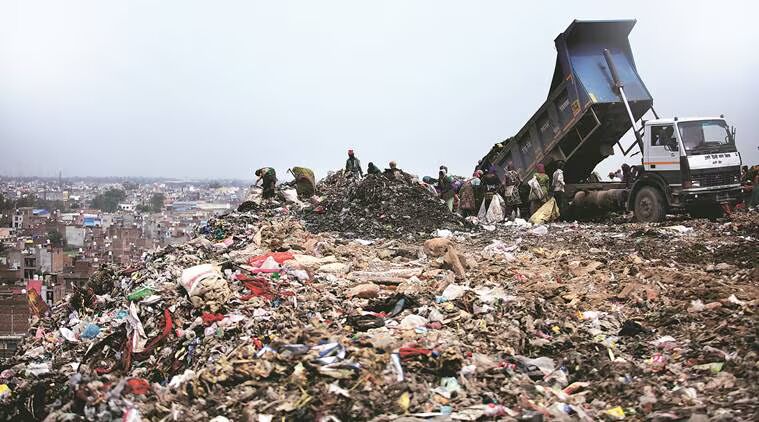
Concerns over incomplete Chandigarh waste segregation are resurfacing as officials acknowledge that several urban bodies in the region are still struggling to implement mandatory source-segregation norms, a gap that could affect the city’s long-standing reputation as one of India’s better-planned urban centres. The issue has drawn attention at a time when waste-management systems across northern India are under pressure from rapid population growth and rising daily garbage generation.
Although Chandigarh has historically reported high levels of door-to-door waste collection and a relatively structured municipal system, the challenge now lies in consistent segregation at the household and institutional level. Waste-management policy documents prepared for Indian cities show that the city generates hundreds of tonnes of municipal waste every day, much of which still ends up at the landfill site when segregation is not properly implemented at source. Urban planners say the significance of the Chandigarh waste segregation issue goes beyond cleanliness rankings. Source segregation is the foundation of sustainable waste systems because it determines whether waste can be recycled, composted, or processed into energy. When mixed waste reaches landfill sites, cities face higher environmental costs, including methane emissions, groundwater contamination, and rising land requirements for dumping sites. These risks are particularly critical for a compact and highly planned city like Chandigarh, where land availability is limited and residential neighbourhoods are located close to waste-processing facilities.
The issue also reflects a wider governance challenge. Municipal corporations across India are responsible for collection, transportation, processing, and disposal of solid waste, but implementation varies widely depending on local infrastructure and public participation. Even in cities with relatively advanced waste-collection systems, incomplete segregation often results from gaps in awareness, irregular monitoring, and limited decentralised processing capacity. For Chandigarh, the timing of the concern is important. Recent news reports have already pointed to environmental penalties and rising civic costs linked to waste-management lapses, indicating that the issue is no longer limited to operational inefficiencies but is becoming a broader urban-governance challenge. Experts say the solution lies not only in enforcement but also in system redesign. Cities that have improved segregation rates typically combine strict penalties for non-compliance with decentralised waste-processing units, better collection infrastructure, and public-awareness campaigns.
In a city known for its planned layout and high quality of life, the current focus on improving segregation could become an important test of how effectively urban governance can adapt to modern sustainability demands. If addressed quickly, stronger segregation practices could help Chandigarh reduce landfill pressure, improve recycling outcomes, and move closer to zero-waste goals that many Indian cities are now attempting to achieve. The next phase will depend on whether local urban bodies can convert policy commitments into consistent behaviour at the neighbourhood level — the factor that ultimately determines how sustainable a city really becomes.