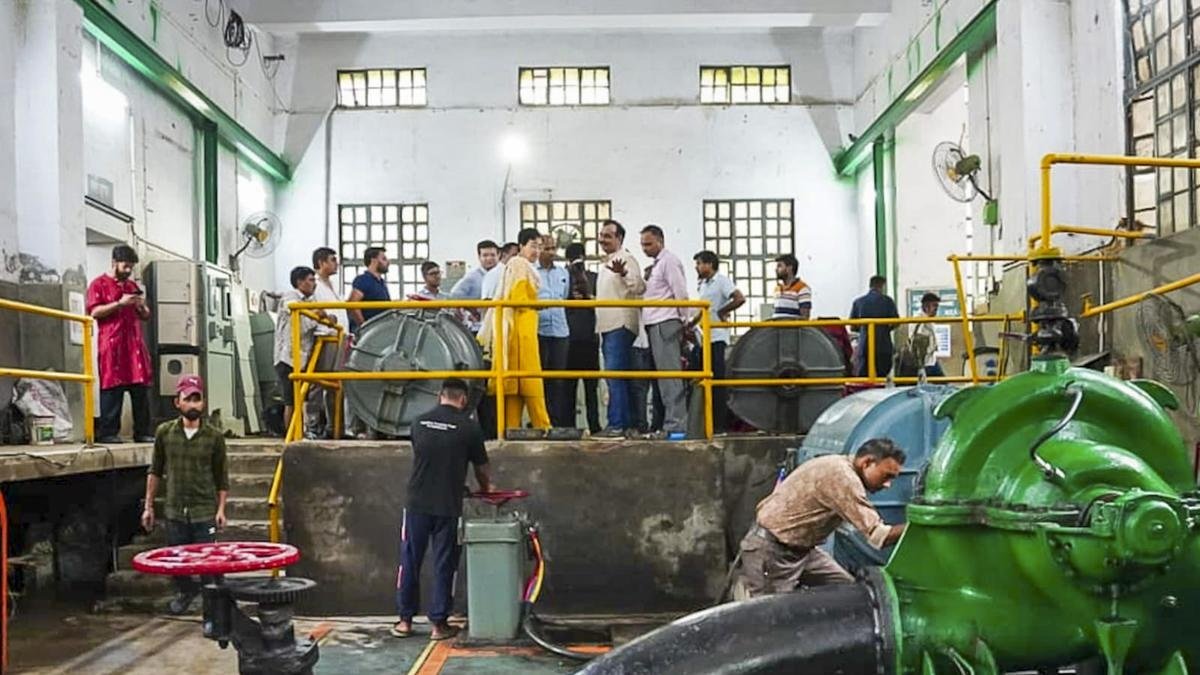
Delhi Chandrawal Plant Repairs Restore City Water Flow
Water supply conditions in parts of central Delhi are expected to stabilize as restoration work at a key treatment facility nears completion, following a disruption triggered by pipeline damage earlier this month. Authorities indicate that the Chandrawal installation, a critical node in the capital’s water distribution network, is on track to resume full operational capacity, easing shortages that have affected residential and institutional zones. The disruption began after a major transmission line linked to the facility was damaged, reducing output and forcing authorities to manage supply through limited pumping capacity. In the interim, contingency measures were deployed, including partial operations using available pump sets to maintain essential distribution. However, several areas experienced irregular supply, highlighting the system’s sensitivity to infrastructure failures.
Officials overseeing operations state that repair work has progressed steadily, with round-the-clock deployment of technical teams. Current output levels have already improved, and full restoration is expected to bring supply back to normal levels. Continuous monitoring is being undertaken to ensure stability once operations scale up, particularly given the high demand in densely populated parts of the city. The Delhi Chandrawal water plant plays a vital role in supplying treated water to key administrative and residential districts. Urban infrastructure experts note that such centralised facilities, while efficient, can create single points of vulnerability if supporting pipelines or pumping systems fail. This incident has renewed focus on the need for redundancy planning and network resilience in urban water systems. From a broader planning perspective, the episode underscores the challenges of maintaining ageing water infrastructure in rapidly growing cities. Many Indian metros rely on legacy pipelines that are prone to wear and accidental damage, often leading to service disruptions.
Experts suggest that periodic upgrades, real-time monitoring systems, and decentralized treatment options could reduce the risk of similar incidents in the future. The Delhi Chandrawal water plant restoration also highlights the importance of coordinated response mechanisms. Quick mobilization of repair teams and phased restoration helped limit the duration of disruption, though the impact on daily life was still significant for affected communities. Ensuring equitable water access during such events remains a critical governance challenge, particularly in areas with limited storage capacity. In the context of climate variability and rising urban demand, strengthening water infrastructure is increasingly linked to city resilience. Reliable supply systems not only support public health and economic activity but also reduce dependence on emergency measures such as tanker services, which can strain resources and increase costs.
As the Chandrawal facility returns to full capacity, attention is likely to shift towards long-term system upgrades and preventive maintenance strategies. The incident serves as a reminder that resilient urban infrastructure requires sustained investment, integrated planning, and proactive risk management to meet the needs of a growing population.