


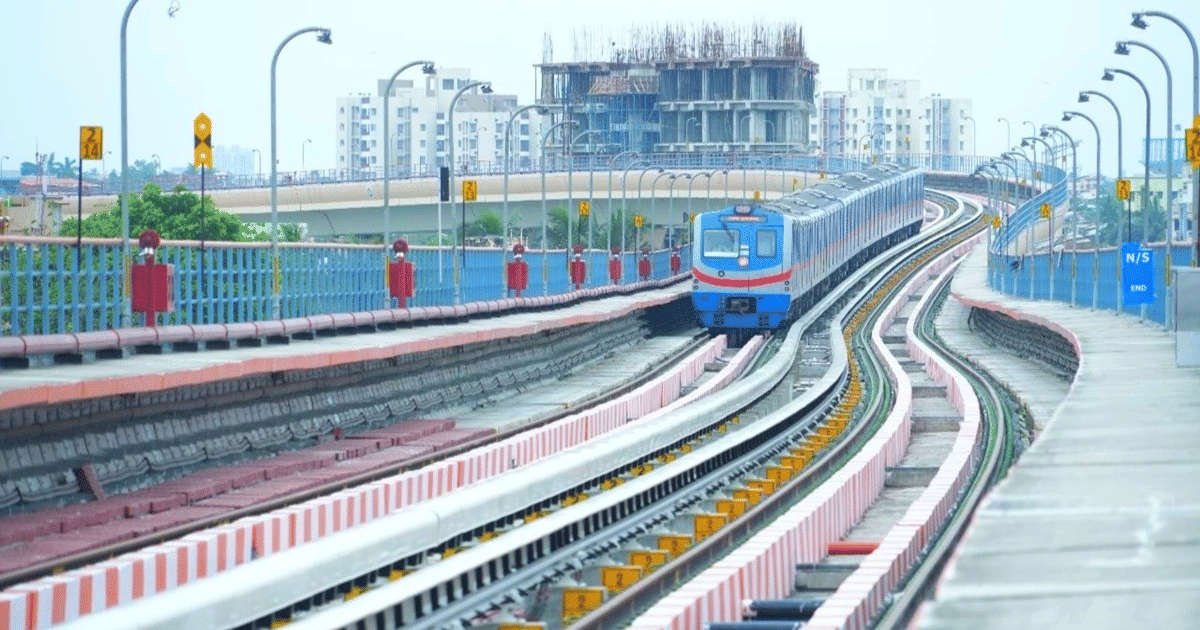
India’s top court has flagged concerns over slow progress in a major metro rail expansion in Kolkata, bringing renewed attention to execution gaps that continue to affect large urban infrastructure projects.
The development underscores how delays in transit systems can ripple across mobility, economic productivity, and environmental goals in rapidly growing cities.The judicial intervention centres on pending works linked to the Kolkata Metro network, where implementation timelines have reportedly lagged despite long-standing approvals and funding commitments. For a city grappling with congestion, ageing infrastructure, and rising commuter demand, such setbacks highlight structural challenges in project coordination between state agencies and implementing bodies.Urban planners note that metro rail systems are not merely transport upgrades but critical tools for reshaping land use and reducing dependence on private vehicles. In cities like Kolkata, where population density and legacy road networks constrain expansion, timely delivery of metro corridors is essential to ensure equitable access to jobs, education, and services. Delays, therefore, risk widening spatial inequalities while prolonging environmental stress caused by traffic congestion and emissions.Officials familiar with the matter suggest that bottlenecks often arise from land acquisition hurdles, utility shifting, and inter-agency coordination failures.
While these issues are not unique to Kolkata, the scale and duration of pending works have drawn sharper scrutiny. Industry experts argue that governance reforms—such as single-window clearances and stricter accountability frameworks—are increasingly necessary to prevent cost overruns and stalled execution.The situation also reflects broader questions around urban infrastructure financing and delivery models in India. Metro projects require sustained capital investment and long-term planning, often spanning multiple political cycles. Any disruption in administrative continuity can delay decision-making, affecting both timelines and investor confidence. For cities aiming to align with climate-resilient growth pathways, such delays undermine efforts to shift commuters towards low-carbon public transport systems.From a civic perspective, incomplete metro links translate into fragmented connectivity, limiting the system’s overall effectiveness. Commuters are forced to rely on intermediate modes, increasing travel time and costs. This weakens the intended impact of integrated transport planning, which is central to building inclusive and efficient urban ecosystems.The court’s remarks may now accelerate administrative action, prompting stakeholders to reassess timelines and execution strategies. Experts suggest that stronger monitoring mechanisms and transparent progress tracking could help restore momentum while ensuring public accountability.
As Indian cities continue to invest in mass transit to support sustainable growth, the experience in Kolkata serves as a reminder that infrastructure ambitions must be matched by consistent execution. The next phase will depend on whether institutional coordination improves and whether delivery frameworks evolve to meet the urgency of urban transformation.
Also Read:Kolkata LPG Queue Cap Impacts Urban Transport
