Zirakpur Bypass Project Moves Closer To Work Award
One of the most critical road projects for the Chandigarh-Mohali-Panchkula urban region is moving closer to execution, with the long-delayed Zirakpur bypass now reaching the final stage before the work award. The development signals a major shift in how the Tricity is planning to deal with mounting traffic congestion along one of its busiest entry corridors.
The six-lane bypass has been planned to divert inter-state and long-distance traffic away from the heavily congested junction where national highways intersect at Zirakpur. Officials involved in the process say the project is expected to significantly reduce travel time for commuters travelling between Punjab, Haryana, Himachal Pradesh and Chandigarh, while also easing pressure on the existing urban road network. The road is designed as a 19-kilometre corridor connecting the Patiala-Zirakpur stretch of National Highway-7 with the Zirakpur-Parwanoo section of National Highway-5. According to government project documents, the bypass will include multiple flyovers, underpasses, culverts and an elevated section, reflecting the scale of engineering required in a rapidly urbanising corridor where land availability and traffic density are both major constraints.
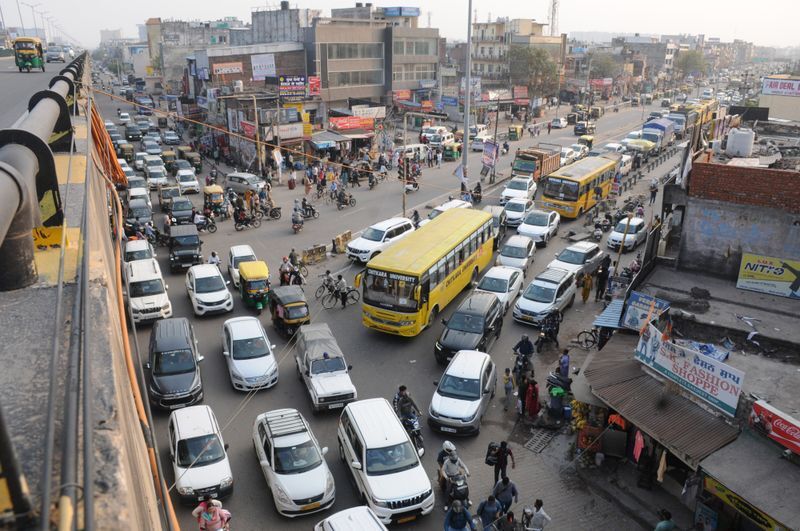
The project has faced repeated delays over the past decade, largely due to environmental clearances and administrative approvals. However, the recent progress in the bidding process suggests the project has finally moved from the policy stage to actual execution planning. Officials have indicated that the evaluation of bids is nearing completion and that the work contract is expected to be finalised shortly. Urban development experts say the timing of the project is particularly significant. Zirakpur has evolved rapidly from a small town into a major residential and commercial hub on the outskirts of Chandigarh, with thousands of daily commuters travelling through the area. As a result, the existing highway stretch now functions not only as an inter-state corridor but also as a local urban road, creating persistent congestion and safety concerns.
The bypass is also expected to influence real-estate and infrastructure growth across the wider Tricity region. Better connectivity to Panchkula, Mohali and Himachal Pradesh could encourage more planned urban expansion while reducing pressure on the core city. Urban planners say such large transport projects are increasingly being viewed as tools for shaping future urban growth rather than simply reducing traffic. At the same time, experts emphasise that large road projects must now be planned alongside sustainable mobility strategies. While bypasses can reduce congestion in the short term, long-term urban resilience depends on integrating public transport, land-use planning and environmentally responsible infrastructure.
For residents and daily commuters, however, the immediate impact will be far more practical: smoother traffic flow, shorter travel times and safer road conditions in one of the most crowded gateways to the Tricity. If the work award is finalised as expected, construction could begin soon, marking the first real progress on a project that has remained on paper for years.