Chandigarh Urban Growth Contributors Honoured At Civic Event
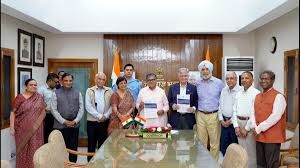
Chandigarh’s long-term development model is once again in focus, with the Punjab governor and administrator of the Union Territory publicly acknowledging the contributions of planners, engineers and civic stakeholders who helped shape the city’s growth.
The recognition comes as Chandigarh prepares to mark 75 years since its creation, a milestone that is prompting fresh conversations about how the planned city should evolve in the coming decades. The governor, who also serves as the administrator of Chandigarh, emphasised that the city’s development has been the result of collective effort rather than isolated policy decisions. Over the past seven decades, the city has grown from a post-independence capital project into one of India’s most structured urban centres, known for its sector-based planning, green cover and balanced land-use approach.
Urban planners say the recognition is significant because Chandigarh remains one of the few Indian cities where planned urban development has largely survived the pressures of rapid population growth. Created in the early 1950s as a modern capital for Punjab after Partition, the city was designed with clear zoning, pedestrian-friendly neighbourhoods and a strong emphasis on public spaces. Today, that planning legacy continues to influence how other Indian cities approach urban design and infrastructure development. The recent acknowledgement of contributors to the city’s growth also comes at a time when Chandigarh is facing a new set of challenges. Rapid expansion in the surrounding urban region — particularly in the tri-city area that includes Mohali and Panchkula — is increasing pressure on infrastructure, mobility and housing. Experts believe that preserving the city’s original planning principles while adapting to modern urban demands will be one of the most critical policy challenges over the next decade.
Officials involved in the commemorative programmes have indicated that the focus will not be limited to celebrating the city’s history. The 75-year milestone is also being used to encourage public participation in future urban planning, including heritage preservation, sustainable mobility and long-term climate resilience. The recognition of planners and civic contributors therefore reflects a broader effort to position Chandigarh as a model for sustainable and inclusive urban growth rather than simply a historic planned city. For residents, the message is particularly relevant at a time when many Indian cities are struggling with congestion, unplanned development and declining public spaces. Chandigarh’s experience demonstrates how long-term planning can shape a more liveable urban environment — but also how maintaining that balance requires continuous civic investment and community participation.
As the city enters its next phase of growth, the focus is likely to shift from expansion to preservation and renewal. Whether Chandigarh can maintain its reputation as one of India’s most liveable urban centres will depend on how effectively policymakers integrate modern infrastructure needs with the planning principles that originally defined the city.