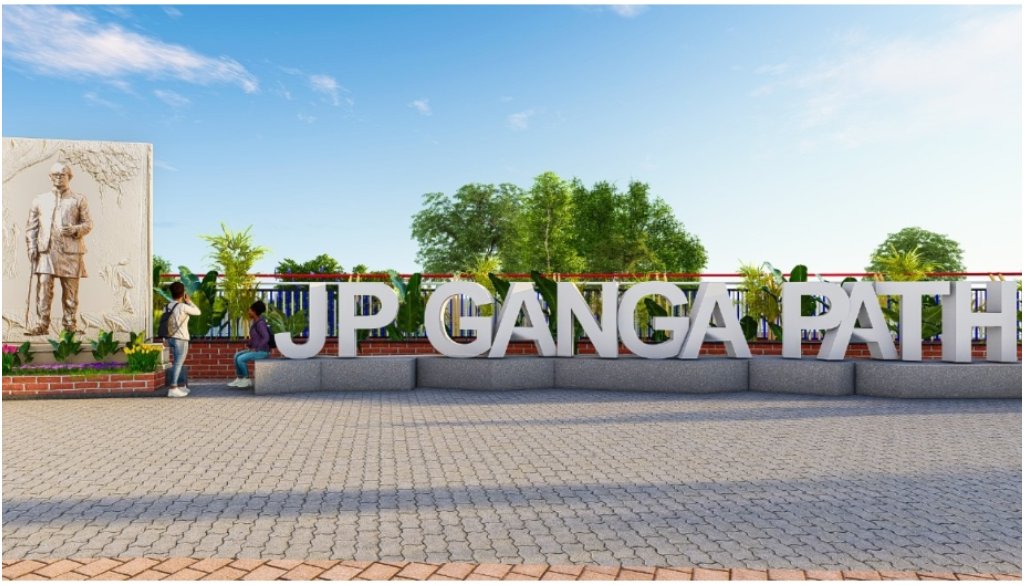
Patna’s riverfront road network is entering a much larger expansion phase, with construction of the second stretch of the JP Ganga Path set to connect the city further west towards Maner and Koilwar. The project, which forms part of a broader river-edge mobility plan, is expected to reshape how the capital connects with neighbouring districts while also influencing long-term urban growth along the Ganga corridor. According to officials involved in the project, the Phase-2 extension will run for more than 35 km from the existing Digha stretch to the Koilwar bridge area.
The corridor will combine elevated sections and ground-level road segments, with the aim of enabling faster travel while reducing pressure on already congested inner-city routes such as Ashok Rajpath and the western entry points into the city. The scale of the project reflects the changing transport needs of Patna. Over the last decade, the city has expanded rapidly beyond its traditional core, particularly towards Bihta, Maner and other western zones where new housing and institutional developments are emerging. Urban planners say a high-speed riverfront corridor could become a defining growth axis, similar to how ring roads and coastal corridors have reshaped development patterns in other Indian cities. Officials reviewing the project have also emphasised the need to accelerate execution and resolve land-related bottlenecks, which have slowed several large infrastructure projects in the region in the past.
The second phase is expected to be implemented in multiple construction segments, with contractors required to begin mobilisation and complete the work within a four-year timeline. The implications go beyond traffic relief. Large riverfront road projects often trigger parallel growth in real estate, commercial activity and tourism. In Patna, improved access to western districts such as Ara and Buxar is likely to strengthen economic links between the capital and emerging urban centres across Bihar and eastern Uttar Pradesh. Infrastructure experts note that such connectivity upgrades can reduce travel times significantly, making it easier for people to live outside the city while working or studying in the capital. However, urban policy specialists say river-edge infrastructure must be developed with careful environmental planning. Projects along major rivers increasingly face scrutiny over flood risks, land-use management and long-term climate resilience.
For Patna, which already faces seasonal flooding and rapid urban expansion, the success of the next phase will depend not only on speed of construction but also on how effectively it integrates with drainage, public transport and sustainable riverfront planning. The expansion towards Maner and Koilwar marks a critical moment in the city’s infrastructure journey. If completed on schedule and integrated into a broader urban mobility strategy, the project could shift Patna’s growth westward and strengthen its role as a regional transport hub for eastern India.