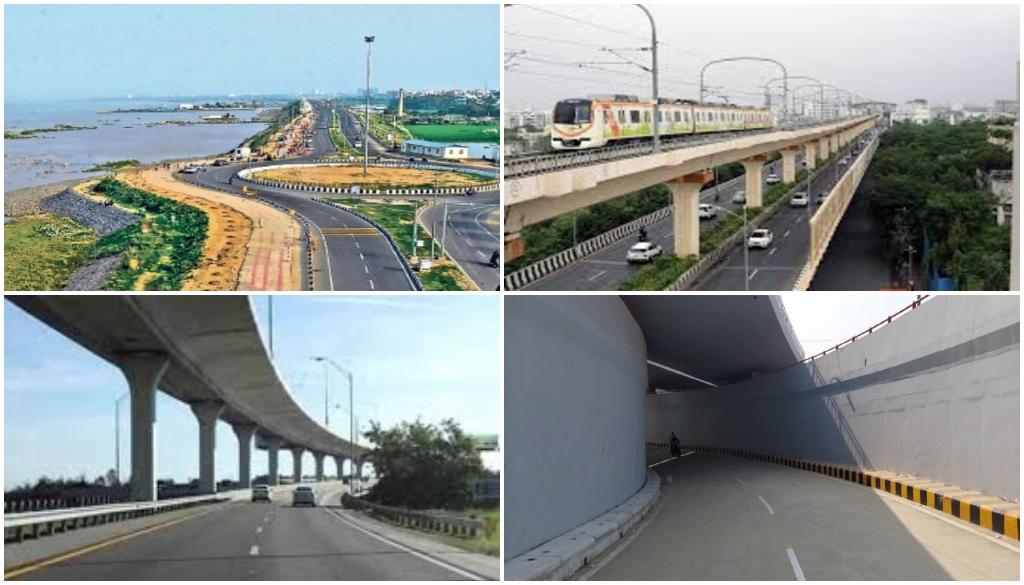
Patna is set to see one of its largest single-day development pushes this year, with hundreds of public infrastructure and civic projects being launched and opened across the city. The initiatives, announced at the close of a statewide government outreach programme, could significantly influence how the capital grows over the next decade, particularly in terms of urban services, connectivity and planned expansion.
According to officials involved in the programme, more than a thousand crore rupees’ worth of projects have been lined up for launch and completion in Patna alone. These include both new schemes and completed works across multiple sectors such as roads, civic infrastructure, urban amenities and welfare-linked public services. Urban planners say the scale of the announcements reflects the growing pressure on Patna’s infrastructure. With the city expanding rapidly due to migration from smaller towns and rural districts, demand for better roads, drainage systems, public facilities and local-level services has increased sharply over the last few years. A large number of the projects are expected to focus on strengthening basic infrastructure rather than launching entirely new mega developments.
Officials said hundreds of new projects are being approved simultaneously while several completed schemes are also being formally opened to the public. The approach signals a shift towards faster execution cycles — a critical issue in cities like Patna where project delays often result in cost overruns and reduced public impact. For the urban economy, the implications could be significant. Infrastructure expansion in state capitals typically triggers secondary growth in real estate, local employment and small businesses, especially in areas where road connectivity and civic facilities improve. Real estate experts tracking tier-2 city markets believe such project clusters often create micro-growth corridors, particularly along upgraded roads and newly developed civic zones.
At the same time, urban policy experts caution that large volumes of small and medium-sized projects must be backed by long-term planning. Cities like Patna are increasingly facing issues such as waterlogging, traffic congestion and unplanned urban sprawl. Without integrated planning that includes climate-resilient drainage, public transport expansion and inclusive public spaces, short-term infrastructure gains may not translate into long-term urban resilience. The programme’s final phase in the state capital also included a review of development progress at the district level, suggesting a stronger emphasis on monitoring and implementation rather than only announcing new projects.
For residents, the real impact will depend on how quickly the projects are completed and whether they improve daily life — from smoother travel and safer neighbourhoods to better access to public services. As tier-2 cities across India compete for investment and population growth, Patna’s next phase of urban development will likely be judged not by the scale of announcements, but by the quality and sustainability of what gets built.